

Ara
 Populations
Distinct groups of people within a society who share certain characteristics such as age, gender, geographic location, socioeconomic status, cultural background, or exposure to particular risk factors that may influence patterns of substance use, vulnerability to substance use disorders, and access to services. In the context of substance use systems, identifying and understanding different populations helps guide the design of prevention, treatment, recovery, and policy responses that are appropriate, equitable, and responsive to specific needs. Examples may include youth, women, people experiencing homelessness, individuals in the criminal justice system, or communities affected by specific social or economic conditions.


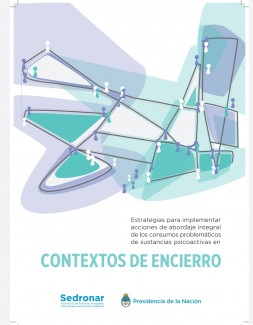
Prevención en contextos de encierro
El material promueve el desarrollo de estrategias de intervención para un abordaje integral y en red de los consumos problemáticos de sustancias en ámbitos de privación de libertad. Impulsando la participación de las personas privadas de...
Association of Disability With Mortality From Opioid Overdose Among US Medicare Adults
Key Points
Question: What is the rate of opioid overdose deaths among Medicare enrollees younger than 65 years who qualified for Medicare because of disability?
Findings: In this cohort study, the 1 766 790 adult Medicare enrollees who...
Association of Punitive and Reporting State Policies Related to Substance Use in Pregnancy With Rates of Neonatal Abstinence Syndrome
Key Points
Question: Are state punitive or reporting policies related to substance use during pregnancy associated with rates of neonatal abstinence syndrome (NAS)?
Finding: In this repeated cross-sectional study of nearly 4.6 million...
Post Event Resources: 2019 NDARC Annual Research Symposium
The 2019 National Drug and Alcohol Research Centre (NDARC) Annual Research Symposium was held on Wednesday, 16 October 2019 at the John Niland Scientia Conference and Events Centre, UNSW Sydney.
NDARC have put together a selection of...
Seizures of Illegal Diazepam Tablets Double in a Year
Diazepam, first marketed as Valium, is a medicine of the benzodiazepine family. It is often used to treat anxiety, spasms, seizures and occasionally withdrawal.
Diazepam typically slows down the functioning of the body and produce a...

Substance Use Prevention Session Organized by Hashoo Foundation Karachi, Pakistan
A Substance Use Prevention session was organized by Hashoo Foundation Karachi, Pakistan on 3rd December, 2019 for students from Balochistan that are currently enrolled in different Hospitality Management courses. Mr. Ahmad Shah conducted...
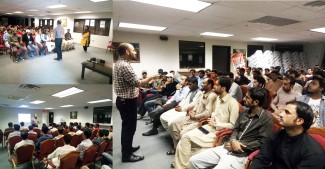
Introduction to Adverse Childhood Experiences - Slideshow
Adverse Childhood Experiences (ACEs) are highly stressful events or situations that happen during childhood and/or adolescence.
Evidence suggests strong links between ACEs and a wide range of health and social problems across the lifespan...

Estrategias de enfrentamiento en adolescentes que concluyeron un programa de intervención breve en consumo de alcohol
El propósito del presente estudio fue identificar las circunstancias de riesgo de consumo de alcohol y las estrategias para enfrentar exitosamente una recaída o el consumo abusivo, en un grupo de adolescentes que terminaron un programa de...
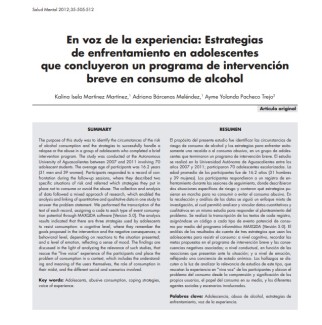
Alcoolismo precoce: a prevenção é um desafio em busca de seu combate
Um estudo realizado por Lucia Parente e Luís Camboim relata a presença abusiva do consumo de álcool por crianças e adolescentes em nossa sociedade. O alcoolismo é um problema sério e considerado um risco de saúde pública. As Leis n. 9.294...
Prosper Study of Evidence-Based Intervention Implementation Quality by Community-University Partnership
This study examined a community–university partnership model for sustained, high-quality implementation of evidence-based interventions. In the context of a randomized study, it assessed whether implementation quality for both family...
UNODC-WHO Training in Argentina on the Management of Substance Use & Substance Use Disorders during Pregnancy
A total of 35 participants took part in this training that was organized by WHO and UNODC together with PAHO, SEDRONAR, Hospital der Mar, and the generous support from the U.S. State Department Bureau of International Narcotics and Law...

The Stages of Change
1) PRECONTEMPLATION STAGE
“It isn’t that we cannot see the solution. It’s that we cannot see the problem.”
Precontemplators usually show up in therapy because of pressures from others… spouses, employers, parents, and courts… Resist...
The Stages of Change Model of Overcoming Addiction
The “stages of change” or “transtheoretical” model is a way of describing the process by which people overcome addiction. The stages of change can be applied to a range of other behaviors that people want to change, but have difficulty...
Should Addiction Counselors Disclose They Are in Recovery?
Addiction therapy is often a personal and complex thing, which relies on interaction, bonding, and communication between counselors and their patients. This often happens because many of the people choosing to become addiction counselors...
Parent Marijuana Use Associated With Substance Use in Children
New research explores some of the long-term impacts of marijuana use in families. The study revealed that the children of parents who reported marijuana use during their teenage years were significantly more likely to report substance use...

Women and Children are the Emerging Face of Drug Addiction in Afghanistan
Q breaks into song, and the lyrics reflect something of himself: "My heart aches, my heart aches and my heart aches," he croons. The 10-year-old hopes to go professional one day, but his mother says that first, he has to break his addiction...
Substance Abuse in Northeast India: Nearly 20 % more than other States
The rot in Northeast India’s substance abuse problem runs deep. A recent study shows that the prevalence of any type of substance abuse - smoking, smokeless tobacco products, alcohol - in men in Northeastern states is much higher (20...
Strategies Needed to Prevent Diversion of Prescription Opioids to Youth
Despite the well-documented detrimental effects of opioid abuse, misuse of prescription opioids remains high among adolescents and young adults in the U.S. While measures have been implemented to prevent prescription opioid diversion, such...
Lift Up! “Prevention of Violence against Women Living with People with Substance Use Disorder
Lift Up! “Prevention of Violence against Women Living with People with Substance Use Disorder”
Special thanks to the Institute of Clinical Psychology UoK, Pakistan US Alumni Network, Initiator Hdf SNYC, DFPF, Wajid Ali Rizwan Jaffar, Dr...
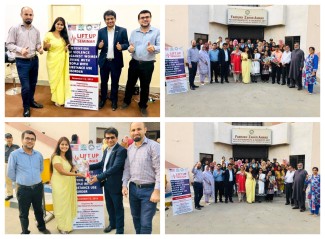
Helping to Support and Transform the Lives of People Affected by Alcohol
Drinking to excess takes a huge toll on individuals, families, communities and society as a whole.
Many adult problem drug users have long histories of substance misuse which often starts before the age of 18.
Providing well-funded...
