Ara
 Populations
Distinct groups of people within a society who share certain characteristics such as age, gender, geographic location, socioeconomic status, cultural background, or exposure to particular risk factors that may influence patterns of substance use, vulnerability to substance use disorders, and access to services. In the context of substance use systems, identifying and understanding different populations helps guide the design of prevention, treatment, recovery, and policy responses that are appropriate, equitable, and responsive to specific needs. Examples may include youth, women, people experiencing homelessness, individuals in the criminal justice system, or communities affected by specific social or economic conditions.


UNODC-WHO Joint Programme on Drug Dependence Treatment and Care
Both the WHO and UNODC strive to address the complex issues presented by drug use and dependence.
The vision: The effective and humane treatment for all people with drug use disorders. Nothing less than would be expected for any other...
One in Three: Adfam’s Manifesto for 2020 and beyond
Following the concerning findings that one in three adults in Great Britain have been negatively affected by the substance use of someone we know, Adfam has launched their 2020 manifesto.
Adfam's five asks are:
- Make funding available...
UK Parents' Drinking Negatively Affects Over a Third of Children
The physical and psychological harm caused by heavy alcohol consumption to the individual drinking is often clear. What is often less obvious, is the damage an individuals alcohol consumption can have to the people around them.
A recent...

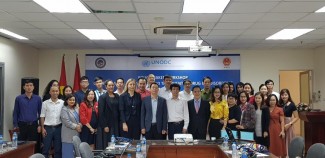
Vietnamese Policymakers Attend UNODC Training on the Nature, Prevention and Treatment of Drug Use Disorders
More than thirty (30) Vietnamese high-level decision makers from the Department of Social Vice Prevention, Ministry of Labour, Invalids and Social Affairs (MOLISA), the Office of the Government (OOG), Ministry of Health (MOH), Ministry of...
Intelligence in Young Adulthood and Alcohol Use Disorders in a Prospective Cohort Study of Danish Men: The Role of Psychiatric Disorders and Parental Psychiatric History
Abstract
Objectives: The aims were to estimate the association between intelligence measured in young adulthood and risk of alcohol use disorders (AUD) in men and to investigate the potential modification of this association by psychiatric...
Punjab Gets its First Mobile Detox Centre in Amritsar
An Amritsar-based private hospital has opened Punjab's first mobile de-addiction centre for ditigal detox of adults besides the school children and even small kids. The hospital was in the news after it opened a drug de-addiction centre for...
Comorbidity and Recovery
Imagine going through treatment numerous times but not being able to stop using. Imagine deciding not to use and doing everything you possibly can to stop using but relapsing despite all your efforts. If this sums up your situation or If...
Women Using Heroin in Kenya: Why It’s Important to Intervene Early in Life
Recreational drug use in Kenya is common among men, women, and youth from both rural and urban environments.
Heroin is the primary drug taken by injection in Kenya and it is linked with increased rates of HIV transmission.
Recent...

Experiences of Women with Substance Use Disorders in Treatment Centers: An Exploratory Study
ABSTRACT
Women with substance use problems also make up a population with gender-specific needs, which has not received enough attention in the development of policies and treatment services. The gap in gender specific interventions...
Addiction in Bhutan
Bhutan is recognised for its development philosophy of Gross National Happiness, which places the well-being of people above gross domestic product. However, over the last few years, the number of patients with mental disorder seeking help...

Depression and Binge-drinking among Military Spouses and Partner
It is recognised that harmful alcohol consumption is more common amongst those who have served in the UK armed forces.
However this is not just an issue for the individual who has served in the army. In a recent study conducted by...

Nonverbal Communication
Nonverbal communication is the act of conveying a thought, feeling, or idea through physical gestures, posture, and facial expressions. A study conducted at UCLA found a majority of communication to be nonverbal, although the study’s exact...
Motivational Interviewing: Open Questions, Affirmation, Reflective Listening, and Summary Reflections (OARS)
Motivational Interviewing provides a foundation for assisting individuals with developing the rationale for beginning change in their lives. This resources provides basic information about the principles on communicating using motivational...
Resilience in Paco Addiction Treatments
This paper presents the results of a study on the factors promoting the rehabilitation of adolescents treated for paco addiction, from the point of view of resilience, i.e. the understanding and ability to cope with life's difficulties...

Lift UP Workshop - 2019
5 members of the Pakistan U.S. Alumni group participated in the “Prevention of Violence against Women Living in Drug Affected Families”
Adv. Zia Awan - IVLP
Rana Asif Habib - IVLP
Kiran Mushtaq - IVLP
Dr Salman Baig - Hubert Humphrey Fellow...

European Prevention Curriculum
This week the European Monitoring Centre for Drugs and Drug Addiction (EMCDDA) has released the European Prevention Curriculum - a handbook designed for decision, opinion and policy makers in science-based prevention of substance use. The...
Cannabis Use among Adolescents: Risk Pattern, Implications and Possible Explanatory Variables
According to the Spanish Survey on Drug Use in Secondary Schools (ESTUDES), cannabis remains the most used illegal substance among Spanish adolescents, with around 3 out of 10 students reporting lifetime use.
Several studies have warned...
Taking a Stand: An Untapped Strategy to Reduce Waterpipe Smoking in Adolescents
Waterpipe smoking (otherwise known as shisha, hookah, narghile, goza, and hubble bubble ) is an increasing global health concern with evidence suggesting particularly high prevalence amongst adolescents.
Despite clear evidence for the...

Report of 2018 NIDA International Forum, San Diego, USA
INTRODUCTION
This report was written by Ikenna Daniel Molobe, Co-founder/Director of Unified Initiative for a Drug Free Nigeria; who presented a poster of his research, with support from the UNODC, at the 2018 National Institute on Drug...
Central Asian Master Trainers Trained on Advanced Universal Treatment Curriculum (UTC) Courses 14 and 17
From 23-31 July 2019, a team of master trainers from Central Asia attended the Regional Training of Trainers for Central Asia held in Dubai, United Arab Emirates.
The training was organized by Colombo Plan Drug Advisory Programme (DAP) wi...