


Ara
 Populations
Distinct groups of people within a society who share certain characteristics such as age, gender, geographic location, socioeconomic status, cultural background, or exposure to particular risk factors that may influence patterns of substance use, vulnerability to substance use disorders, and access to services. In the context of substance use systems, identifying and understanding different populations helps guide the design of prevention, treatment, recovery, and policy responses that are appropriate, equitable, and responsive to specific needs. Examples may include youth, women, people experiencing homelessness, individuals in the criminal justice system, or communities affected by specific social or economic conditions.



Exploring the Public Stigma of Substance Use Disorder
Illicit drug use disorder is one of the most stigmatised health conditions in the world. Stigmatisation is the mark of shame, disgrace or disapproval. It can affect people’s self-esteem and confidence, help disrupt their family...
Uma ótima oportunidade para Profissionais de Tratamento e Prevenção do uso de Substâncias.
Trabalhar no campo do abuso de substâncias é, ao mesmo tempo, um grande desafio e uma ótima oportunidade para crescer, ajudar as pessoas e fazer a diferença no mundo. O Programa de Bolsas de Estudo Hubert H. Humphrey, é uma grande...
A Great Opportunity for Substance Use Prevention and Treatment Professionals
To work in the substance abuse field, is at the same time, a big challenge and a great opportunity for growing, helping people and making a difference in the world.
The Hubert H. Humphrey Fellowship Program is a great opportunity for...
Information and Advice for the Families of People Living with Hepatitis C
Hepatitis C is a highly infectious blood-borne virus that affects the cells of the liver causing inflammation. Although many people with the virus may have no symptoms at all people can experience jaundice, depression, fatigue, skin...
Effect of a Primary Care–Based Psychological Intervention on Symptoms of Common Mental Disorders in Zimbabwe
Key Points
Question: Does a lay health worker–delivered psychological intervention improve symptoms of depression and anxiety in Zimbabwe?
Findings: In a cluster randomized clinical trial of 573 randomized patients with common mental...
Qualitative Cross-Country Comparison of Whether, When and How People Diagnosed with Lung Cancer Talk about Cigarette Smoking in Narrative Interviews
Abstract
Objectives: To compare and examine whether, when and how patients with lung cancer in three countries, with different survival rates, talk about cigarette smoking and its relationship with help-seeking.
Design: A qualitative...
History of Child Sexual Abuse among Women Consuming Illicit Substances in Mexico City
Abstract
Introduction:
Child sexual abuse (CSA) is a pervasive problem that has been linked to numerous developmental, social, health, and substance use consequences. Nevertheless, the relationship between CSA and the consumption of...
Surveillance for Cancers Associated with Tobacco Use — United States, 2010–2014
Abstract
Problem/Condition: Tobacco use is the leading preventable cause of cancer, contributing to at least 12 types of cancer, including acute myeloid leukemia (AML) and cancers of the oral cavity and pharynx; esophagus; stomach; colon...

Effectiveness Bank Course on Drug Treatment Research
COURSE ON DRUG TREATMENT RESEARCH REACHES ITS CONCLUSION
This instalment ends the 2018 refresh of the Drug Treatment Matrix, reminding you of the issues addressed in its five rows (listed below) intersected by five columns stepping up in...
Neighbourhood Tobacco Supply and Individual Maternal Smoking during Pregnancy
Abstract
Background: Tobacco policy is increasingly focusing on the ‘tobacco endgame’ which commits to eradicating tobacco use (prevalence below 5%) within the next two decades. Strategies for achieving the endgame are likely to include...
Sex Differences in Cannabis Use
Cannabis remains the most commonly used illicit drug worldwide and, with the rise of decriminalisation and legalization of marijuana for medical and recreational use, it is expected this will increase even further. There are, however...
Effectiveness Bank Drug Treatment Matrix Row 5: Reducing Crime, Protecting Families
Time to consolidate the lessons of the last five instalments of our course on drug treatment research. Row 5 explored key studies on treatment in relation to safeguarding the family and the community from crime. A common theme was the...
YOUTH AND DEVELOPMENT: Risk Factors and Protection of Adolescents in the City of Campos do Jordão, Brazil
YOUTH AND DEVELOPMENT: Risk factors and protection of adolescents in the city of Campos do Jordão – state of São Paulo - Brazil
The teenager, individual in a situation of bio-psycho-social development, protected in Brazil by the ECA...

Migración femenina a Estados Unidos y consumo de drogas
Abstract
Con el objetivo de conocer la experiencia migratoria a Estados Unidos de mujeres mexicanas, de identificar si cuentan con redes sociales cercanas de usuarias de drogas, así como valorar la presencia de consumo de dichas sustancias...
Mental, Neurological, and Substance Use Problems among Refugees in Primary Health Care
Abstract
Background
Population-based epidemiological research has established that refugees in low- and middle-income countries (LMIC) are at increased risk for a range of mental, neurological and substance use (MNS) problems. Improved...
Despite Falling Rates, Smoking-Related Lung Cancer Will Remain a Major Health Concern
Tobacco control interventions introduced in the United States over the past 50 years have led to notable decrease in smoking and smoking-related diseases, including lung cancer.
In a recent study, published by University of Michigan's...
Substance Use and the Maldives
There are decades’ worth of evidence from around the world to guide us; we need to follow it. Given the importance of the issue, I say let’s do all interventions that have shown promising results. But what does this mean for drug use in...

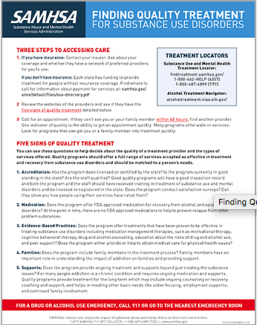
Quality Treatment for Substance Use Disorders
It is important that people wishing to access treatment for substance use disorder are informed about the quality of care they will receive.
A new fact sheet has been developed by the Substance Abuse and Mental Health Services...
Low Self-Esteem Connected to Greater Risk for Opioid Use
It has been suggested that individuals with low self-esteem are more likely to choose maladaptive coping behaviors, such as abuse of opioids, when faced with life stressors.
In a recent study conducted in New York, over 1000 adults, of...
Role of Research-Practice-Policy Partnerships in Optimizing Prevention Science and the Use of Research Evidence: Building a Stakeholder Task Force to Advance Prevention Science
This abstract was presented at the 2018 Society for Prevention Research Annual Meeting which was held May 29 – June 1, 2018 in Washington, DC, US.
Jenelle R. Shanley Georgia State University
Lisa P. Armistead Georgia State University; Vi...