
Cerca
 Psychoactive Substances
Psychoactive substances are natural or synthetic substances that act on the central nervous system and alter mental processes such as mood, perception, cognition, consciousness, and behaviour. These substances may be legally prescribed medications (e.g., pain medications or sedatives), legally available substances such as alcohol or caffeine, or controlled or illicit drugs. Psychoactive substances can be used for medical, social, cultural, or recreational purposes, but some carry risks of misuse, dependence, and health or social harms when used in harmful ways.
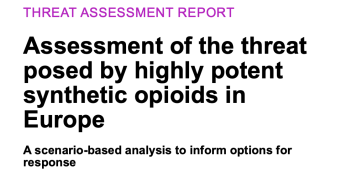
Scaife Medical Student Fellowship in Substance Use Disorders
With the generous support of the Scaife Family Foundation, the Institute for Research, Education and Training in Addictions (IRETA) is able to conduct this specialised program.
The program offers medical students an intensive learning...
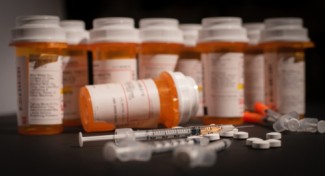
Fentanyl Deaths on the Rise
Deaths caused by the drug fentanyl are on the rise in the UK, a recent report published by the Advisory Council on the Misuse of Drugs (ACMD) warns.
The report, which included a a literature review of the effects of fentanyl, details of...
Lisbon Addictions: Presentations & Posters
Following their 2019 conference, the Lisbon Addictions team have gathered posters and information about the presentations from the event.
The co-producers have built coherent packages of topical strands, sessions and guided poster tours.
...
Commission on Alcohol Harm
The Alcohol Health Alliance UK (AHA) is supporting a Commission on Alcohol Harm, consisting of a panel of varied experts.
The Commission on Alcohol Harm has been established to examine the current evidence on alcohol harm, recent trends in...
Goal Commitment Predicts Cannabis Use for Adolescents in Treatment
Background: Commitment to change is an innovative potential mediator and mechanism of behaviour change (MOBC) that has not been examined in adolescents with cannabis use. The Adolescent Substance Abuse Goal Commitment (ASAGC) questionnaire...
Rapid Increase in the Prevalence of Cannabis Use Among People with Depression in the United States, 2005–17: The Role of Differentially Changing Risk Perceptions
Abstract
Aims
To estimate trends in the prevalence of cannabis use and risk perceptions of cannabis use from 2005 to 2017 among United States people with and without depression.
Design
Linear time trends of the prevalence of any, daily...
National Addiction-Specific Institutional Infrastructure – Fundamental Prerequisite for Successful Implementation of Specialized Academic Degree Study Programmes: A Case Study in Historical Perspective
Objective: Human resources are crucial for addiction treatment and prevention services, as well as for science and research. The aim of this historical case study is to explain and demonstrate the role of specialized university academic...
Incorporation of Universal Prevention Curriculum into Established Academic Degree Study Programme: Qualitative Process Evaluation
Comprehensive bachelor's, master's, and doctorate-level curricula of Addiction Studies (Addictology) were developed and implemented at Charles University between 2003 and 2012.
EU4MD Bursaries for the 2020 NIDA International Forum
Professionals, academics and experts from European Neighbourhood Policy (ENP) countries will have the opportunity to participate in the 2020 National Institute on Drug Abuse International Forum, thanks to five bursaries being offered...

Alcohol and Cancer Risks: A Guide for Health Professionals
Drinking alcohol increases the risk of mouth cancer, pharyngeal (upper throat) cancer, oesophageal (food pipe) cancer, laryngeal (voice box) cancer, breast cancer, bowel cancer and liver cancer.
Having conversations with patients about the...

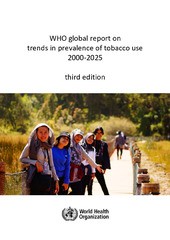
WHO Global Report on Trends in Prevalence of Tobacco Use 2000-2025
Tobacco is the only legal drug that kills many of its users when used exactly as intended by manufacturers. WHO has estimated that tobacco use (smoking and smokeless) is currently responsible for the death of about six million people across...
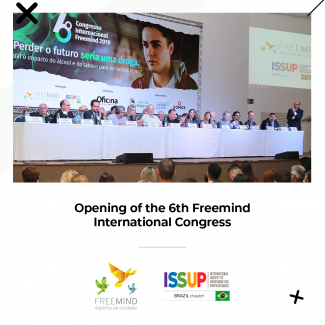
Opening Ceremony of the 6th Freemind International Congress
The 6th Freemind International Congress, organized by the Freemind Mobilization and ISSUP Brazil, was held in the city of Águas de Lindóia / SP, Brazil from December 4th to 7th, 2019.
The event was held at Hotel Majestic, which has one of...
Ricoveri per disturbi psicotici associati all'abuso o alla dipendenza da cannabis
Il Delta 9-tetraidrocannabinolo - un composto psicoattivo presente nella cannabis - attiva le parti del cervello responsabili della cognizione, della percezione, dell'ansia, della paura, della memoria e della ricompensa.
Ci sono continui...

Key Findings from the Illicit Drug Reporting System (IDRS) Interviews
The Illicit Drug Reporting System (IDRS) is an ongoing illicit drug monitoring system which has been conducted in all states and territories of Australia since 2000 and forms part of Drug Trends.
This year, we have provided a suite of...

Ecstasy and Related Drugs Reporting System (EDRS)
The Ecstasy and Related Drugs Reporting System (EDRS) is an illicit drug monitoring system which has been conducted in all states and territories of Australia since 2003 and forms part of Drug Trends.
The EDRS consists of annual...

People Who Inject Drugs: A Global Review
Globally, an estimated 15·6 million people aged 15–64 years inject drugs. Younger people who inject drugs are at higher risk of overdose, drug dependence, and blood-borne virus transmission and engaging in risky sexual behaviour.
In a...
Teen E-Cigarette Use Doubles Since 2017
Data from the 2019 Monitoring the Future Survey of 8th, 10th and 12th graders show alarmingly high rates of e-cigarette use compared to just a year ago, with rates doubling in the past two years.
The Monitoring the Future Survey analyses...

Making Progress in the Fight Against Tobacco
The harm that tobacco causes is clear. Research has confirmed the damage that smoking has on an individuals wellbeing as well as the wellbeing of those around them. More than 7 million deaths a year are the result of direct tobacco use...

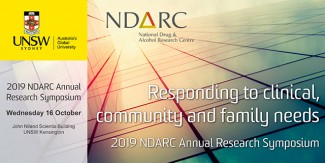
Post Event Resources: 2019 NDARC Annual Research Symposium
The 2019 National Drug and Alcohol Research Centre (NDARC) Annual Research Symposium was held on Wednesday, 16 October 2019 at the John Niland Scientia Conference and Events Centre, UNSW Sydney.
NDARC have put together a selection of...
NAADAC Free Webinar Series
NAADAC is happy to offer free addiction-specific education through its Free Webinar Series.
The 2019 Free Webinar Series releases two live webinars per month, which are then captured and made available for future viewing in NAADAC's Free...