
The product may not be what it says: What emerging synthetic drugs and dangerous mixtures mean for practice
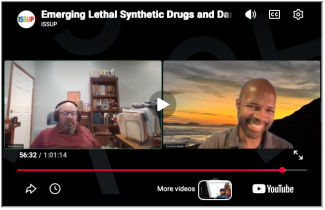
On 19 August 2026, ISSUP hosted Thom Browne Jr. for a wide-ranging discussion on emerging synthetic drugs, adulterants and dangerous mixtures. Thom drew on examples involving highly potent synthetic opioids, synthetic cannabinoids and benzodiazepines, ketamine-containing mixtures, etomidate in vaping products, concentrated 7-hydroxymitragynine products and cutting agents that may affect the kidneys, heart, lungs and blood system.
This is a fast-moving and uneven global picture. A substance or mixture reported in one country is not automatically present in another, and a street name does not describe a stable chemical formula. The practical value of international alerts is therefore not to create alarm or to encourage assumptions. It is to help us ask better questions, strengthen local surveillance and recognise patterns that warrant investigation.
Why this matters across the ISSUP community
The immediate concern is mortality: highly potent opioids and sedating mixtures can cause rapid respiratory depression, loss of consciousness and death. But the webinar also asked us to pay closer attention to morbidity, the longer-term and sometimes less visible harms affecting renal, cardiovascular, respiratory, neurological, hepatic and haematological systems.
For health, treatment and social-service practitioners, this means that a familiar account of “what was taken” may not explain the presentation in front of us. A person may have been exposed to several pharmacologically different substances, including ingredients they did not knowingly choose. Assessment may need to extend beyond intoxication and withdrawal to breathing, consciousness, circulation, kidney function, cardiovascular symptoms, infection risk and other organ-system concerns, guided by local protocols and the clinical picture.
For prevention, recovery and community practitioners, the challenge is to communicate uncertainty clearly without stigmatising people or sensationalising risk. Messages should avoid implying that colour, branding, price, route of administration or a street name can reliably identify contents. Communities also need to know that vaping does not make an unknown product safe and that tablets resembling medicines may not contain the expected pharmaceutical ingredient.
For law enforcement, forensic and border-control colleagues, timely analytical information can have direct public-health value. Rapid sharing of verified findings, stripped of case-identifying information, can help emergency departments, treatment services, outreach teams and public-health authorities recognise unusual clusters sooner. In return, clinical and community observations can help laboratories and investigative services know what to test for.
For judicial, regulatory and policy colleagues, the pace of analogue development raises difficult questions about whether substance-by-substance controls can keep up on their own. Scheduling remains one tool, but effective preparedness also depends on toxicology capacity, flexible early-warning mechanisms, proportional responses, treatment access and sustained cooperation across health, social and public-safety systems.
What practitioners should look out for
- Unexpected or mixed clinical presentations.
Profound sedation, unusually slow or difficult breathing, loss of consciousness, seizures, severe agitation, hallucinations, marked loss of balance, temperature disturbance or sudden cardiovascular symptoms may indicate exposure to a potent substance or mixture. No single pattern is diagnostic, and urgent presentations require emergency assessment in line with local guidance.
- A partial response to naloxone.
Where opioid overdose is suspected, naloxone and support for airway and breathing remain critical. However, naloxone only reverses opioid effects. A mixed product may also contain non-opioid sedatives or other toxic substances, so breathing, consciousness and circulation must continue to be monitored and supported even after naloxone has been given.
- Clusters and departures from the expected pattern.
Several people presenting within a short period with similar unexpected symptoms, an apparent change in duration or intensity, unusual wounds, unexplained kidney injury, or a rise in counterfeit-looking tablets can be an early signal. These observations become more useful when they are recorded consistently and connected rapidly with toxicology and drug-checking information.
- Vapes and unfamiliar delivery systems.
The presentation highlighted reports of etomidate and other substances in refillable vape products in parts of Asia-Pacific. The important practice point is broader: a device, liquid or pod may contain a different drug or combination from what the user expects, and heating can introduce additional respiratory risks.
- Street names used as clues, not conclusions.
Names such as “pink cocaine” or “tusi”, “kush”, “Happy Water”, “Labubu”, “tranq dope” and “space oil” may prompt useful questions, but their composition varies by place and over time. They should support inquiry and targeted testing, not replace chemical analysis.
What should change in practice?
First, build the relationships before an alert is needed. Treatment and recovery services, hospitals, poison centres, public-health teams, community organisations, forensic and toxicology laboratories, drug-checking services, law enforcement and policymakers need agreed routes for sharing verified information quickly and responsibly.
Second, broaden early-warning systems beyond the appearance of a single new molecule. Useful alerts should connect laboratory identification with route of administration, suspected mixtures, clinical effects, population and place, while remaining clear about what is confirmed and what is still being investigated.
Third, prepare the workforce for uncertainty. Training should help practitioners recognise mixed toxidromes, understand the limits of product appearance and street terminology, gather non-judgemental histories, respond safely within their scope of practice, and know when and where to escalate.
Finally, keep the response person-centred. People who use substances should not carry the blame for an increasingly opaque supply. Better information, non-stigmatising communication, careful assessment, evidence-informed treatment and recovery support, and rapid sharing of verified alerts are practical ways to reduce harm while strengthening preparedness.
Recommended resources
- CFSRE NPS Discovery: Thom’s recommended starting point for monographs, trend reports, public alerts, drug-checking reports and clinical reports on emerging substances.
- UNODC Early Warning Advisory on New Psychoactive Substances: A global platform for information, data visualisations and emerging NPS trends, with additional technical material available to registered users.
- EUDA European Drug Alert System: A European regional model for detecting, assessing and communicating serious drug-related risks across health, social, safety and security systems.
- WHO: Opioid overdose: Practical information on recognising and responding to opioid overdose, including naloxone and basic life support.
- ISSUP webinar page and recording information: This webinar recording information and access to ISSUP’s related webinar and Knowledge Share resources.