
Cerca
 Populations
Distinct groups of people within a society who share certain characteristics such as age, gender, geographic location, socioeconomic status, cultural background, or exposure to particular risk factors that may influence patterns of substance use, vulnerability to substance use disorders, and access to services. In the context of substance use systems, identifying and understanding different populations helps guide the design of prevention, treatment, recovery, and policy responses that are appropriate, equitable, and responsive to specific needs. Examples may include youth, women, people experiencing homelessness, individuals in the criminal justice system, or communities affected by specific social or economic conditions.



Development of the Screening Test For the Problem Drinking
Presented at Thessaloniki 2024 - Panel: Advancing Global Prevention Initiatives: Standardization, Innovation & Cultural Adaptation, on the 27th of June, 2024.
PREVDRUGS Program: University Extension on Drugs Use Prevention
Presented at Thessaloniki 2024 - Panel: Advancing Global Prevention Initiatives: Standardization, Innovation & Cultural Adaptation, on the 27th of June, 2024.
Learning environments and conflict management: an ecological approach in kindergarten
Presented at Thessaloniki 2024 - Panel: Community Collaboration for Prevention, on the 27th of June, 2024.
Vulnerable Populations – Migrants and Refugees (Panahgah)
Presented at Thessaloniki 2024 - Panel: Working with Vulnerable Populations, on the 27th of June, 2024.
Dying well: the void between principle and practice in the care of people using substances
Presented at Thessaloniki 2024 - Panel: Harm Reduction: Strategies, Challenges, and Global Perspectives in Substance Use, on the 26th of June, 2024.
Developing and implementing a Drug reduce University Diploma for health practitioners in Uruguay: challenges and future directions
Presented at Thessaloniki 2024 - Panel: Global Developments in Addiction Studies, on the 26th of June, 2024.
Building Inclusive Recovery Cities: Generating community connection and community resilience to improve prevention and early intervention
Presented at Thessaloniki 2024 - Panel: Addiction Recovery Models, on the 26th of June, 2024.
Building Inclusive Recovery Cities: Generating community connection and community resilience to improve prevention and early intervention ( David Best)
Presented at Thessaloniki 2024 - Panel: Addiction Recovery Models, on the 26th of June, 2024.
Self-Care Toolbox for women in recovery
This document provides self-care tools for women who are seeking or in recovery.
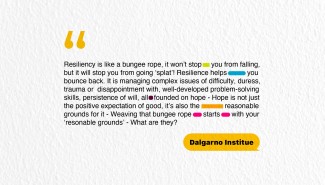
World Resiliency Day 26th - 30th of June 2024
WORLD RESILIENCY WEEK - 2024
IT’S TIME TO CHANGE THE VIEW – IT’S TIME FOR A NEW LENS.
Resilience H.E.R.O.E.S are the New Champs of the community. If building #resilient communities – if proactive prevention and demand reduction are the...
Prevalence, correlates, and reasons for substance use among adolescents aged 10–17 in Ghana: a cross-sectional convergent parallel mixed-method study
Background:
In Ghana, substance use among adolescents poses significant risks to their health, wellbeing, and development. However, little is known about the outlets and reasons for substance use among Ghanaian adolescents. This study...
Trauma exposure across the lifespan among individuals engaged in treatment with medication for opioid use disorder: differences by gender, PTSD status, and chronic pain
Background
There is little research on lifetime trauma exposure among individuals undergoing medication treatment for opioid use disorder (MOUD). A multisite study examined the prevalence of lifetime trauma and explored differences based...
Technology Use and Substance Use Disorder Among Youth
ISSUP presents a webinar on Technology Use and Substance Use Disorder Among Youth.
A Reading List for Public health interventions within the criminal justice system
Public health interventions within the criminal justice system encompass multi-sector approach on strategies and programs designed to divert individuals with substance use disorders away from conventional imprisonment. These interventions...

Co-Creation in Community-Based Prevention
ISSUP, in collaboration with the ICUDDR, presents a webinar on Co-creation in community-based prevention.
Building Inclusive Recovery Cities: An international movement for community building, recovery and prevention.
ISSUP, in collaboration with the Centre for Addiction Recovery Research (CARR), presents its webinar on Building Inclusive Recovery Cities.
This webinar combines key innovations in public-facing recovery programmes that challenge...
Trauma exposure across the lifespan among individuals engaged in treatment with medication for opioid use disorder: differences by gender, PTSD status, and chronic pain
Background: Limited research has been conducted on lifetime trauma exposure among individuals undergoing medication treatment for opioid use disorder (MOUD). A multisite study provided an opportunity to investigate the prevalence of...
People who use drugs engagement in substance use disorder services and harm reduction: evaluation, challenges and future direction of a community-based intervention
Background:
Since 1996, an urban community-based organization has been providing screening, testing, overdose prevention, referrals, and access to treatment for substance use disorders (SUD) and communicable diseases such as HIV through...
A qualitative study of experiences with physical activity among people receiving opioid agonist therapy
Background:
Many people with substance use disorders undergoing opioid agonist therapy often have physical or mental health commorbidities. Exercise is recognised as beneficial for both prevention and treatment of various health conditions...

Trauma exposure across the lifespan among individuals engaged in treatment with medication for opioid use disorder: differences by gender, PTSD status, and chronic pain
There is little study of lifetime trauma exposure among individuals engaged in medication treatment for opioid use disorder (MOUD). A multisite study provided the opportunity to examine the prevalence of lifetime trauma and differences by gender, PTSD status, and chronic pain.