
Ara
 Data
Data
Systematically collected information used to understand patterns of substance use, substance use disorders, treatment needs, and drug market dynamics. This may include epidemiological data, service utilisation records, treatment outcomes, law enforcement intelligence, and public health surveillance. Data helps identify emerging trends, assess the effectiveness of prevention and treatment programmes, monitor trafficking and market activity, and guide evidence-informed policy and decision-making. Reliable data systems are essential for improving responses to substance use and ensuring that interventions are targeted, effective, and responsive to population needs.

The Changing Approach to Addiction — From Incarceration to Treatment and Recovery Support
It’s been more than 50 years since the United States launched a “war on drugs.” History has demonstrated the ineffectiveness of “tough-oncrime” drug-use policies, including laws requiring mandatory minimum sentencing for possession of...
Community-based substance use treatment programs for reentering justice-involved adults: A scoping review
Introduction:
For adults involved with the criminal justice system who are reentering their communities postincarceration, there is a large need for community-based substance use treatment. Little is known, however, about the types...

Drug Diversion Schemes Linked to Lower Reoffending Rates, New Research Finds
New research examining more than 62,000 criminal incidents across 13 police forces in England found that police-led drug diversion schemes are associated with significantly lower reoffending rates than traditional prosecution for drug...

Do Drug Diversion Schemes Work? Insights from the Thames Valley Police Drugs Diversion Pilot
This paper examines the development and early outcomes of the Thames Valley Police Drugs Diversion Pilot in West Berkshire, which offers people found in possession of drugs an opportunity to engage with treatment rather than receive a...

The introduction of drug Arrest Referral schemes in London: A partnership between drug services and the police
Arrest Referral (AR) schemes in London were established to connect people who use drugs with treatment services at the point of arrest through collaboration between police and drug service providers. Based on interviews with police officers...

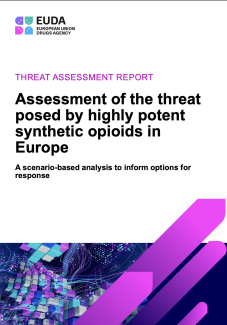
Assessment of the threat posed by highly potent synthetic opioids in Europe
This threat assessment examines the potential risks posed by highly potent synthetic opioids (HPSOs) in Europe over the next two years. Drawing on early warning data, forensic and clinical evidence, and expert input, the report explores how...
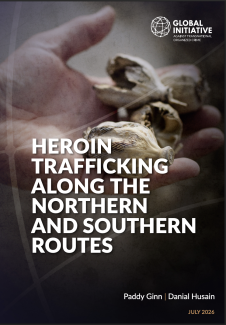
Heroin Trafficking Along the Northern and Southern Routes: Emerging Trends and Strategic Implications
This paper examines how heroin trafficking routes from Afghanistan into Europe have evolved following the Taliban's return to power in 2021. It explores the changing dynamics of the northern and southern trafficking routes, highlighting how...
The Role of Faith Communities in Addressing Substance Use and Crime – Reading List (Part 2)
In this second reading list, we continue exploring the growing evidence on the role and contribution of faith communities and faith-based organisations in addressing substance use and crime, with a particular focus on treatment engagement...

Association Between Religiosity and Spirituality and Cocaine Use: A Systematic Review
This systematic review examines the association between religiosity, spirituality, and cocaine use by analysing findings from 20 observational studies involving adults and adolescents. Most studies found that higher levels of religiosity...
Religion, Crime, and Criminal Justice
This chapter reviews the evidence on the relationship between religion, crime, and the criminal justice system. It highlights a growing body of research showing a consistent inverse association between religiosity and criminal behaviour...

Emerging Lethal Synthetic Drugs and Dangerous Drug Mixtures: The Wave of the Future and How We Should Respond
ISSUP Global presents a webinar exploring the growing impact of adulterants and synthetic additives in illicit drug markets, and their implications for prevention, treatment, recovery, and public health.
Explore the UNODC World Drug Report 2026: Drug Market Patterns and Trends
The UNODC World Drug Report 2026 introduces a new interactive platform that allows users to explore the latest global, regional, and subregional trends in drug demand and supply through dynamic data visualisations, maps, graphs, and...
Measuring gang membership in England and Wales: A latent class analysis with Eurogang survey questions
This study examines how gang membership is measured among young people using the Eurogang Network’s survey approach. Drawing on nationally representative data from England and Wales, the researchers used statistical analysis to identify...
Child Criminal Exploitation and the Interactional Emergence of Victim Status
This article draws on observations and interviews with youth justice practitioners and young people involved in county lines drug dealing to explore the processes by which young people are identified as victims of child criminal...
Protecting Youth from Mexican Drug Cartel Recruitment: The Prospects of Educational Interventions
This investigation considers the impact of Mexico’s War on Drugs since 2006 and the influence of widespread cartel networks on the youth population. As both victims and perpetrators of drug-related crime, the young individuals of Mexico are...
Recruitment of minors into organised crime
The recruitment of minors into serious and organised crime has increasingly become a tactic used by criminal networks to avoid detection, capture and prosecution. By using minors, the criminal networks increase the distance between the...
The Association Between Religiosity and Substance Use Patterns Among Women Involved in the Criminal Justice System
This study explores the relationship between religiosity and substance use patterns among women involved in the criminal justice system. Using data from women participating in a drug court programme in the United States, the researchers...
Religiosity and crime: Evidence from a city-wide shock
This study examines the relationship between religiosity and crime using data from the 2015 visit of Pope Francis to Philadelphia. By analysing daily crime reports before, during, and after the visit, the researchers found a significant...
Drug production and precursors — EUDA ongoing activities
The European Union Drugs Agency (EUDA) continues to monitor illicit drug production and precursor chemicals across Europe to improve understanding of how drug markets are evolving. Production within the European Union is primarily focused...

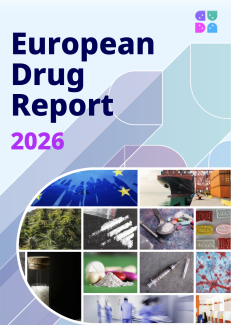
European Drug Report 2026: Trends and Developments
The European Drug Report 2026: Trends and Developments provides the latest overview of the drug situation across Europe, drawing on data from EU Member States, Türkiye, and Norway. The report examines patterns of drug use, drug-related...