Ara
 Treatment
The range of medical, psychological, and social services designed to help individuals reduce or stop substance use and manage substance use disorders. Treatment may include assessment, counselling and behavioural therapies, medication-assisted treatment, withdrawal management, and support for co-occurring mental or physical health conditions. Effective treatment is typically person-centred and evidence-informed, and may be provided in outpatient, community, or residential settings. Treatment aims to improve health and functioning, reduce substance-related harms, and support individuals in moving toward recovery and long-term wellbeing.


Bi-Monthly Webinar: ISSUP Nigeria Knowledge Update Series (Eighteenth Session)
ISSUP Nigeria are pleased to present their next Bi-Monthly Webinar in the Knowledge Update Series. This Webinar will focus on the topic 'Driving change through addiction prevention advocacy: Strategies for lasting impact and effective messaging'.
Provision of addiction treatment services during the war in Ukraine
This webinar is held under the joint initiative of ISSUP Ukraine, the Center for Public Health of the Ministry of Health of Ukraine and ICF "Alliance for Public Health".
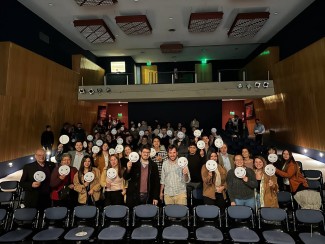
"Droga: no miremos al costado"
En el mes de Mayo se llevó a cabo en un Auditorio de la Ciudad de Buenos Aires el evento "Droga: no miremos al costado", organizado por dos ONG de jóvenes: Frente Joven y el Observatorio de la Dignidad.
La iniciativa reunió a expertos...
Children and families affected by parental drug use
ISSUP are pleased to present their webinar on Children and families affected by parental drug use.
Addiction Nursing Competencies: A Comprehensive Toolkit for the Addictions Nurse
Abstract
With the increased role of nurses in caring for patients with substance addiction, there was a clear need to develop the Addiction Nursing Competencies to guide and support the nursing workforce.
A literature search revealed a...
Center for Global Health - Sri Lanka Participates at UNODC Constructive Dialogue - Vienna
The American College of Science and Humanities and its Centre for Global Health Research and Policy in Sri Lanka participated at the UNODC Constructive Dialogue on Technical Assistance at Vienne, Austria, in person, on 30 May 2023 - 31 May...

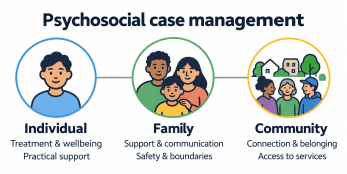
Psychosocial and Cultural Coping Strategies for Mental Health and Substance Use Prevention and Treatment
American College of Science and Humanities initiated activities to fulfill the ISSUP mission in Sri Lanka. On June 11th 2023, the college held the inaugural psychology research conference with special focus on substance use prevention and...

International monitoring of capacity of treatment systems for alcohol and drug use disorders: Methodology of the Service Capacity Index for Substance Use Disorders
Abstract
Objectives
We aimed to develop a Service Capacity Index for Substance Use Disorders (SCI-SUD) that would reflect the capacity of national health systems to provide treatment for alcohol and drug use disorders, in terms of the...
Support. Don't Punish International Day of Action
A global advocacy campaign calling for drug policies based on health and human rights.
Support. Don’t Punish is a global grassroots-centred initiative in support of harm reduction and drug policies that prioritise public health and human...
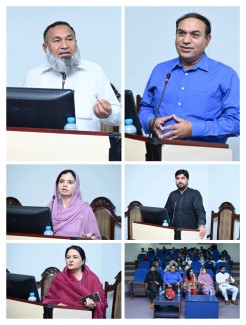
Pakistan Youth Organization (PYO) Seminar on International Day Against Drug Abuse
Pakistan Youth Organization organized a seminar on the eve of the international day against drug abuse and illicit trafficking in collaboration with Freedom drug treatment & rehab Centre, Gujranwala Pakistan on 26th June 2023 at GIFT...
Practical Guide for Implementing a Trauma-Informed Approach
The guide specifically focuses on tools and strategies for implementing a trauma-informed approach. This guide highlights the need for organizational assessment of readiness and capacity before implementing trauma-informed approach and...

Implementing Quality Measurement in the Field of Drug Treatment and Harm Reduction: A Case Study in Flanders
BACKGROUND: Implementing quality measurement is still a challenge in the field of drug treatment and harm reduction. In this case study, we investigate which strategies can be used to enhance the implementation of a policy in which quality...
AddictologyIssue 1/2023
National Implementation of Quality Standards in Prevention and Treatment Services for Substance Use/ Addictions – A Case Study of Cyprus
INTRODUCTION: The Cyprus National Addictions Authority (NAAC) is the main coordinating body for all matters related to licit and illicit substances as well as pathological gambling in Cyprus and it is responsible, inter alia, for the...
AddictologyIssue 1/2023
The social context of drinking among LGBT+ people
Professor Carol Emslie and David Barbour discuss research on gender, identity and drinking, and the disproportionate impact of substance use in the LGBT+ community.
Stress, Coping, and Context: Examining Substance Use Among LGBTQ Young Adults With Probable Substance Use Disorders
In this research, the authors explored how lesbian, gay, bisexual, transgender, and queer (LGBTQ) young adults with problematic substance use made sense of their substance use in relation to their LGBTQ identities.
The authors interviewed...
LGBTQ+ People and Alcohol
This briefing provides a summary of alcohol consumption, alcohol harm, alcohol treatment, and gaps in knowledge regarding alcohol use among LGBTQ+ people.
It uses the acronym LGBTQ+ to include lesbian, gay, bisexual, transgender, queer...
Substance Use in the LGBTQ+ Community: Reading List
Lesbian, Gay, Bisexual, Transgender and Queer (LGBTQ+) Pride month is celebrated each year during the month of June. Here you can find a list of resources and research on the topic of substance use among the LGBTQ+ community.
1) This repor...

European Drug Report 2023: Trends and Developments
The European Drug Report 2023: Trends and Developments presents the EMCDDA’s latest analysis of the drug situation in Europe. Focusing on illicit drug use, related harms and drug supply, the report contains a comprehensive set of national...
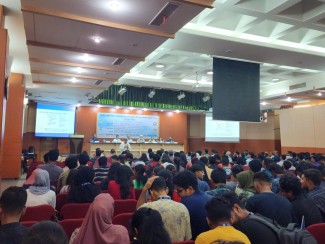
Seminar on Youth Participation in Substance Use Prevention
To build an affluent society, the youth must be involved in prevention of substance - Director General, Department of Narcotics Control
Youth is the time for our brain to grow and develop. Using of substances at a young age affect brain...
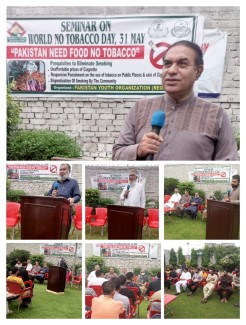
No Smoking day commemoration by Pakistan Youth Organization
Pakistan Youth Organization has organized seminar on eve of international no Smoking day in collaboration with Freedom drug treatment & rehab Centre, Gujranwala Pakistan on 31st May, 2023 at Freedom Rehab. Sufi Muhammad Javed, Sana Ullah...