
Ara
 Treatment
The range of medical, psychological, and social services designed to help individuals reduce or stop substance use and manage substance use disorders. Treatment may include assessment, counselling and behavioural therapies, medication-assisted treatment, withdrawal management, and support for co-occurring mental or physical health conditions. Effective treatment is typically person-centred and evidence-informed, and may be provided in outpatient, community, or residential settings. Treatment aims to improve health and functioning, reduce substance-related harms, and support individuals in moving toward recovery and long-term wellbeing.


Highlights from the 2023 UNODC World Drug Report
ISSUP are pleased to present our Webinar on highlights from the 2023 edition of the UNODC World Drug Report.
Treatment and Prevention of Substance Use Disorders in the Workplace
ISSUP Kenya present their webinar on Workplace Substance Use.
MPSP se manifesta contra a descriminalização do porte de drogas para consumo pessoal
Dr. Mario Luiz Sarrubbo, Procurador-Geral da Justiça do Estado de São Paulo, protocolizou um memorial no Supremo Tribunal Federal – STF com o posicionamento do Ministério Público paulista sobre a pauta que trata da possível...

Exploring the impact of the COVID-19 pandemic on healthcare and substance use service access among women who inject drugs: a qualitative study
Abstract
Background
The COVID-19 pandemic disrupted healthcare and substance use services engagement, including primary and mental health services as well as residential and outpatient drug treatment. Women who inject drugs (WWID) face...
Comparative Effectiveness of Pharmacotherapies for the Risk of Attempted or Completed Suicide Among Persons With Borderline Personality Disorder
Abstract
Importance Suicidal behavior is a significant clinical concern in individuals with borderline personality disorder (BPD), but the effectiveness of pharmacotherapy on reducing suicide risk has remained unknown.
Objective To...
Continuum of Care in Recovery
ISSUP Botswana present their Webinar on Continuum of Care in Recovery.
Efectos del uso de cannabis fumada en adolescentes escolares
ISSUP Chile presentó un Webinar sobre 'Efectos del uso de cannabis fumada en adolescentes escolares'.
Psychedelics promote plasticity by directly binding to BDNF receptor TrkB
Abstract
Psychedelics produce fast and persistent antidepressant effects and induce neuroplasticity resembling the effects of clinically approved antidepressants. We recently reported that pharmacologically diverse antidepressants...
Accounts of women identified as drinking at ‘high risk’ during pregnancy
Drinking alcohol during pregnancy is associated with Foetal Alcohol Spectrum Disorders (FASD), and women who drink at higher levels are more likely to have a baby with FASD.
Efforts to better understand and respond to ‘high risk’ drinking...
“Alcohol marketing to LGBTQ+ people”
Watch the video of the SHAAP/SARN 'Alcohol Occasionals' webinar, held over Zoom on 24 May 2023: "Alcohol marketing to LGBTQ+ people: Evolving strategies to target identity", by Dr David Whiteley .
Webinar on Addiction Prevention for Youth
The International Society of Substance Use Professionals (ISSUP) Indonesia and the Indonesia International Training and Treatment Centre (ITTC) together hosted the second webinar on "Addiction Prevention for Youth" on Sunday, May 21, 2023...
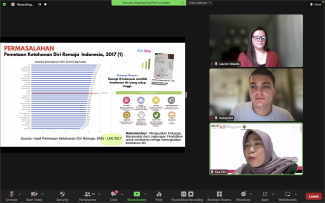
Indonesia's INEP Plus Online Training
ISSUP Indonesia organized the Introduction to Evidence-Based Prevention (INEP) Online Course as a national-level training in Indonesia with 17 participants. The training, conducted by Dr.dr. Kristiana Siste, SpKJ, and Dr. Elvina K...
Introduction to SAMHSA 4E’s Modern and Comprehensive Prevention System
SAMHSA recently introduced the 4 E’s as a “Modern and Comprehensive Prevention System” to support the work of prevention providers in States and communities.
The 4 E’s: Early Action, Easy Access, Equitable Opportunities and Effective...
Treatment for drug and alcohol misuse should involve families and communities
Alcohol and other drug treatment are generally only provided for individuals, often away from their families. Treatment aims to improve well-being and reduce the harms of substance use and families and communities can play a significant...
How alcohol consumption contributes to chronic pain
A team showed how both alcohol intake and alcohol withdrawal can lead to increased pain and hypersensitivity.
Chronic alcohol consumption may make people more sensitive to pain through two different molecular mechanisms -- one driven by...
National Drug Observatories from Latin American and Caribbean countries meet in Lisbon for ‘COPOLAD week’
National Drug Observatories (NDOs) from Latin American and Caribbean (LAC) countries are gathering in Lisbon from 22–26 May for a week of activities under the COPOLAD III programme.
The overarching theme of the initiative will be...
FDA Approves New Buprenorphine Treatment Option for Opioid Use Disorder
For Immediate Release: May 23, 2023
Today, the U.S. Food and Drug Administration approved Brixadi (buprenorphine) extended-release injection for subcutaneous use (under the skin) to treat moderate to severe opioid use disorder (OUD)...
La FDA aprueba una nueva opción de tratamiento con buprenorfina para el trastorno por consumo de opioides
Para publicación inmediata: 24 de mayo del 2023
Hoy, la Administración de Alimentos y Medicamentos de los Estados Unidos (FDA, por sus siglas en inglés) aprobó la inyección subcutánea (para uso por debajo de la piel) de Brixadi...
Covering Substance Use and Addiction Responsibly
Stories about substance use and addiction can be among the thorniest that health and science reporters encounter. This topic carries a long history of marginalizing the people most directly affected. In addition, deeply ingrained societal misconceptions about substance use make it difficult to separate fact from fiction

Substance use disorders: a comprehensive update of classification, epidemiology, neurobiology, clinical aspects, treatment and prevention
Abstract
Substance use disorders (SUDs) are highly prevalent and impact individuals' health, well-being, and social functioning. Long-lasting changes in brain networks involved in reward, executive function, stress reactivity, mood, and...