Ara
 Treatment
The range of medical, psychological, and social services designed to help individuals reduce or stop substance use and manage substance use disorders. Treatment may include assessment, counselling and behavioural therapies, medication-assisted treatment, withdrawal management, and support for co-occurring mental or physical health conditions. Effective treatment is typically person-centred and evidence-informed, and may be provided in outpatient, community, or residential settings. Treatment aims to improve health and functioning, reduce substance-related harms, and support individuals in moving toward recovery and long-term wellbeing.


Parenting interventions in the context of prevention: New guidelines and a call for action
ISSUP Lebanon present their Webinar on Parenting interventions in the context of prevention.
Early exposure to cannabis and long-lasting consequences in the brain
ISSUP Italy are pleased to present their Webinar on How early exposure to cannabis misshapes the brain and exerts long-lived effects.
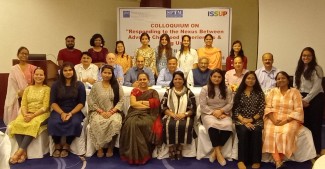
Colloquium on “Responding to the Nexus between Adverse Childhood Experiences and Drug Use”
ISSUP India conducted a one-day colloquium titled “Responding to the Nexus between Adverse Childhood Experiences and Drug Use” with the support of the Paul Hamlyn Foundation and National Drug Dependence Treatment Centre, AIIMS on 15th April...
Stigma, Family and Community
ISSUP are pleased to present the Second Session in the Webinar Series on Stigma and Substance Use. The Second Session will be hosted by ISSUP Nigeria on the topic of 'Stigma, Family and Community'.
Normalisation of Prevention Principles and Practices to Reduce Substance Use Disorders Through an Integrated Dissemination and Implementation Framework
Major research breakthroughs over the past 30 years in the field of substance use prevention have served to:
(1) enhance understanding of pharmacological effects on the nervous systems and the health and social consequences of the use of...
Free Telementoring Mentoring Program Aims to Bring Research-Based Practices and Skills Related to Health Care Professionals Working with People who Use Alcohol
The Alcohol Use and Mental Health Project ECHO is a no-cost virtual program for health care professionals who are looking for up-to-date and research-based information on working with people who use alcohol.
The program, which is only in...

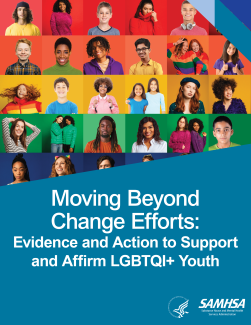
National Substance Use and Mental Health Services Survey (N-SUMHSS), 2021: Data on Substance Use and Mental Health Treatment Facilities
The N‑SUMHSS is a voluntary annual survey of all active substance use and mental health facilities in the United States, its territories, and D.C. The annual report presents findings on the general profile of substance use and mental health...
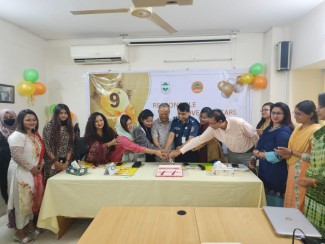
The 9th Anniversary of Ahsania Mission Women Drug Treatment Centre
Social stigma is the main obstacle for female substance users’ treatment.
Social stigma is the reason why females who use substances are unwilling to seek treatment. The rate of substance abuse among the female is frightfully increasing...
Cigarette/Nicotine use - a Gateway to other drug use?
ISSUP The Gambia are pleased to present their upcoming Webinar on Cigarette/Nicotine use.
Exploring the association of meaning in life with psychological distress in male patients with substance use disorder in Pakistan
Abstract
The objective of the present research is to explore the predictive association of meaning in life (presence & search) with psychological distress (depression, anxiety & stress) in people with substance use disorder. Sample of the...
Improving alcohol management in primary health care in Mexico
Abstract
Introduction
Alcohol screening, brief advice and referral to treatment (SBIRT) in primary health care is an effective strategy to decrease alcohol consumption at population level. However, there is relatively scarce evidence...

New Psychoactive Substances in the Homeless Population: A Cross-Sectional Study in the United Kingdom
Abstract
The last few years have seen the emergence of new psychoactive substances among the homeless population, specifically synthetic cannabinoid receptor agonists. The purpose of this study is to investigate the knowledge and...
The impact of childhood trauma and mental disorders among people with opioid dependence
Tom Santo Jr presented at the NDARC Webinar Series on Thursday, 16 February 2023.
How do childhood trauma and mental disorders affect health, treatment and social outcomes among people with opioid dependence?
Research has found that...
Epidemiology of prescription opioid use in Iran
Dr Jaleh Gholami presented at the NDARC Webinar Series on Thursday, 9 March 2023.
Iran, located in the Middle East, has a high rate of opioid consumption and different patterns of drug use. In this webinar, we will present the epidemiology...
I had nothing, and drugs don’t leave”: Young offenders’ perspectives on Alcohol and Other Drugs (AoD)
This webinar looked at the contexts of young offenders’ alcohol and other drug use and the implications for harm reduction strategies.
The importance of multi-level interventions that move beyond ‘victim blaming’ and ‘individual...
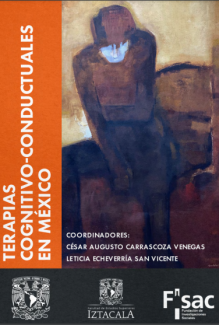
Terapias cognitivo-conductuales en México
El libro que el lector tiene en sus manos pretende reflejar el origen, antecedentes y estado actual a nivel mundial y en México de las terapias cognitivo-conductuales, así como los diferentes ámbitos a su alcance, de los cuales aquí solo...
Situation of Homelessness and Substance Use in India and the Impact of COVID-19 Pandemic
Availability of safe and comfortable shelter is one of the elementary human needs essential for both an individual’s survival as well as social development. However, even in the 21st century, about one fifth of the world’s population...
Bion’s Basic Assumption Groups in the Regimen Treatment of Addictions: Clinical Implications
This article provides reflection on the potential application of Bion’s model of basic assumption groups in patients undergoing midterm inpatient addiction treatment. The clinical implications are discussed in terms of the usability of Bion...
AddictologyIssue 4/2022
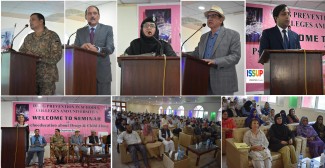
Seminar on “Psycho-Education about Drugs and Child Abuse” for Drug Use Prevention in Schools, Colleges and Universities by Department of Psychiatry Poonch Medical College Rawalakot-AJK in Collaboration with ISSUP Pakistan, Pakistan Psychiatric Society AT
Seminar on “Psycho-Education about Drugs and Child Abuse” for Drug Use Prevention In Schools, Colleges, and Universities organized by Department of Psychiatry Poonch Medical Collage Rawalakot-AJK in collaboration with ISSUP Pakistan Chapter...
The Influence of Persuasive Messages to Quit Smoking by Media Advertisements
INTRODUCTION: The high rate of substance use highlights the need to intervene in the initial use prevention of smoking tobacco. The aim was to determine the efficacy of anti-smoking messages
to motivate smoking cessation.
METHODS: It was...