

Ara
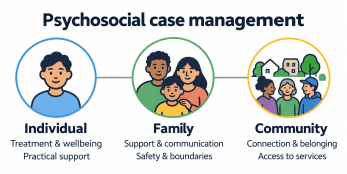
 Treatment
The range of medical, psychological, and social services designed to help individuals reduce or stop substance use and manage substance use disorders. Treatment may include assessment, counselling and behavioural therapies, medication-assisted treatment, withdrawal management, and support for co-occurring mental or physical health conditions. Effective treatment is typically person-centred and evidence-informed, and may be provided in outpatient, community, or residential settings. Treatment aims to improve health and functioning, reduce substance-related harms, and support individuals in moving toward recovery and long-term wellbeing.



The Substance Use Professional’s Guide to Addressing Medical Cannabis in Substance Use Treatment Settings
ISSUP are pleased to present a Webinar on Addressing Medical Cannabis in Substance Use Treatment Settings.
Correction: Interdisciplinary collaboration in the treatment of alcohol use disorders in a general hospital department: a mixed-method study
Background
Interdisciplinary collaborations (i.e., where various disciplines work coordinated and interdependently toward shared goals) are stated to yield higher team effectiveness than multidisciplinary approaches (i.e., where various...
Understanding injecting drug use in Afghanistan: A scoping review
Background
Several reports have described a growing prevalence of illicit drug use in Afghanistan, with recognition of a recent shift from traditional modes of consumption involving inhalation and oral ingestion to injecting drug use.
Obj
...Correlates of treatment engagement and client outcomes: results of a randomised controlled trial of nabiximols for the treatment of cannabis use disorder
Introduction and aims
There is increasing interest and evidence for the use of cannabinoid medications in the treatment of cannabis use disorder, but little examination of the correlates of successful treatment. This paper is a secondary...
Disruptions to U.S. local public health’s role in population-based substance use prevention and response during COVID-19
Background
The COVID-19 emergency has tested the public health, medical, and public safety infrastructure of the United States (U.S.) in unprecedented ways. As the focal point for public health in their communities, local health...
Mortality and life-years lost following subsequent physical comorbidity in people with pre-existing substance use disorders: a national registry-based retrospective cohort study of hospitalised individuals in Czechia
Summary
Background
Substance use disorders constitute a major global public health problem, attributable largely to their subsequent comorbidity with other health conditions. This study aimed to investigate the risk of all-cause death and...
Patterns of Health Care Use 5 Years After an Intervention Linking Patients in Addiction Treatment With a Primary Care Practitioner
Abstract
Importance Substance use disorders are associated with high rates of emergency department (ED) use and challenges engaging with primary care services.
Objective To examine 5-year health care engagement and utilization outcomes...
Prevención del uso problemático de alcohol en contextos de ocio de la población juvenil
Con motivo del Día Mundial Sin Alcohol, ISSUP Chile invita a participar de un webinar para compartir visiones, estrategias u oportunidades para promover el consumo de alcohol de bajo riesgo en espacios recreativos nocturnos en nuestra población más joven.
INL DDR Partners Call - Quality Assurance
This month on November 9th, 2022, the International Narcotics and Law Enforcement Affairs (INL) DDR Partners meeting offered a discussion on quality assurance and included two presentations:
- Building Quality Improvement for SUD Treatment...
“La Situación de la salud mental, la violencia contra la Mujer en el contexto de la post pandemia del COVID19” avances, retos y desafíos
ISSUP Perú quiere invitarle a su próximo Webinar.
Prevention of Opioid Use Education Materials
Mid-America Addiction Technology Transfer Center (MATTC) partnered with the Ethnic Communities Opioid Response Network in Missouri, the Addiction Policy Forum, and the Opioid Response Network (ORN in IA, KS, MO, and NE) to translate 5...
World AIDS Day 2022 Event: Challenges and Perspectives from SUD Treatment Practice
In acknowledgement of World AIDS Day, ISSUP Italy would like to invite you to attend their upcoming Webinar.
First Presentation: The Post COVID-19 AIDS Challenges
The characteristics of HIV infection and how they have evolved over the...
ADDICTUS 2022, 4° Forum Nazionale sulle Dipendenze Patologiche
ADDICTUS 2022
IV° FORUM NAZIONALE SULLE DIPENDENZE PATOLOGICHE
Centro Congressi di Riva del Garda (TN) 2 - 4 dicembre 2022
Responsabili scientifici: Fabio Lugoboni, Anna Franceschini, Stefano Canali
VENERDI’ 2.12.22
Disturbi del...
Substance Use Prevention: A review of what it means and requires through the language of football/soccer
ISSUP presents Part Two of a two-part webinar on the topic of Substance Use Prevention.
Bi-Monthly Webinar: ISSUP Nigeria Knowledge Update Series (Fifteenth Session)
ISSUP Nigeria would like to invite you to their next Bi-Monthly Webinar in the Knowledge Update Series. This Webinar will centre on 'Substance Use Disorders (SUDs) in Schizophrenia: Current Approach to Management'.
Substance use and homelessness
This research explored changes in the tobacco, alcohol and illicit drug use of people experiencing homelessness in the UK. Particularly, the researchers examined the following questions:
- what are the characteristics of people with...
UNODC launched a Training of Trainers (ToT) Programme on the Universal Treatment Curriculum (UTC) Advanced Courses 9-15 in Pakistan
|
|
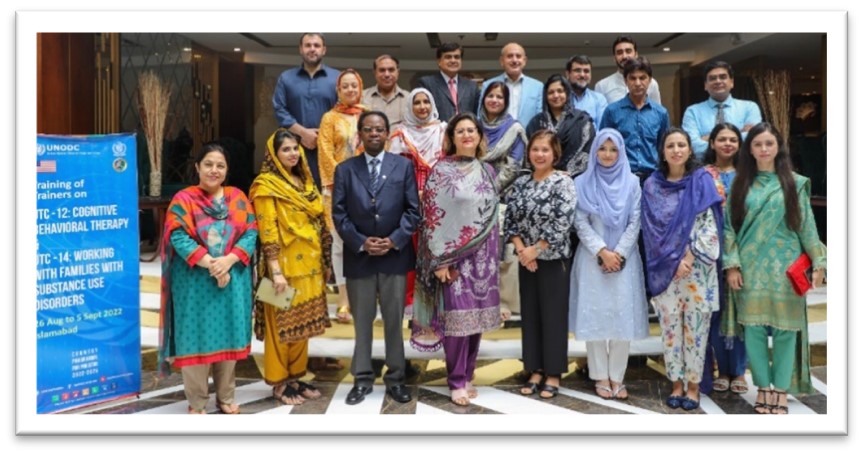 Ensuring continued learning and offering opportunities to substance use dependence treatment professionals to learn advanced and evidence-based treatment techniques and strategies is one of the important missions of UNODC. In...
UNODC Trains Team of National Trainers from Central Asia on UTC 16 and UTC 19
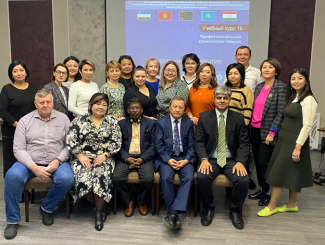
The UNODC Regional Office for Central Asia supported a training of trainers (ToT) on “Course 16 – Advanced Clinical Skills “ and “Course 19 – “Enhancing Group Facilitation Skills” which took place in person in Almaty, Kazakhstan on 24-29...
Dois Paises e um mesmo Problema: Prevenção na Pediatria
O ISSUP Brasil apresentou um webinar com pediatras discutindo formas de prevenção e como funcionam os problemas causados pelo uso de substâncias.
Dois pediatras discutem sobre os meios de se fazer prevenção e como funciona os problemas...
Substance Use Prevention: A review of what it means and requires through the language of football/soccer
ISSUP presents Part One of a two-part webinar on the topic of Substance Use Prevention.