
Ara
 Treatment
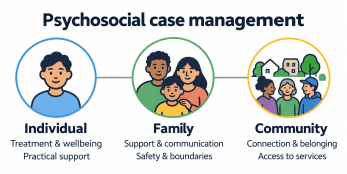
The range of medical, psychological, and social services designed to help individuals reduce or stop substance use and manage substance use disorders. Treatment may include assessment, counselling and behavioural therapies, medication-assisted treatment, withdrawal management, and support for co-occurring mental or physical health conditions. Effective treatment is typically person-centred and evidence-informed, and may be provided in outpatient, community, or residential settings. Treatment aims to improve health and functioning, reduce substance-related harms, and support individuals in moving toward recovery and long-term wellbeing.


Sulphated dehydroepiandrosterone serum levels are reduced in women with alcohol use disorder and correlate negatively with craving: A sex-separated cross-sectional and longitudinal study
Abstract
Previous studies have established a role of sex hormones in alcohol use disorder (AUD).Only few clinical investigations with low numbers of patients with AUD have focused on the sulphated form of dehydroepiandrosterone (DHEA-S)...
From binge eating to binge drinking: A new and robust paradigm for assessing binge ethanol self-administration in male rats
Abstract
Animal models of alcohol (ethanol) self-administration are crucial to dissect the neurobiological mechanisms underlying alcohol dependence, yet only a few of these induce pharmacologically relevant levels of alcohol consumption...
UTC-2 Training for Addiction Treatment Professionals of South Punjab, Pakistan.
“Training of Addiction Professionals for Pakistan Addiction Treatment Practitioners”
February 22-25, 2022 (8 am to 6pm)
Multan, Islamic Republic of Pakistan
- Description:
- Training Name: Training of Addiction Professionals for...
Law Enforcement in Prevention Programming
An APSI Prevention Talk on how to appropriately engage law enforcement in the implementation of evidence-based prevention strategies, with specific reference to the prevention of substance use.
Estudio de seroprevalencia al SARS-CoV-2 en pacientes en tratamiento por adicciones en Madrid
Resumen
Fundamentos: Los pacientes con adicción son un colectivo vulnerable en el que apenas hay datos sobre la infección y gravedad de la COVID-19. El objetivo de este estudio fue analizar la seroprevalencia frente a SARS-CoV-2 en...
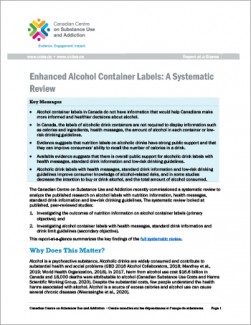
Enhanced Alcohol Container Labels: A Systematic Review (Report at a Glance)
To investigate how alcohol container labels can be used to build public awareness, the Canadian Centre on Substance Use and Addiction commissioned Enhanced Alcohol Container Labels: A Systematic Review and developed a summary of the report...
HealthCare educational differences in pain management, adverse childhood experiences and their relationship to substance use disorder education
The Ohio Attorney General selected experts from a number of academic fields to the Scientific Committee on Opioid Prevention and Education (SCOPE) to help the State of Ohio in tackling the opioid crisis in the United States. The focus of...
The prevalence of people who inject drugs among those with HIV late presentation: a meta-analysis
Early detection of Acquired Immune Deficiency Syndrome allows infected people to use prophylaxis against opportunistic infections and beginning immediate treatment for secondary complications. People who receive treatment benefit from...
The prevalence and pattern of cannabis use among patients attending a methadone treatment clinic in Nairobi, Kenya
Cannabis is the most widely used illegal substance in the world, with a global prevalence of 4% among people aged 15 to 64 years and a recent trend of growing use. Cannabis usage can have negative health consequences, such as impaired...
Staff preferences towards electronic data collection from a national take-home naloxone program: a cross-sectional study
In Norway, overdose mortality is over 260 per year, with opioids being implicated in the majority of cases. In 2014, the Norwegian government announced a government-funded nationwide overdose prevention initiative in response to the country...
Barriers to support for people experiencing problem substance use and homelessness: Reading list
The second webinar in our series on homelessness and substances use was presented by Dr Hannah Carver who focused on the different barriers that people experience when trying to access support and the evidence base for different...

An overview of global homelessness and strategies for systemic change
The Institute of Global Homelessness (IGH) drives a global movement to end street homelessness. Their vision is a world where everyone has a home that offers security, safety, autonomy, and opportunity.
This paper, published by IGH...
European responses to the needs of people who experience homelessness and use drugs
Summary:
This paper explores the evidence base for services designed to meet the needs of people who experience homelessness and use drugs. Through a delimited analysis of existing systematic and rapid evidence reviews, it considers the...
Provision of peer support at the intersection of homelessness and problem substance use services
People who experience homelessness are often described as hard to reach and face marginalisation and exclusion.Peer support, which refers to the support provided by people who have lived experiences of a particular situation, has been...
What treatment and services are effective for people who are homeless and use drugs?
People who experience homelessness experience disproportionately high rates of drug use and associated harms, yet barriers to services and support are common. This review explores the effects of interventions for this population on...
What constitutes effective problematic substance use treatment from the perspective of people who are homeless?
Despite people who are homeless experiencing higher rates of substance use, individuals face barriers when trying to access and engage with treatment services.
This systematic review and meta-ethnography explores the view of effective...
Estimación del coste social del consumo de drogas ilegales en Catalunya
Resumen
Mundialmente, así como en España, el consumo de drogas ilegales es uno los principales contribuyentes a la carga mundial de morbilidad. Cuantificar los costes que las drogas ilegales imponen a la sociedad es clave para la toma de...
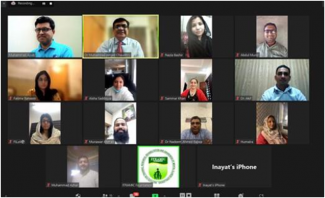
Training on Universal Treatment Curriculum 01: Physiology and Pharmacology for Addiction Professionals by ITRAMIC Foundation
In order to endorse the evidence-based practices in the field of addiction treatment in Pakistan, ITRAMIC Foundation Lahore organized virtual training for treatment staff and professionals from 22nd to 29th October 2021, in collaboration...
An estimation of the social cost of illicit drug consumption in Catalonia
Abstract
Worldwide, as well as in Spain, the use of illegal drugs is among the major contributors to the global burden of disease. Quantifying the costs that illegal drugs impose on society is key in terms of decision-making. The objective...
Alcohol and suicide
Drinking alcohol can increase someone's risk of dying by suicide. This is connected to both the impact of long-term alcohol use and the immediate effects of drinking.
Samaritans and Suicide Prevention Consortium have conducted research...