

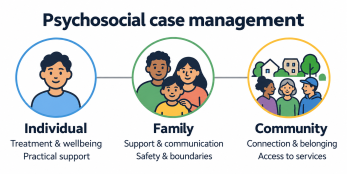
Ara
 Treatment
The range of medical, psychological, and social services designed to help individuals reduce or stop substance use and manage substance use disorders. Treatment may include assessment, counselling and behavioural therapies, medication-assisted treatment, withdrawal management, and support for co-occurring mental or physical health conditions. Effective treatment is typically person-centred and evidence-informed, and may be provided in outpatient, community, or residential settings. Treatment aims to improve health and functioning, reduce substance-related harms, and support individuals in moving toward recovery and long-term wellbeing.



The Contribution of Health Behaviours to Socioeconomic Inequalities in Health
This study explores the "role of health behaviours in explaining socioeconomic inequalities in health" through a systematic review.
Examining Differences in Breath Alcohol Concentration (BrAC) Levels and Hazardous Drinking by Smoking Status among a Sample of College Student Bar Patrons
A study published in the Journal of Community Health, Examining Differences in Breath Alcohol Concentration (BrAC) Levels and Hazardous Drinking by Smoking Status Among a Sample of College Student Bar Patrons, explores the relationship...
Webinar: Treatment and Prevention of Opioid Use Disorder: Overview
A webinar on opioid use disorder by Dr. Dennis McCarty is now available through the Addiction Technology Transfer Centre (ATTC) website.
The hour long webinar took place in April 2018 and discusses treatment and prevention. The webinar...
Transferring Patients from Methadone to Buprenorphine: The Feasibility and Evaluation of Practice Guidelines
ABSTRACT
Introduction and Aims: Transfer from methadone to buprenorphine is problematic for many opioid-dependent patients, with limited documented evidence or practical clinical guidance, particularly for the range of methadonedoses...
Cost of Provision of Opioid Substitution Therapy Provision in Tijuana, Mexico
Abstract
Background
Mexico recently enacted drug policy reform to decriminalize possession of small amounts of illicit drugs and mandated that police refer identified substance users to drug treatment. However, the economic implications...
OPIÁCEOS: Guías Clínicas SOCIDROGALCOHOL basadas en la evidencia científica
Este documento forma parte de las Guías Clínicas SOCIDROGALCOHOL, basadas en la evidencia científica. Es de utilidad para los profesionales que atienden a personas con problemas por consumo de heroína y otros opiáceos.
La evidencia...

Drug Addiction: Is Brain Stimulation the Answer?
Transcranial magnetic brain stimulation has allowed researchers to reduce how "excited" the brains of chronic cocaine and alcohol users become in response to drug cues.
Drug addiction is a chronic disease affecting 5.4 percent of the...
Cannabinoids in Glioblastoma Therapy: New Applications for Old Drugs
Glioblastoma (GBM) is the most malignant brain tumor and one of the deadliest
types of solid cancer overall. Despite aggressive therapeutic approaches consisting of
maximum safe surgical resection and radio-chemotherapy, more than 95% of...
Factors Related to Simultaneous Cocaine and Alcohol Use for Clients in Treatment
Research shows that alcohol and cocaine are frequently used simultaneously.
Abuse-Deterrent Opioid Formulations
Abstract
Abuse-deterrent opioid formulations have been suggested as one way to decrease the abuse, addiction, and overdose of orally prescribed opioids. Ten oral opioid formulations have received abuse-deterrent labeling by the U.S. Food...
Genetic Etiology for Alcohol-Induced Cardiac Toxicity
Abstract
Background: Alcoholic cardiomyopathy (ACM) is defined by a dilated and impaired left ventricle due to chronic excess alcohol consumption. It is largely unknown which factors determine cardiac toxicity on exposure to alcohol.
Obje...
Effectiveness Bank Matrix Cell: Psychosocial Treatment; Individuals, Not Programmes
Every treatment involves direct or indirect human interaction, but this cell is about interventions in which interaction is the main ingredient, from mutual support groups through to professionally delivered psychological programmes....

Family Rejection as a Predictor of Suicide Attempts and Substance Misuse among Transgender and Gender Nonconforming Adults
A study published in the LGBT Health Journal explores family rejection as a predictor for substance misuse in transgender and gender nonconforming adults.
Taking data from the National Transgender Discrimination Survey the study involved...
Alcohol Consumption Reduction among a Web-Based Supportive Community Using the Hello Sunday Morning Blog Platform: Observational Study
ABSTRACT
Background: Alcohol misuse is a major social and public health issue in Australia, with an estimated cost to the community of Aus $30 billion per annum. Until recently, a major barrier in addressing this significant public health...
A Double Blind, Placebo Controlled Trial of Modafinil for the Treatment of Cocaine Dependence without Co-Morbid Alcohol Dependence
Like methadone for heroin dependence, modafinil is an oral medication with similar effects to cocaine but milder, slower in onset and longer-acting - properties which might help plug the gap in effective pharmacotherapies for dependence on...
May Student Membership Update
In our second Student Membership Update we have sourced some funding and research opportunities, and events that we are sure will be of interest.

Racial & Ethnic Disparities in Outpatient Treatment Completion
A study exploring the completion of outpatient substance use disorder treatment has highlighted racial and ethnic health disparities.
The research team utilised a sample of 416,224 outpatient discharges in the study which found people of...
National Prevention Week 2018
National Prevention week led by the Substance Abuse and Mental Health Administration (SAMHSA) will take place from 13-19th May 2018.
Each day focus will fall on a different topic - starting off with the theme of "Promotion of Mental Health...
Health Communications in Tobacco Prevention and Control
This user guide focuses on how comprehensive tobacco control programs can deliver effective health communications. Best Practices for Comprehensive Tobacco Control Programs—2014 recommends mass-reach health communication interventions as...
The Effect of Branding to Promote Healthy Behavior: Reducing Tobacco Use among Youth and Young Adults
Abstract
Policy interventions such as public health mass media campaigns disseminate messages in order to improve health-related knowledge, attitudes, beliefs and behaviors at the population level. Only more recently have campaigns that...