Παράκαμψη προς το κυρίως περιεχόμενο

User account menu

  • Είσοδος

Γλώσσες

  • English
  • Français
  • Português
  • Español
  • العربية
  • Pусский

Κεντρική πλοήγηση

  • About ISSUP

    • 10 Years of ISSUP
    • ISSUP Rationale
    • Membership
      • Membership Criteria
      • Code of Ethics
      • Who is ISSUP for?
    • News
      • Newsletters
    • ISSUP Events
    • International Partners
    • Governance
    • ISSUP Scientific Council
    • Friends of ISSUP (USA)
    • ISSUP Awards
      • Evidence-Based Award
      • Local Initiative Award
      • Services Award
      • Excellence in Training Provision
      • Outstanding Contribution to ISSUP Award
    • In Memoriam
    • Acknowledgements
    • ISSUP Website Guides
    • Contact ISSUP
    • FAQs - Frequently Asked Questions
  • Professional Development

    • Online Learning Hub
      • How to Register
      • UTC Self Led Courses
    • Universal Curricula (UC)
      • Currículo de Prevenção Universal
      • Currículo de Tratamento Universal
      • Universal Recovery Curriculum
    • Resources
      • Drug Data Hub
      • Glossary
      • The ISSUP Exchange
      • ISSUP Webinars
      • IEP
      • INEP Plus
      • Prevention Insights Video Series
      • Prevention Lists
      • Recovery Support
      • Quality in Treatment
      • ICAP certification
      • HealthEKnowledge
    • Jobs and Opportunities
  • Knowledge Share

    • Search in the Knowledge Share
    • ADDICTOLOGY Journal
      • Latest Issue
  • National Chapters

    • Africa
      • ISSUP Botswana
      • ISSUP Côte d’Ivoire
      • ISSUP Egypt
      • ISSUP Ethiopia
      • ISSUP The Gambia
      • ISSUP Ghana
      • ISSUP Kenya
      • ISSUP Liberia
      • ISSUP Mauritius
      • ISSUP Morocco
      • ISSUP Namibia
      • ISSUP Nigeria
      • ISSUP South Africa
      • ISSUP Tanzania
      • ISSUP Togo
      • ISSUP Uganda
      • ISSUP Zambia
    • The Americas
      • ISSUP Argentina
      • ISSUP The Bahamas
      • ISSUP Barbados
      • ISSUP Brazil
      • ISSUP Canada
      • ISSUP Chile
      • ISSUP Colombia
      • ISSUP Ecuador
      • ISSUP El Salvador
      • ISSUP Guatemala
      • ISSUP Mexico
      • ISSUP Panama
      • ISSUP Paraguay
      • ISSUP Peru
      • ISSUP United States
    • Asia
      • ISSUP Afghanistan
      • ISSUP Bangladesh
      • ISSUP India
      • ISSUP Indonesia
      • ISSUP Kazakhstan
      • ISSUP Korea
      • ISSUP Lebanon
      • ISSUP Malaysia
      • ISSUP in Pakistan
      • ISSUP Philippines
      • ISSUP Qatar
      • ISSUP Singapore
      • ISSUP Sri Lanka
      • ISSUP Thailand
      • ISSUP Türkiye
      • ISSUP United Arab Emirates
      • ISSUP Uzbekistan
      • ISSUP Vietnam
    • Europe
      • ISSUP Bosnia & Herzegovina
      • ISSUP Czech Republic
      • ISSUP Greece
      • ISSUP Italy
      • ISSUP Spain
      • ISSUP Ukraine
      • ISSUP United Kingdom
    • Oceania
      • ISSUP Australia
      • ISSUP Fiji
      • ISSUP New Zealand
    • How to Become a National Chapter
    • ISSUP National Chapters' Advisory Committee
    • ISSUP National Chapter Spotlight
  • Events

    • Search through all events
    • ISSUP Events
      • Accra 2026
      • Indonesia 2025
      • Thessaloniki 2024
      • Buenos Aires 2023
      • Manila 2022
      • Abu Dhabi 2022
      • Virtual 2021
      • Africa 2020
      • Vienna 2019
      • Nairobi 2018
      • Cancún 2017
      • Campinas 2016
      • Bangkok 2015
  • Networks

    • A–Z
  • My ISSUP

    • Member Directory
    • Αίτηση συμμετοχής

Treatment Practice

Treatment Practice

Moderators

Profile picture for user livia.edegger
Livia
ISSUP
Profile picture for user MoralesBA
Brian Morales
U.S. Department of State
DiscussionsΑρχείαΕικόνεςVideosΣύνδεσμοιΓεγονόταKnowledge ShareΌλες
Livia

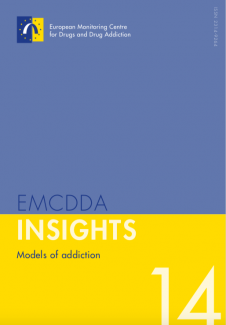
Models of Addiction

Shared by Livia - 27 December 2018
Format
Book
Published by / Citation
EMCDDA

The science of addiction is complicated, and it continues to be a field where the debate over definitions, models, theories, and the most appropriate ways to respond continues. 

EMCDDA's Insight Review provides a critical analysis of the different models of addiction.

The researchers explore ways in which the different models could be arranged into a collected structure that can be used to guide prevention, assessment and treatment practices.

The authors hope that the report will support the reader in developing an understanding of the complicated issues surrounding addiction and that it...

Μεταφράσεις
Қазақ
Pусский
Italiano
  • Διαβάστε περισσότερα για το Models of Addiction
  • ISSUP members can join Networks to comment – Sign in or become a member
Livia

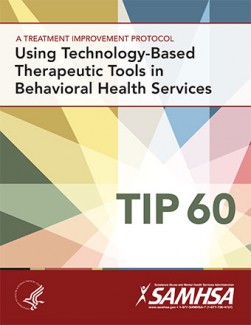
Using Technology-Based Therapeutic Tools in Behavioural Health Services

Shared by Livia - 20 December 2018
Using Technology-Based Therapeutic Tools in Behavioural Health Services
Format
News

For anyone interested in digital health behaviour interventions this manual from SAMHSA will prove interesting. Exploring how technology-assisted care can be implemented, the value of technology based assessments and the ways in which the use of technology can remove barriers people may face when accessing or seeking treatment . 

This manual, Using Technology-Based Therapeutic Tools in Behavioural Health Services, is aimed at prevention professionals, those involved in planning programmes and project managers. It forms part of the TIP (Treatment Improvement Protocols) series with a focus on...

Μεταφράσεις
Қазақ
Bahasa Indonesia
Italiano
Urdu
  • Διαβάστε περισσότερα για το Using Technology-Based Therapeutic Tools in Behavioural Health Services
  • ISSUP members can join Networks to comment – Sign in or become a member
Livia

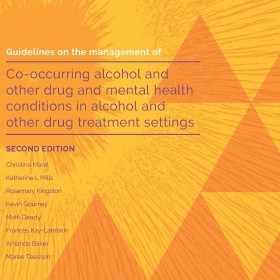
Guidelines on the Management of Co-Occurring Alcohol and Other Drug and Mental Health Conditions in Alcohol and Other Drug Treatment Settings

Shared by Livia - 20 December 2018
Guidelines on the management of co-occurring alcohol and other drug and mental health conditions in alcohol and other drug treatment settings (second edition)
Format
Website
Published by / Citation
National Centre of Research Excellence in Mental Health and Substance Use (NARDC)

First published in 2009 and updated in 2014 the  Guidelines on the Management of Co-Occurring Alcohol and Other Drug and Mental Health Conditions in Alcohol and Other Drug Treatment Settings are offered in tandem with an online training programme. 

Created by the National Centre of Research Excellence in Mental Health and Substance Use (NARDC) and funded by the Australian Government Department of Health, the resource is free to access through the NHMRC. It was developed in consultation and collaboration with clinicians, researchers, consumers, and carers from across Australia.

The guidelines...

  • Διαβάστε περισσότερα για το Guidelines on the Management of Co-Occurring Alcohol and Other Drug and Mental Health Conditions in Alcohol and Other Drug Treatment Settings
  • ISSUP members can join Networks to comment – Sign in or become a member
Edie

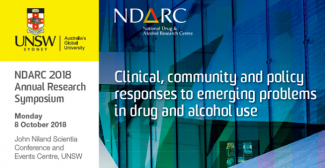
2018 NDARC Annual Research Symposium - Presentations

Shared by Edie - 20 December 2018
Format
Website

A number of presentations from the 2018 NDARC Annual Research Symposium, which was held on Monday, 8 October 2018, have been made available. 

The theme of the event was Clinical, community and policy responses to emerging problems in drug and alcohol use and the symposium's key topics included:

  • Embedding evaluation in routine delivery of services
  • Emerging trends in drug use, harms, and markets: Findings from the Drug Trends Program 2018
  • Treatment within prison settings
  • Working with Aboriginal communities
  • Working with NGOs
  • Criminal justice responses
  • Eliminating HCV among people who...
Μεταφράσεις
Bahasa Indonesia
  • Διαβάστε περισσότερα για το 2018 NDARC Annual Research Symposium - Presentations
  • ISSUP members can join Networks to comment – Sign in or become a member
Jose Luis Vazquez Martinez

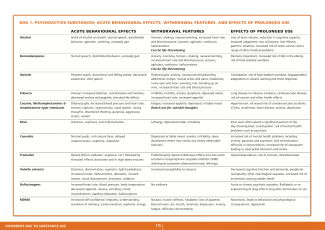
mhGAP Psychoactive substances: acute behavioral effects, withdrawal features, and effects of prolonged use

Jose Luis Vazquez Martinez - 13 December 2018
Page 115 of the mhGAP Intervention Guide provides detailed information on signs and symptoms of acute behavioural effects, withdrawal features, and effects of prolonged use of different psychoactive substances. Full text in English is available at: https://www.issup.net/knowledge-share/publications...
  • Διαβάστε περισσότερα για το mhGAP Psychoactive substances: acute behavioral effects, withdrawal features, and effects of prolonged use
  • ISSUP members can join Networks to comment – Sign in or become a member

Σελιδοποίηση

  • First page « First
  • Προηγούμενη σελίδα ‹ Previous
  • …
  • Σελίδα 12
  • Σελίδα 13
  • Σελίδα 14
  • Σελίδα 15
  • Σελίδα 16
  • Σελίδα 17
  • Σελίδα 18
  • Σελίδα 19
  • Τρέχουσα σελίδα 20

Upcoming Events

There aren't any upcoming events
All Events
Contact Us

Stay Connected

Newsletter

ISSUP is funded by the U.S. Department of State via the Bureau of International Narcotics and Law Enforcement Affairs (INL). INL works to keep Americans safe by countering crime, illegal drugs, and instability abroad.

Copyright © International Society of Substance Use Prevention and Treatment Professionals Privacy Policy