Cerca
 Populations
Distinct groups of people within a society who share certain characteristics such as age, gender, geographic location, socioeconomic status, cultural background, or exposure to particular risk factors that may influence patterns of substance use, vulnerability to substance use disorders, and access to services. In the context of substance use systems, identifying and understanding different populations helps guide the design of prevention, treatment, recovery, and policy responses that are appropriate, equitable, and responsive to specific needs. Examples may include youth, women, people experiencing homelessness, individuals in the criminal justice system, or communities affected by specific social or economic conditions.



World Drug Report 2025
On July 2nd, 2025, ISSUP had the privilege of hosting a webinar outlining highlights from the 2025 edition of the World Drug Report (WDR), presented by Ms. Giovanna Campello, Chief of the Prevention, Treatment and Rehabilitation Section at...
Risk Behavior Among Slovak and Czech Adolescents Through the Lens of Self-Regulation, Prosociality, and Antisociality
INTRODUCTION:
In the present article, we focused on the relationship between risk behaviour in adolescents, self-regulation, pro-sociality and anti-sociality. We work under the assumption that the development of the ability to self...
Addictology
Issue 3/2024
Addictions in Potential Sperm Donors: What is Possible to Control?
INTRODUCTION: Third-party sperm donation represents the sole viable option for conception for a considerable number of infertile couples. The donation process is predicated on ensuring the high quality and safety of the donated cells. While...
Addictology
Issue 3/2024
Webinar reflection: Exploring Multiple Pathways of Recovery
ISSUP, in collaboration with Faces & Voices of Recovery, has launched a new Global Recovery Network webinar series to spotlight diverse perspectives on recovery. The first webinar featured Dr. Haner Hernández, a respected expert in the...
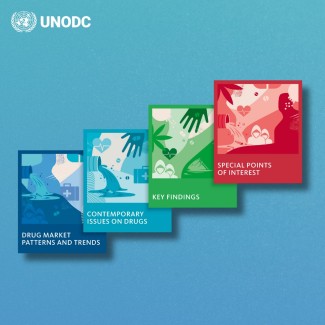
UNODC World Drug Report
A global reference on drug markets, trends and policy developments, the World Drug Report offers a wealth of data and analysis and in 2025 comprises several elements tailored to different audiences.
From Policy to Possibility: Rethinking Municipal Impact Through Intersectionality and Prevention
This blog post explores how Sweden’s municipal policymaking often falls short of its stated commitments to equality and evidence-based governance—particularly when it comes to addressing intersecting identities and structural inequalities...

Improving reach and access to health promotion and preventive services for vulnerable children and adolescents
Across Europe, one in four children faces poverty or social exclusion, with vulnerable groups—such as migrants, refugees, and children from disadvantaged families—bearing the greatest burden. These disparities were worsened by the COVID-19...
Key findings from the 2024 European School Survey Project on Alcohol and Other Drugs (ESPAD)
This publication presents key findings from the 8th round of the European School Survey Project on Alcohol and Other Drugs (ESPAD), conducted in 2024 among 113,882 students aged 15–16 across 37 European countries.
Marking 30 years of...
Psychologists are innovating to tackle substance use by building new alliances in treatment efforts
Recent data from the U.S. highlights a concerning rise in substance use and related harms. In 2022, over 109,000 drug overdose deaths were recorded—a 54% increase since 2019. The majority involved illicit fentanyl, often mixed with...
Highlights from the 2025 UNODC World Drug Report
ISSUP in collaboration with UNODC present a webinar highlighting key findings from the 2025 edition of the UNODC World Drug Report. The session is presented by Giovanna Campello, Chief of the Prevention, Treatment and Rehabilitation Section at the United Nations Office on Drugs and Crime (UNODC).
Smoking and bladder cancer: insights into pathogenesis and public health implications from a bibliometric analysis (1999–2023)
Background
Cigarette smoking is a major risk factor for bladder cancer. Harmful substances in tobacco smoke can damage cells and lead to cancer. Understanding this link is important for better prevention and treatment.
Objective
This study...

Use of Health Services by Residents at a Seniors-only Living Facility
The objective of the study was to compare the use of medical and dental services by seniors residing at a seniors-only living facility and in the general community. It was a quantitative study, among 50 residents of the living facility and...
The burden and risks of emerging complications of diabetes mellitus
Abstract:
While the traditional complications of diabetes mellitus—such as cardiovascular disease—are well recognized, advances in treatment and increased life expectancy have revealed a new set of lesser-known complications that are...
Screen4Success - Talk. They Hear You: Screening for Health, Wellness, and Well-being
Screen4Success – A Tool for Health, Wellness, and Well-being Assessment
SAMHSA’s new “Talk. They Hear You.”® campaign mobile app helps parents and caregivers prepare for some of the most important conversations they may ever have with...

National Training Program on Prevention in Schools: The Paraguayan Experience
EXECUTIVE SUMMARY
In 2024, a public call from the Ministry of Education and Science for the contracting of a higher education institution to design and implement a training programme in strategies for preventing psychoactive substance...
Maternal cannabis use disorder and offspring behavioral outcomes: findings from a linked data cohort study
Few studies have looked into how cannabis use during pregnancy affects the development of disruptive behavioral disorders (DBDs) in children, often using small sample sizes and self-reported data. This study aimed to understand the link...
The changing DNA of serious and organised crime
Europol’s EU Serious and Organised Crime Threat Assessment (EU-SOCTA) 2025, published today, reveals how the very DNA of crime is shifting – reshaping the tactics, tools and structures employed by criminal networks.
The EU-SOCTA offers one...
Spotlight on Dishon: New Youth Focal Point for ISSUP Kenya
My Reflections as a Youth Leader in Prevention: The Journey so far

Using Social Media to Promote Life Skills Among Adolescents: A Debate on Opportunities, Challenges, and Implications for Health and Education
Background
The digitalization of society blurs the boundaries between the analog and digital worlds, providing opportunities such as telemedicine and global connectivity. However, it also introduces risks, including cyberbullying, addiction...
Substance Use Monitoring and Surveillance: Challenges faced by LMICs
Substance use surveillance has emerged as a crucial public health strategy across Africa, particularly in light of the alarming rise in substance use among adolescents (1). This trend poses significant health risks that require a...