


Поиск
Professional Development
Ongoing education aimed at enhancing the competencies of the substance use workforce to deliver evidence-based care effectively, including accreditation.

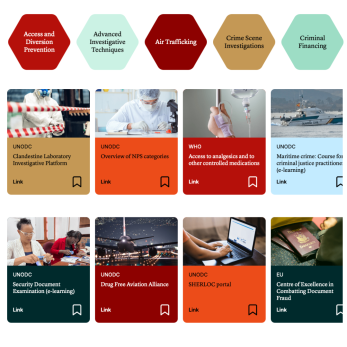
Connecting Evidence, Prevention, Law Enforcement and Community Action: Key Insights from ISSUP 2026
How do we go about translating evidence into effective action, strengthen prevention, address drug-related crime, improve access to treatment and recovery support, and build safer, healthier communities?
This age-old question was explored...

Faith-Based Approaches: The Role of Faith and Religious Institutions in Addressing Substance Use
Faith, spirituality and faith-based organisations can play an important role in addressing substance use, supporting recovery and responding to related vulnerabilities as well as crime. Across different cultural and community settings, they...
From Evidence to Practice: Advances in Substance Use Disorder Care
Evidence-based interventions can improve prevention, treatment and recovery outcomes, but knowing what works does not guarantee that people will benefit. Effective responses depend on trained professionals, supportive systems, coordinated...
Handbook on the crime prevention guidelines: Making them work
The present Handbook is one of a series of practical tools developed by the United Nations Office on Drugs and Crime (UNODC) to support countries in the implementation of the standards and norms in crime prevention and criminal justice...
We know what works, why don’t we use it? Some reflections from our work with Member States
For more than 15 years, UNODC has been promoting evidence-based practice on drug use, as well as treatment, harm reduction and recovery services for people who use drugs and people with drug use disorders, both in the community and when in...
Recent U.S. drug alerts: Turning emerging evidence into workforce preparedness
Recent United States alerts on fentanyl analogues, medetomidine, cychlorphine, drug mixtures and concentrated 7-OH products highlight evolving challenges across the substance use workforce. They invite us to review local preparedness, understand testing limitations and strengthen links between frontline services, laboratories and public-health partners. A useful response brings together clinical, prevention, recovery and peer perspectives, with clear responsibilities for turning relevant findings into action. For the global ISSUP community, these alerts offer lessons in preparedness while requiring careful consideration of local evidence, resources and service arrangements. Staying informed through trusted sources and sharing practical responses through ISSUP can help translate emerging knowledge into safer care and more responsive support for individuals, families and communities.

Substance Use and Health Competencies for All Prescribers
Developed by the Canadian Centre on Substance Use and Addiction (CCSA), the Workforce Competencies provide an evidence-informed framework outlining the knowledge, skills, values and behaviours needed by professionals working in substance...
Foundational Habits for Early Career Professionals
This webinar discusses the how, why, and what of foundational habits. Foundational habits are beneficial actions we make part of our routine to be successful long-term.
The Role of Law Enforcement in the Reduction of Substance Use and Other Behavioral Health Risks: Substance Use as a Focus: United States as an Example
This paper explores how law enforcement can contribute to the prevention of substance use and other behavioural health risks beyond their traditional enforcement role. Using the United States as an example, it argues that police and other...

UN Toolkit on Synthetic Drugs
The UN Toolkit on Synthetic Drugs is a practical online resource coordinated by UNODC that brings together tools, guidance, and operational resources from across the UN system to support responses to the global synthetic drug problem...
A European Guide on Dual disorders: Health and Social Responses
This European guide by EUDA highlights the importance of addressing dual disorders, where mental health conditions and substance use disorders occur at the same time. These co-occurring conditions are common and often lead to poorer health...
NEW Security Document Examination module in the UN Toolkit on Synthetic Drugs
UNODC has launched a new Security Document Examination module within the UN Toolkit on Synthetic Drugs, developed in collaboration with the UNODC Laboratory and Scientific Services. The module aims to help law enforcement, border control...

From Practice to Publication: Sharing Your Work in the Substance Use Field
ISSUP Global presents a webinar titled, "From Practice to Publication: Sharing Your Work in the Substance Use Field."
Perspectives on addiction-related problems in Vietnam
The article provides an overview of key substance use and addictive behaviors in Vietnam, alongside the development of addiction science, drawing from a synthesis of literature and the authors' perspectives. Over the last two decades, the...

The Promotion of Alcohol, Cannabis, Gambling, Tobacco and Vaping Products: A Comparative Analysis of the Potential of Legal Frameworks to Limit Exposure Among Minors
Promotions deemed attractive to minors concerning alcohol, cannabis, gambling, tobacco and vaping are circulating in media outlets and places where minors are very active. This report examines the different legal frameworks in Canada that...
International Consortium of Universities for Drug Demand Reduction
This presentation was featured at Indonesia 2025, on the 17.09.2025.
Strengthening Leadership in Prevention: Sharing Insights from the Development of an Evidence-Based Workshop
ISSUP Global presents its webinar titled “Strengthening Leadership in Prevention: Sharing Insights from the Development of an Evidence-Based Workshop.”
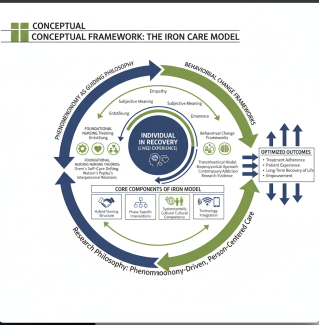
The Integrated Recovery-Oriented Nursing (IRON) Care Model: A Theoretical Framework for Optimizing Addiction Treatment Outcomes
Abstract
Title: The Integrated Recovery-Oriented Nursing (IRON) Care Model: A Theoretical Framework for Optimizing Addiction Treatment Outcomes
Authors: Ahmad Muneer, MSc, RN; Hessa Abdel Qader, MSc, RN
Affiliations: Maudsley Health, Al...
Global Launch – Universal Nurses Addiction Curriculum (UNAC)
On June 26, 2025, the International Consortium of Universities for Drug Demand Reduction (ICUDDR) marked an important milestone with the global launch of the Universal Nurses Addiction Curriculum (UNAC). This initiative, supported by the U...
Global Opportunities for Workforce Building and Support
The International Society of Substance Use Professionals (ISSUP) is committed to building a strong, connected, and skilled global prevention, treatment, and recovery workforce. This presentation, Global Opportunities for Workforce Building and Support, will highlight the ways ISSUP advances professional development and collaboration through its dynamic online platform, active network of National Chapters, and a calendar of impactful international and regional events.