Shared by Diana Crossan
(ISSUP staff) (National Chapter partner) -

Format
Leaflet, Infographic, Fact sheet, Poster
Background
With the largest population of adolescents globally (253 million), India is witnessing an increasing burden of substance use and mental health concerns. The age of substance use initiation is declining, with early risk taking and substance use behaviors being linked to substance use disorders and poor psychosocial outcomes later in adulthood. Despite this, there is a dearth of accessible and engaging prevention strategies that can effectively tackle adolescent substance use, highlighting need for contextually relevant and innovative interventions.
Developed by the Canadian Centre on Substance Use and Addiction (CCSA), the Workforce Competencies provide an evidence-informed framework outlining the knowledge, skills, values and behaviours needed by professionals working in substance use health. The resource includes technical and behavioural competencies across different proficiency levels, alongside practical tools to support recruitment, performance management, professional development and competency-based workforce planning.
It is a useful resource for practitioners, managers, educators and organisations looking to strengthen...
Global Initiative Against Transnational Organized and Crime
The 2025 Global Organized Crime Index shows that overall crime levels in Europe remain stable, and the region continues to rank among the least affected globally. However, this stability hides a more complex reality, with criminal markets and actors evolving and expanding.
Financial crime is the most widespread threat, driven by online fraud and cross-border schemes, while cybercrime continues to grow, often linked to state-backed or hybrid actors. Drug markets are also shifting, with cocaine and synthetic drugs increasing, while trafficking and smuggling networks remain deeply entrenched.
Global Initiative Against Transnational Organized Crime.
Short Summary
Scam centres are a fast-growing global organized crime threat, generating over $1 trillion in losses in 2024. They use technology and psychological manipulation to target victims worldwide, supported by global criminal networks and easy-to-access tools.
Despite enforcement efforts, scams are expanding and adapting, often moving to low-governance environments and exploiting geopolitical gaps.
Key Actions
Increase international coordination and intelligence sharing
Pressure safe havens and strengthen regulation of tech and financial platforms
The Central East ATTC- Addiction Technology Transfer Center Network managed by the Danya Institute
This guide highlights the critical importance of maintaining personal well-being in a field that is both highly rewarding and emotionally demanding. The guide explores common workplace stressors, such as high caseloads, complex client needs, and organisational pressures, and how these can lead to burnout, compassion fatigue, and reduced effectiveness if left unaddressed.
It presents a whole-health approach to well-being, emphasising multiple dimensions including emotional, physical, social, and occupational health, and underscores the shared responsibility between individuals and...
A new chapter in training has begun at ISSUP. A new Training Team has been formed with the goal of improving the accessibility and relevance of ISSUP’s training, while ensuring it reflects the learning needs of members worldwide.
In the early months of its work, the team carried out a training needs assessment to better understand members’ online learning needs. At the same time, the team engaged with several Learning Management System (LMS) providers to explore options for a new platform that supports accessible, high-quality learning. The proposals received are now being reviewed.
We’re excited to share that ISSUP has successfully launched the pilot of the Investing in Evidence-Based Prevention (IEP) Workshop, attended by 18 participants from 17 countries. The workshop was delivered in two online sessions, held on 14 and 21 August, bringing together policy-makers, decision-makers and funders.
The IEP workshop was developed by Jeff Lee, and Rachele Donini, together with the Scientific Support Team (SST). The pilot was delivered by Rachele Donini as trainer.
The first session, Introduction to Prevention Science, focused on the fundamentals of prevention...
Recovery is not a one-size-fits-all process—it is dynamic, multifaceted, and deeply individual. To truly support individuals on their recovery journey, practitioners must access tools, systems, and knowledge that reflect the realities of those they serve.
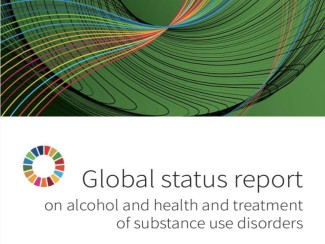
The WHO Global Status Report on Alcohol and Health and Treatment of Substance Use Disorders provides a comprehensive snapshot of global trends in alcohol consumption, related harms, and national policy responses, alongside the availability and quality of treatment services for alcohol and drug use disorders.
Key Highlights:
Presents the latest data from WHO Member States, aligned with SDG Health Target 3.5: “Strengthen prevention and treatment of substance abuse, including narcotic drug abuse and harmful use of alcohol.”
Offers updated insights on global alcohol consumption patterns...
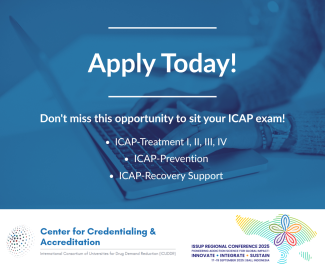
The ICUDDR Center for Credentialing & Accreditation (CCA) has announced that all ICAP Exams will be offered in Bali, Indonesia, on 18 September 2025, during the upcoming ISSUP 2025 event.
This survey is a collaborative effort by ICUDDR, NECPAM and ISAM. Together, we are trying to assess the impact recent reductions in funding have had to the workforce of fields dealing with substance use related issues.
Lee, EH., Yu, HJ. Effectiveness of nurse-initiated smoking cessation intervention: a systematic review and meta-analysis. Subst Abuse Treat Prev Policy 20, 18 (2025). https://doi.org/10.1186/s13011-025-00648-8
Background
Smoking is one of the top causes of preventable death and is linked to many serious health problems, including cancer and chronic diseases. Nurses can play a big role in helping people quit smoking by offering support through counselling, education, and mental health care. These nurse-led programs have been shown to increase quit rates. Training nurses to deliver these programs is important, and reviewing past studies helps us understand what works best.
Methods
Researchers searched eight major health databases between March 27 and August 1, 2024, to find studies on nurse-led...
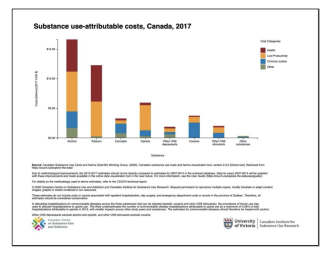
CSUCH’s data visualisation tool can be used to estimate substance use trends across the country. The data helps inform programs, practices, and research to protect communities, save lives, and improve the well-being of people in Canada.
Spotlight: Top 3 causes of death due to substance use in Canada
More than 200 people died each day due to substance use (SU) in 2020 (the latest year for which data are available). That works out to 73,994 deaths that year. The average age of death due to SU was 45 years. Tobacco use caused 63% (46,366) of SU-related deaths, followed by alcohol at 23%...
Addiction and obesity share similar neurological pathways, both linked to compulsive behaviors and the brain's reward system. Research has highlighted the potential of GLP-1 receptor agonists, originally developed for diabetes, to help manage both appetite and addictive cravings. These medications, such as semaglutide, may regulate addictive behaviors by influencing reward circuits in the brain. However, they come with potential side effects, and their long-term effects are still under investigation.
In addition, a new compound, 5-Methoxy-2-aminoindane (MEAI), is being researched for its...
This week, we say goodbye to our dear friend and mentor, Jeff Lee, the founding Executive Director of ISSUP. Jeff was a steadfast advocate for the professionalization of prevention, insisting that those working in this field should be appropriately specialized. He often reminded us that while generalists and treatment specialists are well-meaning and deeply embedded within their communities, they are not always best placed to develop and implement evidence-based prevention systems. Jeff emphasized that prevention must be treated as a distinct science—one that is grounded in rigorous research...
Ulusal Bölümler Ekibi, Ulusal Bölümler için mevcut operasyonel modeli değerlendirmek ve iyileştirme ve büyüme fırsatlarını belirlemek için 10 – 11 Aralık 2024 tarihleri arasında 2 günlük önemli bir sanal toplantı düzenledi. Toplantı, temel gündemi yansıtmak için bir 'Vizyon Toplantısı' olarak adlandırıldı: ISSUP Ulusal Bölümleri için ileriye dönük bir plan hazırlamak.
The Global Recovery Network is committed to providing valuable and relevant content for our community.
To ensure our upcoming webinar series aligns with the needs and interests of our audience, we have developed this survey with U.S. based Faces and Voices of Recovery to determine which topics may be of most relevance. Our goal is to offer webinars that not only inform but also develop and build skills that support recovery, advocacy, and professional growth.
Your feedback is crucial in helping us design a webinar series that resonates with and benefits you.
Ecolink Institute of Wellbeing, approved training provider of the Colombo Plan and the award winner for Excellence in Education Provision is starting its 15th Batch of UTC with Curriculum 1-4 in the first phase and C5-6 in the second phase...