

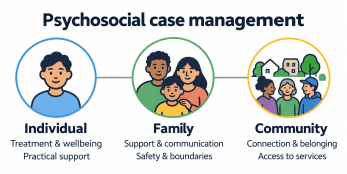
Ara
 Public Health
The organised efforts of governments, health systems, and communities to prevent substance-related harms, promote wellbeing, and improve population health outcomes. A public health approach focuses on prevention, early intervention, treatment, recovery support, and harm reduction, while also addressing the social, economic, and environmental factors that influence substance use. It relies on surveillance data, evidence-based interventions, policies, and cross-sector collaboration to reduce the overall burden of substance use disorders and promote healthier communities.



Playing legislative catch-up: Drug law reform in the Pacific
Drug trafficking in the Pacific is rapidly expanding, shifting countries from transit points to consumer and production markets. However, many national laws remain outdated, as they were designed for earlier challenges like cannabis and are...

Global Organized Crime Index 2025 - Europe Overview
The 2025 Global Organized Crime Index shows that overall crime levels in Europe remain stable, and the region continues to rank among the least affected globally. However, this stability hides a more complex reality, with criminal markets...

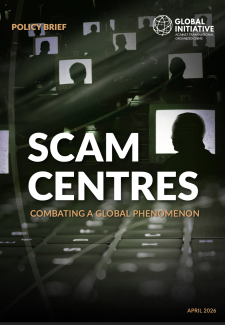
Policy Brief: Scam Centres – Combating a Global Phenomenon
Short Summary
Scam centres are a fast-growing global organized crime threat, generating over $1 trillion in losses in 2024. They use technology and psychological manipulation to target victims worldwide, supported by global criminal...
Medetomidine in the U.S. Illegal Fentanyl Supply Increasing Risk for Overdose and Severe Withdrawal Syndrome
The Centers for Disease Control and Prevention (CDC), in conjunction with the White House Office of National Drug Control Policy (ONDCP), is issuing this Health Advisory to notify public health professionals, clinicians, laboratorians, and...
CCENDU Issue 7 (Part 2): Stimulant Use and Related Harms in Canada — Drivers and Adaptive Responses
This issue is the second of a special two-part series. Part 2 examines key factors driving stimulant use, what these trends mean for different groups of people and the responses being implemented to reduce harms.
Three key points of...
CCENDU Issue 7 (Part 1): Stimulant Use and Related Harms in Canada - Recent Trends
This issue is a special two-part series. The first part features a regional breakdown of reports from seven Canadian Community Epidemiology Network on Drug Use (CCENDU) nodes and five drug checking services from across the country. It...
Nonconceptus Mechanisms of Prenatal Alcohol Exposure That Disrupt Embryo-Fetal Development: An Integrative View
Abstract
PURPOSE: Prenatal alcohol exposure (PAE) is a leading cause of persistent neurodevelopmental disability, with additional adverse consequences to the offspring’s growth, metabolism, cardiovascular health, and immunity, among others...

Preventina (PreventAdvisor)
On 9 March 2026, we officially launched Preventina (PreventAdvisor)—an AI chatbot designed to support prevention science, policy, and practice.
This is not a generic chatbot. Preventina is built on a curated knowledge base of verified...
School Suspension as a Predictor of Young Adult Homelessness: The International Youth Development Study
School suspension in adolescence has been shown to predict homelessness in young adulthood, suggesting that it may be a point of intervention to reduce young adult homelessness. Under zero tolerance policies, school suspension is more...

Anti-Stigma Language Guide
We’re really pleased to launch our first report on stigma and language, which you can read on this page or download here.
We hope it will be a useful guide for organisations that are less familiar with the drug and alcohol treatment sector...

Stigma, Substance Use, and the Struggle to Access Rehab
Phoenix Futures provide a wide range of harm reduction, treatment and advocacy services. We have a keen interest, and long history, in addressing stigma and on behalf of the Anti-Stigma Network we seek to broader anti-stigma movement. In...

Evaluating the DALY impact of disease associated with second-hand smoke exposure in different socio-demographic index regions
Secondhand smoke (SHS) continues to be a major global health risk, contributing to cardiovascular diseases, metabolic disorders, and respiratory illnesses. Using data from the Global Burden of Disease 2021 study across 204 countries, this...

Exploring the lived experiences and coping strategies of mental health caregivers in Ethiopia: implications for supportive interventions
Family caregivers of people with mental illness often face significant stress, stigma, and unequal responsibilities that affect their wellbeing and the quality of care they provide. This mixed-methods study in northwest Ethiopia explored...

The Impact of the COVID-19 Pandemic on Gambling in Europe
INTRODUCTION: The COVID-19 pandemic disrupted Europe‘s gambling market, reshaping consumer behaviour, market structure, and regulatory priorities. Restrictions on land-based venues and the cancellation of major sporting events accelerated a...
AddictologyIssue 4/2025
Ecological Momentary Assessment and Ecological Momentary Interventions in Substance Use Disorders Recovery
INTRODUCTION: Ecological Momentary Assessment (EMA) can capture fluctuations in an individual’s recovery while minimizing recall bias by collecting real-time data in daily life. Ecological Momentary Interventions (EMIs) build on EMA to...
AddictologyIssue 4/2025
Towards Comprehensive Sexuality Education in the Czech Republic: A Qualitative Study of Practitioners‘ Perspectives on Key Themes and Methods
INTRODUCTION: This study explores the perspectives of Czech practitioners on sexuality education (SE) for upper primary school students (ISCED level 2). It focuses on the topics they consider relevant, including those currently...
AddictologyIssue 4/2025
Alcohol Labelling: Czech Expert Perspectives and Recommendations
INTRODUCTION: Consumption of alcohol has significant influence on the physical and mental health of the Czech population. Nevertheless, public awareness of alcohol-related consequences in the Czech Republic remains inadequate. One potential...
AddictologyIssue 4/2025
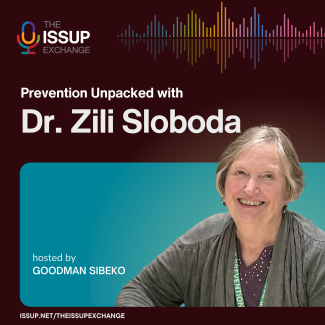
Prevention Unpacked with Dr. Zili Sloboda: Workforce, Capacity & Global Development Pt.3
In this third episode of Prevention Unpacked with Dr. Zili Sloboda, the focus shifts from science to the people who make prevention possible.
Psychological and Addiction-Related Impacts of Artificial Intelligence on Society
BACKGROUND:
The expanding role of artificial intelligence (AI) in mental healthcare presents significant opportunities and challenges. AI has the potential to fundamentally transform traditional healthcare practices, particularly in...
AddictologyIssue 3/2025
“I Can’t Do It Without My Phone”: Nomophobia and Its Impact on Academic Performance – A Systematic Literature Review
INTRODUCTION:
Nomophobia, the fear of losing access to a mobile phone or the Internet, is becoming increasingly prevalent among students due to the rapid digitalization of society and can affect their ability to concentrate, the quality of...
AddictologyIssue 3/2025