Prevention Unpacked with Dr. Zili Sloboda: Workforce, Capacity & Global Development Pt.3
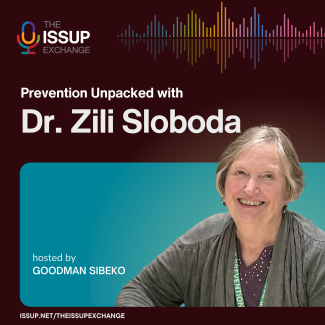
In this third episode of Prevention Unpacked with Dr. Zili Sloboda, the focus shifts from science to the people who make prevention possible.
Dr. Sloboda reflects on why workforce development has become central to the future of prevention, and why evidence alone is never enough without skilled, supported professionals to put it into practice. She speaks candidly about the competencies that matter most in prevention work, from care and humility to monitoring, feedback, and fidelity in implementation.
The conversation explores how prevention has moved toward professionalisation through shared standards, training frameworks, and global networks, including the role of the Universal Prevention Curriculum in creating a common language across regions. Dr. Sloboda also shares lessons from delivering training in diverse cultural contexts, what prevention professionals around the world have in common, and where gaps in training and research still exist.
This episode also tackles the harder questions: how to sustain and retain the prevention workforce, why career pathways remain underdeveloped, and what still keeps Dr. Sloboda concerned about the future of the field. It closes with a forward-looking reflection on online and blended learning, youth engagement, and what gives her hope for the next generation of prevention professionals.
Featured Voices
Host – A/Prof. Goodman Sibeko
ISSUP Global Scientific Advisor.
Head of Addiction Psychiatry, University of Cape Town.
LinkedIn: goodmansibeko
Twitter/X: @profgsibeko
Guest – Dr Zili Sloboda
Dr Zili Sloboda is a global leader in prevention science whose work has shaped evidence-based prevention practice worldwide.
Time Stamps
Professor Goodman Sibeko (00:00)
Welcome to episode three of Prevention Unpacked. Today, we explore a theme that has defined much of Dr. Sloboda's work and the people behind prevention. We'll discuss how workforce development, training, and system capacity became critical levers for scaling prevention globally. From the universal prevention curriculum to regional training networks, we'll unpack what it takes to build a skilled, sustainable prevention workforce and why this human infrastructure is central to lasting impact. Zilli, welcome back. You've long championed workforce systems development in prevention. Why has this become such a focus for you?
Dr Zili Sloboda (00:38)
Well, first of all, thank you, goodness. Good to be back. I think I said this before. I really believe that prevention, based on science, when applied appropriately, has the potential to improve the lives of our children, our families, and our communities. And as you know, I'm very passionate about that. So that's why I feel that way.
Professor Goodman Sibeko (00:56)
That's awesome, Zili. Thank you. And in your perspective, you know, we've had this discussion about competencies quite a lot at ISSUP Of course, our focus being the support of the workforce. What are the most critical competencies that every prevention professional should possess today?
Dr Zili Sloboda (01:13)
I think the most important competency that a prevention professional should have is caring and wanting to improve lives. That's numero uno for me. Caring means that one can assess what is needed to do this work and to deliver, you know, what do you need to deliver the interventions with specific attention to implementation with fidelity.
And monitoring, that's important. Prevention practitioners don't often monitor what they're doing. But monitoring the receptivity of those who are involved in the prevention program and to at least to achieve, to see whether they were achieving their short-term outcomes. Many of the evidence-based prevention programs have pre-post-tests or other kinds of assessment tools.
I know sometimes it's awkward to do, but it's so important to get the feedback because if you work with a group and you walk away and you think, I really, did I really impact them at all? At least you have that. If you're doing a parenting program and you want to know, you want to reach so many parents or certain parents in the community and the ones who come to you are the ones who, know, are good parenting, know, the parenting skills just sort of reinforces what they're doing already. I don't know, do you feel like, yeah, I think it's important. I mean, reinforce is really important, but are you reaching the people that you really want to reach? So, I think that those kinds of things, monitoring that is really important.
Professor Goodman Sibeko (02:39)
So first of all, being genuinely interested in the space and wanting to make sure that people do better and having the humility to learn from the feedback and the outcomes that you see and being able to say what I'm doing isn't really working, let me try something else.
Dr Zili Sloboda (02:52)
But if it is working, you go to your bosses or the community and say, look at this program really works. So yeah, you get a lot of feedback that you can use in a variety of ways.
Professor Goodman Sibeko (03:05)
So, you know, when you go to your boss, one of the things that really helps is having a respectability to your profession, to your identity. So, you know, if I go to my boss and I have a competency that he respects, he might respect my opinion if I share something. So, in your view, how do we build a professional identity for professional practitioners globally?
Dr Zili Sloboda (03:26)
Big sigh. I think that's our big challenge to us. So, I don't have a ready answer for that. think it's a work in progress. I think we're getting there. I think just the fact that prevention practitioners are beginning to realize that they are in a special profession that's unique from other professions. Look at the backgrounds of prevention professionals, they have a variety of backgrounds, right? They could be, they could just have no college education, they could still do prevention. They can have a college education and major in sociology or psychology or other areas that, know, obviously focusing on people. But there's no, that was why we developed UPC obviously was to have standard knowledge because everybody who comes into the training for UPC has different bits of knowledge and expertise. In fact, that's what I love when we do our pre-post-tests. If you look at the range of scores from pre-test to post-test, they're always shorter, which means that people walk in with a big array of knowledge, a lot of knowledge, different areas. But when they leave the room, they all have the same terminology, they understand the same theories.
They're all sort of on the same page if you wish. I think it's a work in progress, but I think that it's happening. The fact that we have ISSUP and ICUDDR I think your groups really play a leadership role in professionalizing the field universally. And I think the universal recognition that there is a field of prevention and prevention science really has moved us, leaps and bounds from where we were even 12, 15 years ago.
Professor Goodman Sibeko (05:11)
And I think there's no denying the fact that having a recognized, a globally recognized and accepted training offering like the UPC helps folks have the capacity to say, I've been exposed to this. I have this competency. So, I'd be very curious, Zili about the experience of developing the UPC. Can you tell us about that? And also, what gaps really was it designed to fill?
Dr Zili Sloboda (05:33)
I sort of mentioned it before. think the fact that there wasn't a training program before UPC in prevention was based on the sort of stigma that I mentioned earlier about prevention, the feeling that it was for kids and it's not a serious field. I think that was a real major change that we recognize that it is a field, that you really need to have certain skills and competencies in order to deliver prevention programming. I think that the work of the international standards, as I think I mentioned there in the first session, was extremely important to move us to professionalize the field also. I think it plays a huge role in that. But also, in identifying the fact that we have evidence-based practices in addressing a number of different areas. There’re some areas where we don't have enough research. And of course, we need to update the research because much of the school-based programs, a lot of those programs have not been replicated.
The research hasn't been replicated now. That's because it's expensive to do, but I think it needs to be done. I belong to a group called the National Prevention Science Coalition here in the United States, and we're trying to work on that. I think that the international standards is a great tool for a group, and this might be something that you all might want to do, to form a group to review it, and say, okay, this is what we know. This is where the gaps are. For instance, mentoring. Mentoring, we have some research that indicates success, but it's not very strong. And a lot of people realize mentoring is really important, but we don't have all the mentoring programs different in terms of how do you train people, what kinds of things they should be doing, how do you monitor them.
We really need to focus on that. So, I think that this is an opportunity to do that. So, review the international standards and to see where the gaps are, identify those gaps and sort put out a blueprint for the future.
Professor Goodman Sibeko (07:45)
So, you've really covered what I was going to ask next, which was, you know, how does training need to evolve? So, it sounds to me, it's a question of looking at a revised needs assessment at a revised problem assessment, looking at, you know, what, what gaps have arisen as we've seen a change in the substance landscape, we're seeing more synthetics, we're seeing changes in trafficking, we're seeing a lot of changes in how substances are manufactured, are trafficked and how they're used. So, we do need training to sort of keep up to pace with that. in, you know, aligned to that, what have you learned from implementing training in different regions or cultural contexts that you think can help us rethink how we evolve training?
Dr Zili Sloboda (08:30)
I think the three things, major things that I have learned from my experience, meeting with and talking with prevention professionals worldwide, major thing, one of the major things was the need to move away from the term legal and illegal drugs. That was dominant, still is to some extent in the United States. And for us to focus on substances that impact the central nervous system, psychoactive substances.
I think that was really, really important for me. And that also helps us focus away from this being a social or cultural issue towards substance use being a health issue because it affects the brain. I think that's huge. I think second was the universal embrace of prevention as being a science-based field.
That was very striking to me that because a lot of the people that we were training were young people. And that was really important that it was important for them that there was a science behind what they were doing. And finally, I think that I learned that we have a lot, lot more in common than we do in differences. The same kinds of challenges international I mean.
What we face here in the United States, face in Europe, you face in Asia, you face in Africa, you face in Latin America, it's worldwide. The same kind of issues you can say in any different language. We all have the same thing.
Professor Goodman Sibeko (09:47)
So, you know, you've spoken, Zili, about the importance of platforms such as ISSUP in galvanizing, organizing, supporting the workforce. What, you know, so obviously we have made some gains. We've created some spaces where professionals can engage, can gather knowledge and further their own capacity and competence. Having said that, what would you view as the biggest remaining barriers to building and sustaining a skilled prevention workforce, and especially in low- and middle-income countries. And do you think universities, NGO and governments need to collaborate better? And if so, how?
Dr Zili Sloboda (10:23)
I mentioned, of course, whole big barrier of culture prevention that unhealthy behaviours can be prevented. The biggest barrier I mentioned also was not having international recognition that prevention practice is a profession. I think that's changed a lot. and ICUDDR are helping a lot in that. And, I think something that I know that UNODC is working on is institutionalizing prevention, is really plugging it into the system so that you may have a health system, but you have a prevention system in place. I think institutionalizing prevention programming, particularly nationally, but also building from the community up is important.
So having policies in place to support that, I think those are the kinds of challenges we have in front of us.
Professor Goodman Sibeko (11:13)
And I think, know, this is really in the context already of the general mental health workforce, we're still being marginalized even at this stage and general, you know, detection and management of mental health and substance use remain somewhat peripheral. So, the challenge is really quite steep to then sell to people. Well, if you actually invest in prevention, you know, the system actually ends up performing better in terms of health outcomes for communities.
Dr Zili Sloboda (11:38)
And what you spend on prisons, what you spend on mental health services, social services, yes, all, I there's a trade-off. And we haven't been able to measure that recently. There were social and economic cost studies that had been done periodically in the United States and also internationally. And...
We haven't had any recently. And I think those trade-offs, we really need to document that for policymakers and for the communities, that they can say that they're saving money. The money that you spend on all these other services, if you put it into preventions, that's a small part of it. But the other money then that's left, you can use for other things, other services that are needed in the community.
Professor Goodman Sibeko (12:22)
Zilli, in the context of these challenges, how then do we go about maintaining the engagement and retention of prevention professionals, given this uphill that they have to work against?
Dr Zili Sloboda (12:33)
It's something that we need to work towards, right? I mean, there's one thing, first of all, to get recognition that prevention is a profession. But we don't have in place a career ladders, so to speak, where there is appreciation of work well done, that's you receive salaries for career opportunities, prevention professionals that I've met worldwide, they see the changes that they make. That's reward for them. And those are the kinds of people that we have in the field now. But they should be recognized, and there should be career ladders. It's going to happen.
It's going to end. may happen sooner than we think. And as I said, the group such as your group and ICD, you're going to be really important in leadership in that area.
Professor Goodman Sibeko (13:17)
So, it sounds to me as well that we probably need to see more sharing of the reward, right? So, we're saying some of these professionals are actually seeing impact and we need to see more of those shared with the workforce.
Dr Zili Sloboda (13:29)
Yes, absolutely. And I think once we recognize prevention as a standalone profession, that that will happen. And it may happen. I think it's going to happen within the next five years, at least that recognition. The other stuff will just come right after that.
Professor Goodman Sibeko (13:44)
That's encouraging. So, in terms of the way the world is moving now, how do you see online and blended learning transforming the workforce development? Do you think it's going to impinge on how we build capacity or do you think it has great potential to?
Dr Zili Sloboda (14:00)
I think that when we brought UPC to the United States, of course, we relabelled it now. We call it Foundations for Prevention, Science, and Practice. Because we did this during COVID, we had to develop different learning processes using online training.
Online training and blended training, I think is really important for us in different groups. So, we have found that the blended learning optimizes the learning process. So, we have those trained. What we try to do is bring people together who have real world experience, obviously. What I love is when you have some young people in the field and you have somebody who's been in the field for a long time and they, you know, how we work with UPC, we give the knowledge and then their activities that they apply the knowledge to those different scenarios, et cetera. And just watching the interaction between the older and the newer, it's wonderful. And that was whole idea. I was hoping through UPC prevention practitioners would network with each other. Because I remember going to meetings and being like the only prevention person at the meeting, at the conference and feeling kind of out there, know, sort of alone. wanting to, feeling isolated and feeling working on my own. I think having those experiences, even if they don't follow up with each other over time, the fact is that they had, they know there are other people there sharing the same kinds of challenges. Sometimes you think it's just, my gosh, it's just me. I don't do this right.
But you find that other people have had the same experience and then they say, well, you know, I've done this and this work. So, I think that's important. So, I think that the blended is probably the best. Having online, because people can't travel, that's huge. It's expensive as well as time consuming. But having online for the knowledge, but for the application, I think there are ways of doing this so that we can do that, in person, you give them assignments and then in person they can share that. We've done that here in the United States and everybody loved that combination. So, I think that's the connection is really important.
Professor Goodman Sibeko (16:05)
That's awesome. So, it's really about accessibility, right? And so that increases in theory in any event, the accessibility to these resources. Zili, you've already said that you're seeing the networking between experienced and upcoming practitioners giving you some hope. You've said that seeing organizations like ISAP that bring practitioners and researchers together gives you some hope. You've said that seeing practitioners who are really engaged in the space, speaking about the rewards also gives you hope. Is there anything else that gives you optimism about the global prevention community today?
Dr Zili Sloboda (16:40)
I think I mentioned it before, going to meetings and conferences and seeing so many young people and so many, passion that they have for this is to me so amazing. And so, and the innovations, a lot of them have shared, for instance, there's two young men from, I think that was Uganda who were saying that they were working with a high school group and teaching them, talking to them about prevention science. That would be my, you I had wanted to write a textbook for high school seniors on prevention science. To me, that's, I mean, I don't even have words to explain it. It was just so brilliant. And, you know, those are the kinds of, and I think more prevention professionals are doing that kind of thing, are reaching out to young people, getting youth involved. And there are a lot of youth programs, programs that you've been supporting. I think, getting young people involved is really incredible. So that gives me a great deal of optimism that there is this embrace of the field by so many young people.
Professor Goodman Sibeko (17:41)
And finally, Zili for this episode, think you've alluded to this in many ways, but just as a closing question, what still keeps you up at night about the workforce?
Dr Zili Sloboda (17:49)
Glad you mentioned the workforce. I think that I think that upsets me about what keeps me up at night here in the United States right now is that there's prevention research is no longer a priority where it had been before. But it's not only in the United States. I think that's true around the world. But I think that comes from the fact that we haven't done a good job in convincing people how important it is, and that we really are a field. mean, that we really, it's not just you know, pie in the sky stuff. So, I think that's it. think, you know, having we have the standards. I understand I spoke to Giovanna recently. She said that they're talking about updating them next year, which I think would be good. We have registries around the world of evidence-based programs. I think those are all good starts to addressing embracing and giving priority to prevention. But a lot of, as I said, lot of the programs that we have were evaluated in the 1990s. mean, cultures have changed since then. Adolescent cultures changed. Now, I think some of them have updated them. mean, Life Skills Training, for instance, has updated in virtual platform. And I think Strengthen the Family, there are programs like that that have been doing stuff.
So yeah, I don't know how we institutionalise prevention. I guess that's, said that earlier, but I think that's still extremely important. I don't know how we institutionalise prevention in our everyday lives. I think that's the real challenge that we have.
Professor Goodman Sibeko (19:13)
Zili, I wish I had an answer and maybe our listeners when they listen to this episode will have some answers and they'll share them in the comments. Let's wait and see
Dr Zili Sloboda (19:20)
I hope so that would be, wouldn't that be wonderful?
Professor Goodman Sibeko (19:23)
That wonderful. Thank you so much for joining us for this episode.
Dr Zili Sloboda (19:26)
Thank you very much, Goodman.
Professor Goodman Sibeko (19:28)
Thank you for joining us to our listeners for this rich discussion on building the global prevention workforce. As Dr. Sloboda has reminded us, evidence alone is not enough. It takes people, partnerships, and persistence to turn science into sustainable systems. In our final episode, we're going to look ahead. We're going to look to the future of prevention, the emerging challenges and opportunities, and the legacy of one of the field's great champions. Join us then.
Thank you for spending this time with us. We hope you enjoy that as much as we do. Be sure to hop on over to our website, isop.net, where you'll find information on how to sign up for free membership. Take care and catch you on the next one.
About the ISSUP Exchange
The ISSUP Exchange podcast series explores the evolution of responses to the challenges of substance use—from research and training to ethics, quality standards and evidence-based practice. We connect the dots so you can see the big picture.
Explore more episodes and join the ISSUP podcast community here>>>
About ISSUP
ISSUP is a global network that unites, connects, and shares knowledge across the substance use prevention, treatment, and recovery support workforce. Our mission is to make our members’ work as effective as possible—by providing access to training, resources, and a vibrant professional community.