
Пошук
Peer and Community Support
Mutual aid groups, peer support networks, and community-based services that provide shared experiences, social connections, and encouragement throughout the recovery process.


Advancing the science of evaluating Collegiate Recovery Program processes and outcomes: A recovery capital perspective
Collegiate recovery programs (CRPs) offer resources and programming for postsecondary students in addiction recovery to ensure they can initiate or maintain their recovery and complete college. To achieve these goals, CRPs offer a variety...
Collegiate Recovery Communities Programs: What do we know and what do we need to know?
As the broad construct of recovery increasingly guides addiction services and policy, federal agencies have called for the expansion of peer-driven recovery support services. The high prevalence of substance use and abuse in colleges and...
Are Collegiate Recovery Programs worth the investment?
The first collegiate recovery program was founded at Brown University in 1977. Since then, these programs have seen explosive growth, with 136 currently in operation. Universities are often tasked with determining whether programs are worth...
Recovery High Schools: A Descriptive Study of School Programs and Students
High schools specifically designed for students recovering from a substance use disorder (substance abuse or dependence) have been emerging as a continuing care resource since 1987. This study of 17 schools provides the first systematic...
A systematic review of recovery high schools and collegiate recovery programs for building recovery capital among adolescents and emerging adults
Introduction:
Educational settings represent a prime opportunity for reaching adolescents and young adults (ages 12–27) experiencing substance use disorders (SUD). Recovery high schools (RHSs) were established to help adolescents in...
What is a Recovery High School?
This resource from the The Association of Recovery Schools explains the role of recovery high schools, which are secondary schools designed specifically to support students recovering from substance use disorders and co-occurring mental...
Recovery schools for improving behavioral and academic outcomes among students in recovery from substance use disorders: a systematic review
This Campbell systematic review examines the effects of recovery schools on student behavioral and academic outcomes, compared to the effects of non-recovery schools. The review summarizes evidence from one quasi-experimental study (with a...
A qualitative examination of social identity and stigma among adolescents recovering from alcohol or drug use
Introduction
Alcohol and other drug (AOD) use disorders are stigmatized conditions, but little is known about youth’s experience of this stigma, which may threaten their developing social identity and recovery process. This study...
Understanding recovery capital for addiction recovery in adolescence and young adulthood
In 2017, the Recovery Capital for Adolescents Model (RCAM) was proposed to highlight needs of adolescents in recovery (1), building on the seminal work of William Cloud and Robert Granfield (2). Research since the RCAM was proposed has...
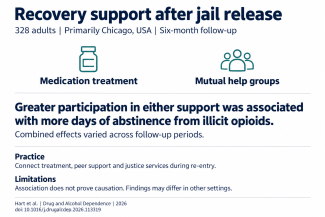
Adults with Problematic Opioid Use Released from Jail: Mutual Help Groups and Medication Support Contribute to a Greater Likelihood of Opioid Abstinence
A recent study found that medication treatment and mutual help group participation were each associated with more days of abstinence from illicit opioids after jail release. Their combined benefits were less clear and varied across follow-up periods. For ISSUP practitioners, the findings highlight the value of connecting treatment, recovery support and justice services during re-entry. The study does not establish causation, and findings from this US sample may not apply equally in other settings.
Connecting Evidence, Prevention, Law Enforcement and Community Action: Key Insights from ISSUP 2026
How do we go about translating evidence into effective action, strengthen prevention, address drug-related crime, improve access to treatment and recovery support, and build safer, healthier communities?
This age-old question was explored...

Peer-based interventions for substance use among young people
ABSTRACT
Adolescents and young adults constitute a large proportion of the population in most low-to middle-income countries but face high levels of disability and mortality. This is influenced by unhealthy substance use, largely with...
A Mosque-Based MOUD Programme: Bringing Treatment, Peer Support and Faith Together
The Ar-Rahman Mosque programme in Kuala Lumpur, Malaysia, was an innovative treatment initiative that combined faith-based and evidence-informed approaches for Muslim men experiencing Opioid Use Disorders. It was reported to be the first...

A mosque-based methadone maintenance treatment strategy: Implementation and pilot results
This study describes an Islamic-inspired methadone maintenance treatment programme delivered in a mosque setting for 36 Muslim men who used heroin. The programme combined methadone treatment with peer support and religious counselling...
Structural and Regulatory Deficits in Alcohol Control Policy: A Critical Evaluation of Advertising Governance and Treatment Systems in Nigeria NAPMIP 2026-2030 (formerly DRAFT NNAP 2025)
|
Nigeria ranks among countries with the highest alcohol consumption rates among individuals aged 15 and above, posing adverse public health risks. On one hand, excessive advertising, and aggressive marketing strategies has... |

Breaking Silos: Building Multi-Sector Partnerships to Address Substance Use Disorders
|
Substance use disorders (SUDs) pose significant challenges in academic environments, impacting students' health, academic performance, and campus well-being. This panel presentation outlines the collaborative efforts of Trinity... |

Integrated In-Patient Rehabilitation and Community Outreach for Substance Use Disorders in a Resource-Limited Post-Conflict Setting: Experience from Liberia
|
Substance use disorders (SUDs) represent an increasing public health challenge in Liberia, particularly among vulnerable youth and individuals affected by trauma, poverty, and social instability. The National Rehabilitation... |

Rehabilitation and Re-entry Programmes for Justice-Involved Individuals and Their Effectiveness in Social Reintegration: A Systematic Review
Prison rehabilitation and community re-entry programmes implemented during incarceration or in the transitional period serve as significant mechanisms for facilitating justice-involved individuals in their post-release adaptation. This...

The Changing Approach to Addiction — From Incarceration to Treatment and Recovery Support
It’s been more than 50 years since the United States launched a “war on drugs.” History has demonstrated the ineffectiveness of “tough-oncrime” drug-use policies, including laws requiring mandatory minimum sentencing for possession of...
Community-based substance use treatment programs for reentering justice-involved adults: A scoping review
Introduction:
For adults involved with the criminal justice system who are reentering their communities postincarceration, there is a large need for community-based substance use treatment. Little is known, however, about the types...