
Пошук
Recovery-Oriented Services
The range of services like housing support, employment assistance, and vocational training that address practical needs and promote stability and independence during recovery.

Advancing the science of evaluating Collegiate Recovery Program processes and outcomes: A recovery capital perspective
Collegiate recovery programs (CRPs) offer resources and programming for postsecondary students in addiction recovery to ensure they can initiate or maintain their recovery and complete college. To achieve these goals, CRPs offer a variety...
Collegiate Recovery Communities Programs: What do we know and what do we need to know?
As the broad construct of recovery increasingly guides addiction services and policy, federal agencies have called for the expansion of peer-driven recovery support services. The high prevalence of substance use and abuse in colleges and...
Are Collegiate Recovery Programs worth the investment?
The first collegiate recovery program was founded at Brown University in 1977. Since then, these programs have seen explosive growth, with 136 currently in operation. Universities are often tasked with determining whether programs are worth...
Recovery High Schools: A Descriptive Study of School Programs and Students
High schools specifically designed for students recovering from a substance use disorder (substance abuse or dependence) have been emerging as a continuing care resource since 1987. This study of 17 schools provides the first systematic...
A systematic review of recovery high schools and collegiate recovery programs for building recovery capital among adolescents and emerging adults
Introduction:
Educational settings represent a prime opportunity for reaching adolescents and young adults (ages 12–27) experiencing substance use disorders (SUD). Recovery high schools (RHSs) were established to help adolescents in...
Recovery schools for improving behavioral and academic outcomes among students in recovery from substance use disorders: a systematic review
This Campbell systematic review examines the effects of recovery schools on student behavioral and academic outcomes, compared to the effects of non-recovery schools. The review summarizes evidence from one quasi-experimental study (with a...
A qualitative examination of social identity and stigma among adolescents recovering from alcohol or drug use
Introduction
Alcohol and other drug (AOD) use disorders are stigmatized conditions, but little is known about youth’s experience of this stigma, which may threaten their developing social identity and recovery process. This study...
Understanding recovery capital for addiction recovery in adolescence and young adulthood
In 2017, the Recovery Capital for Adolescents Model (RCAM) was proposed to highlight needs of adolescents in recovery (1), building on the seminal work of William Cloud and Robert Granfield (2). Research since the RCAM was proposed has...
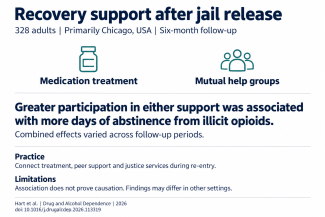
Adults with Problematic Opioid Use Released from Jail: Mutual Help Groups and Medication Support Contribute to a Greater Likelihood of Opioid Abstinence
A recent study found that medication treatment and mutual help group participation were each associated with more days of abstinence from illicit opioids after jail release. Their combined benefits were less clear and varied across follow-up periods. For ISSUP practitioners, the findings highlight the value of connecting treatment, recovery support and justice services during re-entry. The study does not establish causation, and findings from this US sample may not apply equally in other settings.
Beyond Treatment: Building Systemic Capital for Recovery
ABSTRACT
Treatment is essential to addressing substance use disorders, but access to treatment alone does not determine whether recovery can be initiated and sustained. People enter treatment with very different levels of personal, social...
A mosque-based methadone maintenance treatment strategy: Implementation and pilot results
This study describes an Islamic-inspired methadone maintenance treatment programme delivered in a mosque setting for 36 Muslim men who used heroin. The programme combined methadone treatment with peer support and religious counselling...
Evaluating the Efficacy of Repetitive Transcranial Magnetic Stimulation (rTMS) on Craving Reduction and Relapse Prevention in Alcohol and Opioid Use Disorders: A Randomized Controlled Trial
|
Background: High relapse rates in alcohol (AUD) and opioid (OUD) use disorders remain a major treatment challenge. This study investigated the efficacy of repetitive transcranial magnetic stimulation (rTMS) for sustained... |

Collaboration in drug treatment and rehabilitation in the Philippines
|
Introduction: Collaboration is a key strategy to enable organizations involved in drug rehabilitation to address the complex medical, mental, social, and legal problems confronting people who use drugs. One important... |

Recovery in the context of public health interventions within the criminal justice system.
Recovery in the context of the justice system and incarceration refers to a long-term process of change through which people see improvements in their health and stability, experience changes in identity, strengthen relationships, and gain...

Psychosocial determinants of recidivism risk among incarcerated individuals with a history of substance use: A systematic review
The prevalence of recidivism among individuals with a history of substance use and incarceration remains a significant concern for criminal justice systems worldwide. With significant social and economic ramifications, preventing people...
The Changing Approach to Addiction — From Incarceration to Treatment and Recovery Support
It’s been more than 50 years since the United States launched a “war on drugs.” History has demonstrated the ineffectiveness of “tough-oncrime” drug-use policies, including laws requiring mandatory minimum sentencing for possession of...
Community-based substance use treatment programs for reentering justice-involved adults: A scoping review
Introduction:
For adults involved with the criminal justice system who are reentering their communities postincarceration, there is a large need for community-based substance use treatment. Little is known, however, about the types...

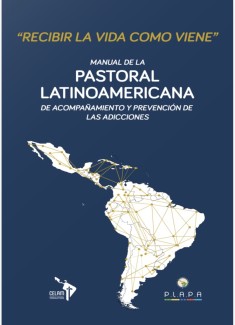
Manual de la Pastoral Latinoamericana de Acompañamiento y Prevención de las Adicciones
Nos complace compartir el lanzamiento del Manual de Pastoral de Adicciones, una iniciativa desarrollada por la Pastoral Latinoamericana de las Adicciones (PLAPA) y el CELAM.
Este manual ofrece una guía pastoral para la prevención, el...
Recovery Connections
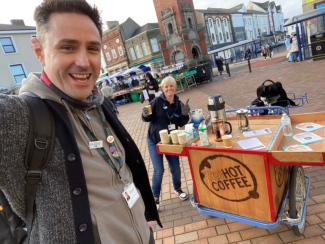
Recovery Connections is a UK-based Lived Experience Recovery Organisation (LERO), a not-for-profit organisation that has developed a strong recovery community model beyond the treatment room. The work they do reflects a deeper understanding...
Understanding Youth Recovery
Recovery for youth differs from that of adults because, for most adults, recovery is about regaining stability and returning to a functional life. For youth, they are still developing and discovering themselves.