
Пошук
Theories and Science
Application of scientific theories and research to understand and prevent substance use, including prevention science.


Adaptation of the Multidimensional Inventory of Recovery Capital (MIRC) to the Czech Environment
INTRODUCTION: While international attention toward addiction recovery research is growing, in the Czech environment there is still a lack of research data and tools for measuring this concept. The primary objective of the research project...
AddictologyIssue 2/2026
IPREV: A National Interactive Platform for Promoting Mental Health and Preventing Risk Behaviour – A Case Study of a Comprehensive School- and Community-Based Prevention System
BACKGORUND: Infrastructural support has become a critical factor in the implementation of prevention at the regional and national level. The complexity of risk behaviour prevention requires a diverse and systematic approach.
AIM: This...
Fear of Missing Out on Social Networking Sites: Associations with Life Satisfaction, Problematic Social Media Use, Depressive Symptoms and Phubbing in Young Adulthood
INTRODUCTION: Social networking sites have become an integral part of everyday life. Their use is closely linked to the phenomena of FoMO (fear of missing out), phubbing, depressive symptoms, life satisfaction and problematic social media...
AddictologyIssue 2/2026
Educating Educators on Substance Use: Insights from the Blended Approach
The school-based drug prevention training program under study is about the combined use of an online learning format and a traditional face-to-face session. This study aims to identify the factors that facilitated or impeded the successful...
AddictologyIssue 2/2026
Call for Abstracts: Lisbon Addictions
The 2027 edition of Lisbon Addictions will take place from 20–22 October 2027 under the overarching theme ‘Addiction in times of disruption: science, technology and whole-of-society responses’.
Submission of abstracts
Potential...
Religion and Spirituality in Addiction Recovery
This scoping review examines the role of spirituality in substance use disorders across three interconnected areas: psychology, biology, and culture. It explores topics including spiritual awakening, the relationship between spirituality...
Spirituality and Harmful or Hazardous Alcohol and Other Drug Use
This meta-analysis synthesises evidence from 55 longitudinal studies involving more than 540,000 participants to examine the relationship between spirituality and harmful or hazardous alcohol and other drug (AOD) use. The findings...

Association Between Religiosity and Spirituality and Cocaine Use: A Systematic Review
This systematic review examines the association between religiosity, spirituality, and cocaine use by analysing findings from 20 observational studies involving adults and adolescents. Most studies found that higher levels of religiosity...
Religion, Crime, and Criminal Justice
This chapter reviews the evidence on the relationship between religion, crime, and the criminal justice system. It highlights a growing body of research showing a consistent inverse association between religiosity and criminal behaviour...

Youth Narratives Concerning Drug Trafficking in Sinaloa: Joining, Risks, and Plans
This qualitative study explores the experiences of young people involved in drug trafficking in Culiacán, Sinaloa, Mexico. Based on interviews with 16 young adults, the research examines why they joined drug trafficking, how they perceived...

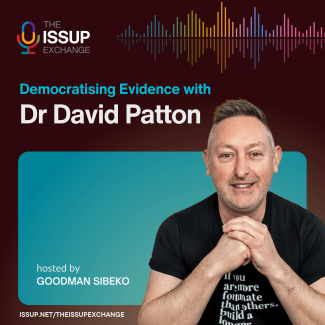
Democratising Evidence with David Patton Pt. 3: Participatory Research in Practice
In episode three , Professor Goodman Sibeko and Dr David Patton move from theory to practice, exploring how lived experience can be meaningfully embedded throughout the research process. Drawing on examples from participatory projects...
Internet-Based Brief Intervention to Reduce Alcohol Consumption in College Students: An Exploratory Randomized Clinical Trial
Abstract
Introduction. Hazardous alcohol consumption among university students is a public health issue, which theoretically supported internet-based interventions have proven effective in addressing.
Objective. To evaluate the...
Measuring gang membership in England and Wales: A latent class analysis with Eurogang survey questions
This study examines how gang membership is measured among young people using the Eurogang Network’s survey approach. Drawing on nationally representative data from England and Wales, the researchers used statistical analysis to identify...
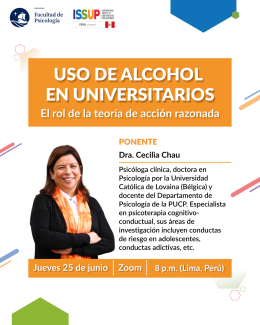
Webinar: Uso del alcohol en universitarios: El rol de la teoría de acción razonada
En esta oportunidad nos acompañará la Dra. Cecilia Chau. Ella es Psicóloga clínica, doctora en Psicología por la Universidad Católica de Lovaina (Bélgica) y docente del Departamento de Psicología de la PUCP. Especialista en psicoterapia...
The Association Between Religiosity and Substance Use Patterns Among Women Involved in the Criminal Justice System
This study explores the relationship between religiosity and substance use patterns among women involved in the criminal justice system. Using data from women participating in a drug court programme in the United States, the researchers...
Democratising Evidence with David Patton: What Counts as Evidence? Pt. 2
In this episode, Professor Goodman Sibeko and Dr David Patton examine how knowledge is created, valued, and used within addiction science. Drawing on his experience as a researcher and advocate for participatory approaches, David challenges...
Spirituality and Harmful or Hazardous Alcohol and Other Drug Use
This meta-analysis reviewed 55 longitudinal studies involving more than 540,000 participants to examine the relationship between spirituality and harmful or hazardous alcohol and other drug use. The findings show that spiritual and...

Democratising Evidence with David Patton: From Experience to Leadership Pt. 1
Professor Goodman Sibeko speaks with Dr David Patton about the experiences that shaped his journey into criminology, recovery research, and the movement to centre lived experience in knowledge production.
David reflects on growing up in a...
Are There Health Benefits to Going ‘California Sober’?
Some people are going California sober, meaning they are cutting back on or quitting alcohol or other addictive substances in favor of using marijuana. In theory, the lifestyle choice aims to replace more harmful substances with something...

Belief, Behavior, and Belonging: How Faith is Indispensable in Preventing and Recovering from Substance Abuse
This study reviews evidence on the role of faith and spirituality in preventing substance use and supporting recovery. It highlights that many addiction treatment programs in the United States include a spiritual component, particularly...