


Tìm kiếm
 Prevention
Evidence-informed strategies and interventions designed to reduce the likelihood of substance use and related harms. Prevention efforts aim to reduce risk factors and strengthen protective factors at the individual, family, community, and societal levels. These approaches may include education, family and school-based programmes, community initiatives, and policies that promote healthy environments. Prevention can be universal (targeting entire populations), selective (targeting groups at higher risk), or indicated (targeting individuals already showing early signs of risk). By addressing the factors that influence substance use before problems develop or escalate, prevention plays a key role in comprehensive responses to substance use disorders and related social and health challenges.


Preventing Substance Use-Related Crime through Deflection
This article examines deflection as a crime prevention strategy aimed at addressing offending associated with substance use and co-occurring disorders through collaborative public health and public safety responses. Drawing on literature...
Understanding Youth Deflection & Pre-Arrest Diversion
This resource introduces youth deflection and pre-arrest diversion as early intervention strategies designed to support young people at risk of entering or progressing further into the criminal justice system. It explores challenges and...
Deflection Turns 10: Lessons from a Decade of Police, Drug Treatment, and Community Partnerships
This article reflects on the development of deflection over the past decade, examining its evolution from local police-led initiatives into an international approach to addressing substance use and drug-related offending. The authors...
Want to Reduce Drugs in Your Community? You Might Want to Deflect Instead of Arrest
In this foundational article, Jac Charlier introduces deflection as an alternative law enforcement response to individuals experiencing substance use disorders who repeatedly come into contact with the criminal justice system.
The article...
Leveraging Arrest Data for Youth Deflection
This resource from the Center for Health and Justice at TASC explores how youth arrest data can inform the development of deflection strategies that prevent unnecessary involvement in the criminal justice system.
Drawing on juvenile arrest...
Faith, Identity and Belonging: Preventing Criminal Recruitment with Tim Rosier Pt. 2
In this second episode of Faith, Identity and Belonging: Preventing Criminal Recruitment, Professor Goodman Sibeko continues the conversation with Tim Rosier, exploring how the need for identity, recognition, safety and belonging can make young people vulnerable to recruitment.

Youth Recovery: Supporting Adolescents and Young Adults – Reading List
In this reading list, we provide resources exploring recovery from substance use disorders among adolescents and young adults, with a particular focus on recovery capital, supportive educational environments, and community-based recovery...

Family Intervention Models for Young Adults with Substance Abuse: A Systematic Review
Published in the Indian Journal of Psychological Medicine, this systematic review examines the effectiveness of family-based interventions for addressing substance use among adolescents and young adults.
The researchers reviewed 41 studies...

Community support and youth recovery: the mediating role of peer and parental disapproval
This study, published in Frontiers in Adolescent Medicine, examines the relationship between community recovery support, parental and peer attitudes towards substance use, and recovery among young people.
Using data from the 2022 Illinois...

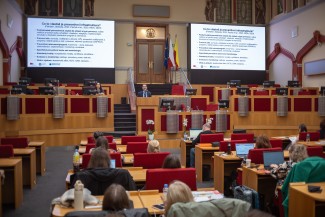
Czech Republic National Prevention Conference - October 2026
The National Chapter of the Czech Republic participated on the annual National Prevention Conference, held in Prague from 12 to 14 October 2026. The conference is one of the major events of its kind in central Europe and brings together...
IPREV: A National Interactive Platform for Promoting Mental Health and Preventing Risk Behaviour – A Case Study of a Comprehensive School- and Community-Based Prevention System
BACKGORUND: Infrastructural support has become a critical factor in the implementation of prevention at the regional and national level. The complexity of risk behaviour prevention requires a diverse and systematic approach.
AIM: This...
Fear of Missing Out on Social Networking Sites: Associations with Life Satisfaction, Problematic Social Media Use, Depressive Symptoms and Phubbing in Young Adulthood
INTRODUCTION: Social networking sites have become an integral part of everyday life. Their use is closely linked to the phenomena of FoMO (fear of missing out), phubbing, depressive symptoms, life satisfaction and problematic social media...
AddictologyIssue 2/2026
Educating Educators on Substance Use: Insights from the Blended Approach
The school-based drug prevention training program under study is about the combined use of an online learning format and a traditional face-to-face session. This study aims to identify the factors that facilitated or impeded the successful...
AddictologyIssue 2/2026
Call for Abstracts: Lisbon Addictions
The 2027 edition of Lisbon Addictions will take place from 20–22 October 2027 under the overarching theme ‘Addiction in times of disruption: science, technology and whole-of-society responses’.
Submission of abstracts
Potential...
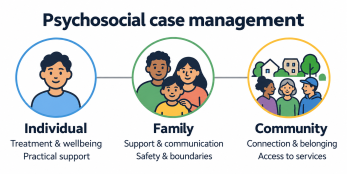
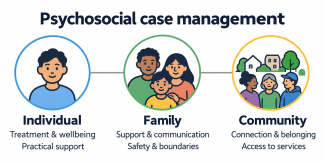
Psychosocial case management: connecting treatment, relationships and community recovery
Psychosocial case management connects evidence-based treatment with the practical and relational support needed for sustained recovery.
Its clearest benefits are helping people access services and remain engaged in care.
Individual care should consider housing, mental health, meaningful activity and continuity of support after discharge.
Families and affected communities also need support, with involvement guided by consent, safety and individual circumstances.
For treatment and prevention, interventions should address identified needs, draw on relevant evidence and be reviewed as circumstances change.
Prevención selectiva e indicada: ¿qué nivel preventivo elegir?
ISSUP España presenta su seminario web sobre 'Prevención selectiva y específica: ¿qué nivel de prevención debes elegir?'.
Para-Methoxymethamphetamine (PMMA) in tablets sold as ecstasy: Why this matters across our workforce
UNODC reports increasing PMMA detections in tablets sold as ecstasy in Europe, raising serious toxicity concerns. The alert encourages coordinated information sharing across prevention, treatment, recovery and law enforcement. It does not confirm local circulation, but prompts a review of local early warning responses.

Connecting Evidence, Prevention, Law Enforcement and Community Action: Key Insights from ISSUP 2026
How do we go about translating evidence into effective action, strengthen prevention, address drug-related crime, improve access to treatment and recovery support, and build safer, healthier communities?
This age-old question was explored...

Faith-Based Approaches: The Role of Faith and Religious Institutions in Addressing Substance Use
Faith, spirituality and faith-based organisations can play an important role in addressing substance use, supporting recovery and responding to related vulnerabilities as well as crime. Across different cultural and community settings, they...
Addressing Youth Substance Use and Crime: Risk Factors and Strategies
Protecting young people from substance use and crime: building safer communities and pathways to support
Young people's involvement in substance use and crime cannot be understood without considering the environments in which they grow up...