Tìm kiếm
 Treatment
The range of medical, psychological, and social services designed to help individuals reduce or stop substance use and manage substance use disorders. Treatment may include assessment, counselling and behavioural therapies, medication-assisted treatment, withdrawal management, and support for co-occurring mental or physical health conditions. Effective treatment is typically person-centred and evidence-informed, and may be provided in outpatient, community, or residential settings. Treatment aims to improve health and functioning, reduce substance-related harms, and support individuals in moving toward recovery and long-term wellbeing.


Handbook on Quality Standards for Interventions Aimed at Drug Experienced Young People in Contact with Criminal Justice Systems
Executive Summary
As one of the objectives of the European Health Programme project “Exchanging Prevention practices on Polydrug use among youth in Criminal justice systems” (EPPIC), the present handbook of quality standards was produced...
Medication-Assisted Treatment (MAT) for Opioid Use Disorder in Jails and Prisons: A Planning and Implementation Toolkit
People who have been incarcerated are approximately 100 times more likely to die by overdose in the first two weeks after their release than the general public. Despite high rates of opioid use disorder among justice-involved individuals...
Uso Nocivo de Álcool e Outras Drogas: Desafio para a Sociedade Brasileira
O uso nocivo de álcool e outras drogas é tema que, frequentemente, a sociedade brasileira discute, mas por sua amplitude e complexidade, também, é assunto que retorna ao debate em razão da profundidade das suas causas e da severidade dos...

Bridging the Gap on NCDs: From Global Promises to Local Progress
Noncommunicable Diseases (NCDs) are recognised as the world’s biggest killer and cause of disability, constituting a global health crisis that requires an urgent policy response. This was acknowledged by world leaders at three UN High-Level...
Roadmap to a Smokefree 2030
In July 2019, the UK Government set out its ambition for England to be smokefree by 2030. Government guidelines say the next steps should have been announced by 6th January 2020, but it has yet to do so.
Several key charities, including...
National Drug Control Strategy, USA
This Strategy focuses on achieving one overarching strategic outcome:
Building a stronger, healthier, drug-free society today and in the years to come by drastically reducing the number of Americans losing their lives to drug addiction...
Substance Use among Women and Children in Afghanistan: The Complexities of an Important Public Health Issue
National surveys of substance use among those living in Afghanistan show multiple substances are easily accessible and commonly used in combination. Substance use in Afghanistan is complex, compounded
by the fact that almost half (48%) of...
US National Treatment Plan for Substance Use Disorder 2020
"In 2018, nearly 89% of the estimated 20.2 million Americans with a substance use disorder (SUD) did not receive specialized treatment for their condition—a disparity known as the “treatment gap”. Today, the White House Office of National...
Evaluating the Impact of Minimum Unit Pricing (MUP) on Sales-Based Consumption in Scotland
The rise in alcohol consumption and alcohol-related harms in the UK in recent decades has gone hand in hand with the increasing affordability of alcoholic beverages.
Minimum Unit Pricing (setting a minimum price below which a unit of...
An Up-To-Date Review of Brain Stimulation Techniques for Addiction Treatment
This Recovery Research Institute review summarizes a recent meta-analysis of research on brain stimulation as a treatment for substance use disorders. The study finds that stimulation using specific methods on specific brain regions may...
Drogas: um problema complexo. Prevenção: o único caminho!
As drogas são problemas que integram praticamente todas as sociedades contemporâneas, causando grandes impactos sociais e econômicos. No Brasil, as drogas ilícitas também financiam o crime e a violência, por isso, seu combate continua a ser...
Predictors of Early Recovery after Treatment for Alcohol Use Disorders in Uganda
Data on treatment for AUD (Alcohol Use Disorders) in developing countries are scarce. This study explores aspects of early recovery and correlates of alcohol use after residential AUD treatment in Uganda. 78 respondents were followed up...
Training on the Universal Curriculum for Substance Use - Implementers Series (UPC1), Core Course for Afghanistan Cohort 2
Colombo, Sri Lanka 18-26 January 2020
By Rogers Kasirye
The workshop started on 18th January organized by Colombo/ INL for the support in undertaking the training programme for Afghanistan entitled Training on the Universal Curriculum...
Referral to Slimming World in UK Stop Smoking Services (SWISSS) versus Stop Smoking Support Alone on Body Weight in Quitters: Results of a Randomised Controlled Trial
Abstract
Introduction: Most people who stop smoking gain weight. Dietary modification may seem an obvious solution, but food restriction may increase cigarette craving and smoking relapse.
Trial design: An unblinded parallel randomised...
UK Drug Treatment - Lessons from History for the Future
On 7th November 2019, Public Health England released their adult substance misuse treatment statistics report. During the reporting year, a total of 268,251 adults were in contact with drug and alcohol treatment services, between April 2018...
Call for Team Applications: Fifteenth Annual Sloboda and Bukoski SPR Cup
Significant advances in prevention science are often due to a team of individuals working closely together across many years. In recognition of the importance of the collaborative process to the field, the Society for Prevention Research...
Alcohol, Tobacco & other Drugs in Australia
The consumption of alcohol, tobacco and other drugs is a significant cause of preventable disease and illness in Australia. There is a wide range of data sources available that contribute to our understanding of alcohol, tobacco and...

Effectiveness Bank Alcohol Treatment Matrix: Effectiveness of Screening and Brief Interventions
EFFECTIVENESS OF SCREENING AND BRIEF INTERVENTIONS
First instalment of a fortnightly course on the evidence for alcohol treatment and related topics. This instalment selects, explains and explores seminal and key research on the...
The SALIS Collection: Alcohol, Tobacco, and Other Drugs
THE SALIS COLLECTION is a full-text, digital lending library of literature in the field of alcohol, tobacco, other drugs, and addictions. “Other drugs” refers to marijuana, heroin, LSD, cocaine, methamphetamine, opioids etc. International...
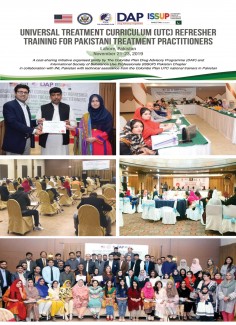
Universal Treatment Curricula (UTC) Refresher Training and International Certified Addiction Professional (ICAP) Examination for Treatment Practitioners in Pakistan
Working jointly the International Society of Substance Use Professional (ISSUP) Pakistan National Chapter and Drug Advisory Program (DAP) of the Colombo Plan, in collaboration with the US Department of State Bureau of International...