
Tìm kiếm
 Responding to Drug-Related Offending
Coordinated efforts between law enforcement, courts, treatment providers, and social services to reduce reoffending, promote recovery, and address the underlying causes of drug-related crime.



Changing the Narrative
Changing The Narrative is a network of reporters, researchers, academics, and advocates concerned about the way media represents drug use and addiction.

UNODC Training on the Nature, Prevention and Treatment of Drug Use Disorders Organized jointly with SENDA in Chile
30 policy makers attended the training event in Chile which was organized from 28-30 May 2019 in coordination with the National Service for the Prevention and Rehabilitation of Drug and Alcohol Consumption (SENDA) and with the support of...
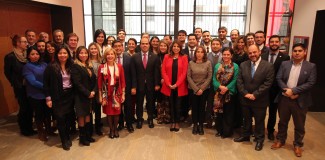
We are Family - Families and their Role in Prevention and Treatment of Drug Use, Crime and Violence, Including the Prevention of Recruitment into Violent Extremist Groups
The 28th Commission on Crime Prevention and Criminal Justice (CCPCJ) is being held from 20 - 24 May 2019. On Monday, 20 May 2019 UNODC's Prevention Treatment and Rehabilitation Section organized a side event on We are Family: Families and...
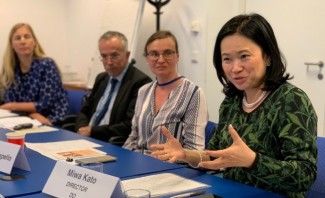
Call for Evidence on Cannabis - Royal College of Psychiatrists
About the Review
The Royal College of Psychiatrists is undertaking a review to develop a College position on:
- cannabis use in the UK and how this relates to mental health, incorporating evidence on the biological, psychological and...
Comparing Credentialing Requirements of Substance Abuse Treatment Staff by Funding Source
Studies have found that clinicians with higher education and/or attainment of national certification have a more favorable outlook regarding the adoption of evidence-based practices. However, staff hiring decisions may be based on a...
A Conceptual Model for Understanding Post-Release Opioid-Related Overdose Risk
Abstract
Post-release opioid-related overdose mortality is the leading cause of death among people released from jails or prisons (PRJP). Informed by the proximate determinants framework, this paper presents the Post-Release Opioid-Related...
Effectiveness Bank Analysis: Do Interventions to Reduce Alcohol-Related Harms also Reduce Domestic Abuse?
In celebration of International Women’s Day we are highlighting studies throughout the month of March that further our understanding of how sex and gender influence the course of addiction and treatment, with a particular focus on women.
T...
Treatment of Stimulant Use Disorders: Current Practices and Promising Perspectives
UNODC has put together a discussion paper that aims to raise awareness about the latest scientific evidence concerning the treatment of psychostimulant use disorders.
New Resource: Time to Act!
Time to Act! outlines pragmatic and concrete actions, following the UN General Assembly Special Session 2016 (UNGASS 2016), for prevention of non-medical use of controlled substances, treatment of drug use disorders, social protection and...
A Cross-Journal Call for Papers- Substance Use, Misuse and Dependence: Prevention and Treatment
Substance use and misuse affect people worldwide, of all ages and from all walks of life, resulting in a substantial burden of ill health and mortality, and presenting big challenges in prevention and treatment.
PLOS Medicine is planning...

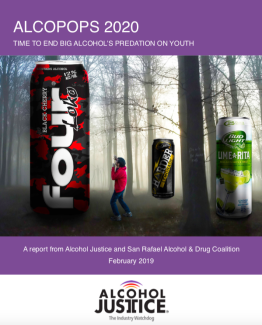
Alcopops
Alcopops are highly sweetened pre-mixed spirit-based drinks which are specially designed and marketed for adolescents and young adults.
Alcohol Justice has released a publication highlighting findings illustrating the extent and...
A Rapid Systematic Review of What We Know about Alcohol Use Disorders and Brief Interventions in the Criminal Justice System
-
Purpose
– The purpose of this paper is to review the evidence of alcohol use disorders within the different stages of the criminal justice system in the UK. Furthermore it reviewed the worldwide evidence of alcohol brief interventions...
Magnitude of Substance Use in India
The National Survey assesses the extent and patterns of substance use in India.

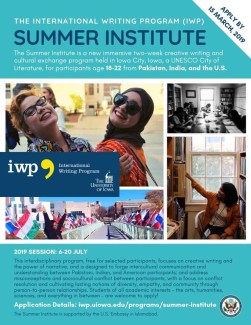
Summer Institute: Two-Week Creative Writing and Cultural Exchange Program for Participants from Pakistan, India, and the US
The Summer Institute is a new immersive two-week creative writing and cultural exchange program held in Iowa City, Iowa, a UNESCO City of Literature, for participants age 18-22 from Pakistan, India, and the U.S.
This program for students...
Global Peace Summit 2019 in South Africa
Participate in the Fully Funded Global Peace Summit 2019 in South Africa
Global Peace Chain (A Project of MAPS) envisions to build resilience, cultivate the culture of tolerance, inclusivity, interfaith harmony,co-existence,love & social...

Overview of European Forensic Youth Care: Towards an Integrative Mission for Prevention and Intervention Strategies for Juvenile Offenders
Abstract
All over Europe youth delinquency is decreasing; our understanding of the factors related to juvenile delinquency and the characteristics of effective forensic youth care has increased substantially. However, effective prevention...
A prática de binge drinking entre jovens e o papel das promoções de bebidas alcoólicas: uma questão de saúde pública.
A prática de binge drinking entre jovens e o papel das promoções de bebidas alcoólicas: uma questão de saúde pública.
Zila M. Sanchez
Universidade Federal de São Paulo, Departamento de Medicina Preventiva, São Paulo-SP, Brasil
Binge...

A ESPIRITUALIDADE/RELIGIOSIDADE COMO FATOR DE PROTEÇÃO CONTRA O USO DE SUBSTÂNCIAS PSICOATIVAS NA ADOLESCÊNCIA

Artigo de revisão publicada na Revista debates em Psiquiatria - Jul/Ago 2017
Abstract
Objective: To analyze the impact of spirituality and/or religiousness on the use of psychoactive substances in the adolescent population in both...
Rights, Respect and Recovery: Scotland's Alcohol and Drug Treatment Strategy
The Scottish Government has released the new Alcohol and Drugs Strategy, which aims to improve health by preventing and reducing alcohol and drug use, harm and related deaths. There were a record 934 drugs-related deaths in Scotland in 2017...
Alcohol Occasionals: Seminars 2013–2018
Almost a fifth more alcohol is sold per adult in Scotland than in England and Wales. It is believed 1 in 4 people drink at hazardous or harmful levels and in 2016 alone there were over 1,200 alcohol-related deaths in Scotland.
Scottish...