


Αναζήτηση
Treatment Settings
Various treatment formats, either in a live-in facility or through regular visits to a clinic, are designed for ongoing support, to help maintain recovery, and to prevent relapse.

How Childhood Trauma Rewires the Brain: New Insights and Hope for Healing
Childhood trauma leaves an indelible mark not just on a person’s memories, but on the very structure and function of their brain. A groundbreaking study from the University of Essex, led by Dr. Megan Klabunde, has shed new light on how...

Resources for Building Compassionate and Responsive Recovery Systems
Recovery is not a one-size-fits-all process—it is dynamic, multifaceted, and deeply individual. To truly support individuals on their recovery journey, practitioners must access tools, systems, and knowledge that reflect the realities of those they serve.
Women’s Substance Use Treatment and Recovery
This report from the Centre of Excellence for Women’s Health reviews what we know about women’s substance use treatment and recovery in Canada. It highlights the need for trauma-informed, culturally sensitive, and family-focused care. Since...
The Use of AI in the Treatment of Addictions
AI is helping improve addiction treatment in many ways. It creates personalized treatment plans based on a person’s history and needs, and can even detect early signs of risk before addiction develops. AI also analyzes large amounts of data...
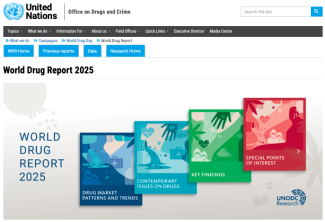
World Drug Report 2025
On July 2nd, 2025, ISSUP had the privilege of hosting a webinar outlining highlights from the 2025 edition of the World Drug Report (WDR), presented by Ms. Giovanna Campello, Chief of the Prevention, Treatment and Rehabilitation Section at...
A Call for Trauma-Informed Justice Reform in Nigeria: Breaking the Cycle of Substance Use, Mental Illness, and Incarceration
By Seye Omiyefa
Across Nigeria and many parts of the world, thousands of individuals, particularly youth and economically marginalized people, are trapped in a revolving door of arrest, incarceration, and reentry. Much of this cycle is...
Making a Difference Across Illinois
BOOSTING TREATMENT SUCCESS & VALUE
People referred to substance use treatment by the justice system (courts, probation, parole) are significantly more likely to complete it when they also receive TASC (Treatment Accountability for Safer...
Importance of Lived Experience in a Recovery-Oriented System of Care
ISSUP Global, in collaboration with Faces & Voices of Recovery, presents its webinar titled 'Importance of Lived Experience in a Recovery-Oriented System of Care.'
2023 Companion infographic report: Results from the 2021, 2022, and 2023 National Surveys on Drug Use and Health
Conducted annually, the National Survey on Drug Use and Health (NSDUH) provides nationally representative data on the use of tobacco, alcohol, and drugs; substance use disorders; mental health issues; and receipt of substance use and mental...
Evaluating the effectiveness of mindfulness-based interventions in incarcerated populations: A meta-analysis.
Abstract
A growing body of research supports the use of mindfulness-based interventions (MBIs) in incarcerated populations; however, treatment effectiveness remains unclear. This meta-analysis of 22 studies (N = 2,265, 75% male) quantified...
Effectiveness of mindfulness-based relapse prevention in individuals with substance use disorders:
Abstract
Objectives: This systematic review aimed to understand the current state of the art about the effectiveness of mindfulness-based relapse prevention (MBRP) on individuals with substance use disorders (SUD), taking into account not...
Mindfulness treatment for substance misuse: A systematic review and meta-analysis.
Highlights
•First meta-analysis of mindfulness treatment for substance misuse.
•Mindfulness treatment is a positive intervention for substance use disorders.
•Mindfulness treatment had a significant small effect on reducing substance...
Mindfulness-based relapse prevention for substance use disorders: A systematic review and meta-analysis.
Abstract
Objectives: Substance use disorder (SUD) is a prevalent health issue with serious personal and societal consequences. This review aims to estimate the effects and safety of Mindfulness-based Relapse Prevention (MBRP) for SUDs.
Me...
The impulsive lifestyle counseling program for antisocial behaviour in outpatient substance abuse treatment.
Abstract
Patients with antisocial personality disorder in outpatient treatment for substance use disorders are at high risk of drop-out. Using a randomized design, this study tested the impact of adding a brief psycho-educational program...
Seeking Safety A Treatment Manual for PTSD and Substance Abuse
SUMMARY
This manual presents the most widely adopted evidence-based treatment for co-occurring trauma and addiction. For clients facing one or both of these issues, the most urgent clinical need is to establish safety—to reduce addictive...
Psychological interventions for antisocial personality disorder.
Abstract
Background: Antisocial personality disorder (AsPD) is associated with poor mental health, criminality, substance use and relationship difficulties. This review updates Gibbon 2010 (previous version of the review).
Objectives: To...
Psycho-education for substance use and antisocial personality disorder: a randomized trial.
Abstract
Background
Antisocial personality disorder often co-exists with drug and alcohol use disorders.
Methods
This trial examined the effectiveness of offering psycho-education for antisocial personality disorder in community...
Impulsive Lifestyle Counselling versus treatment as usual to reduce offending in people with co-occurring antisocial personality disorder and substance use disorder: a post hoc analysis.
Abstract
Objectives: To assess the impact of a short psychoeducation intervention for antisocial personality disorder on offending after randomization to treatment.
Design: Multicentre, superiority, non-blinded randomized controlled trial...
The outcome of integrated motivational interviewing and cognitive-behavioral therapy in Egyptian patients with substance use disorder.
Abstract
Objectives
The authors aimed to evaluate the outcome of combined motivational interviewing and cognitive-behavioural therapy (MICBT) for substance use disorder compared to the twelve-step facilitation (TSF) therapy in terms of...
Motivational interview techniques and the effectiveness of intervention programs with perpetrators of intimate partner violence: A systematic review.
Abstract
Intimate Partner Violence (IPV) is widely recognised as a severe public health issue. Perpetrators’ Intervention Programs (PIPs) have been essential to prevent recidivism, and the incorporation of Motivational Interview Techniques...