

Поиск
 Regulatory Control of Substances
The legal and administrative systems used to manage the classification, production, distribution, prescribing, and availability of controlled substances. These regulatory frameworks aim to ensure that substances with psychoactive properties are safely produced, distributed, and used for legitimate medical and scientific purposes, while preventing diversion, misuse, and illegal distribution. Regulatory control may include drug scheduling, licensing of manufacturers and prescribers, prescription monitoring systems, import and export controls, and pharmaceutical supply oversight. These mechanisms help balance access to essential medicines with the protection of public health and safety.
Perceptions of Law Enforcement Personnel and Public Health Professionals on Synthetic Drug Use in Nigeria
BACKGROUND: Nigeria is one of the countries in the world severely impacted by synthetic drug production and use, yet lacks fundamental understanding of the synthetic drug market, how many people use, and how much they use. AIMS: The aims of...
The 2025 Global Adderall Shortage: Clinical Impact, Public Health Risks, and Implications for Substance Use Professionals
The 2025 Global Adderall Shortage: Clinical Impact, Public Health Risks, and Implications for Substance Use Professionals
Author: Benjamin Zohar, NCACIP – Nationally Certified Advanced Addiction Intervention Professional, Founder of Interv...

Guía para la respuesta policial en crisis de salud mental relacionadas con el consumo de drogas
ISSUP Argentina presenta su seminario web sobre Guía para la respuesta policial en crisis de salud mental relacionada con el consumo de drogas.
World Drug Report 2025: Key Trends and Policy Challenges for Africa
ISSUP Global, UNODC, and the African Union presents their webinar on the World Drug Report 2025, focusing on key trends and policy challenges for Africa.
Attitudes and views regarding law enforcement activity at large outdoor raves in Israel: a cross-sectional survey
ABSTRACT
Harm reduction services, such as drug testing kiosks and ‘safe zones’ are often advocated for reducing the harms of drug use among rave and festival attendees. However, interaction with law enforcement can undermine efforts at...
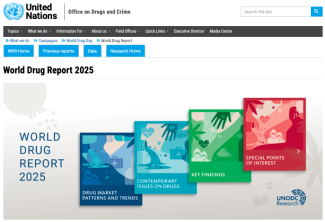
World Drug Report 2025
On July 2nd, 2025, ISSUP had the privilege of hosting a webinar outlining highlights from the 2025 edition of the World Drug Report (WDR), presented by Ms. Giovanna Campello, Chief of the Prevention, Treatment and Rehabilitation Section at...
Seattle’s law enforcement assisted diversion (LEAD): Program effects on criminal justice and legal system utilization and costs.
Abstract
Objectives We evaluated a prebooking law enforcement assisted diversion (LEAD) program (i.e., initial diversion from the criminal justice system paired with harm-reduction case management and legal assistance to individuals with...
Law enforcement-led, pre-arrest diversion-to-treatment may reduce crime recidivism, incarceration, and overdose deaths: Program evaluation outcomes.
Abstract
Introduction: Substance use disorder (SUD), overdose, and drug use-related crime continue to increase in the U.S. Pre-arrest diversion-to-treatment programs may decrease crime recidivism and overdose deaths. We assessed the impact...
A multi-site evaluation of law enforcement deflection in the United States.
Many law enforcement and other first responder agencies have adopted deflection as a front-line response to the increasing number of drug overdoses and deaths in the United States over the past two decades. Deflection programs aim to...
Moving Beyond Referrals: Addressing Multilevel Barriers to Substance Use Treatment Engagement Through Police-Led Recovery Management Check-Ups
ABSTRACT
The opioid epidemic in the United States (US) has prompted innovative responses from law enforcement agencies including specialized units to refer overdose survivors to substance use treatment following an overdose. However...
The changing DNA of serious and organised crime
Europol’s EU Serious and Organised Crime Threat Assessment (EU-SOCTA) 2025, published today, reveals how the very DNA of crime is shifting – reshaping the tactics, tools and structures employed by criminal networks.
The EU-SOCTA offers one...
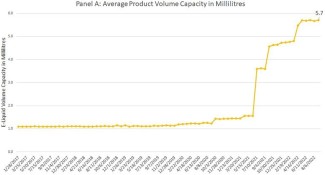
Bigger, stronger and cheaper: growth in e-cigarette market driven by disposable devices with more e-liquid, higher nicotine concentration and declining prices
Abstract
Objective: This study explores trends in the disposable e-cigarette market in the USA, specifically focusing on changes in e-cigarette size, nicotine strength, and real sales-weighted average prices, both per e-cigarette unit and...
Release of Global Coalition to Address Synthetic Drug Threats Report
The latest report from the Global Coalition to Address Synthetic Drug Threats highlights the significant progress made since its launch in July 2023.

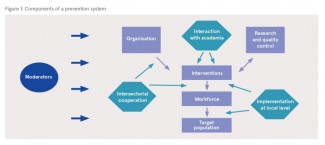
A Reflection on Prevention Systems: A European perspective
Prevention science over the past years has accumulated evidence on the effectiveness of drug prevention interventions (Sloboda et al. 2014). In Europe this improvement has been a consequence of priorities defined by EU drug strategies since...
Teachers Training -Anuradhapura Education Zone -Sri Lanka
Teachers Training Anuradhapura Education Zone
A training workshop on drug prevention and counseling for 64 teachers engaged in counseling in the Anuradhapura Education Zone was held on the 16th of October 2024 at the Anuradhapura...
Day 2, 16:00 - 15:30, ISSUP, Community Collaboration for Prevention
Presented at Thessaloniki 2024, on the 27th of June, 2024.
Bringing law enforcement officers closer to other agents of prevention. The experience with UNODC Guiding Document on the Role of Law Enforcement Officers in Drug Use Prevention within School Settings
Presented at Thessaloniki 2024 - Panel: Community Collaboration for Prevention, on the 27th of June, 2024.
Создана новая глобальная коалиция по борьбе с угрозами, связанными с синтетическими наркотиками
7 июля 2023 года Государственный секретарь США Энтони Блинкен провел виртуальную встречу на уровне министров, посвященную созданию Глобальной коалиции по борьбе с угрозами, связанными с синтетическими наркотиками.
Роль сотрудников правоохранительных органов в профилактике наркомании в школьных условиях: руководящий документ
В контексте правоохранительной деятельности УНП ООН разработало руководящий документ, призванный помочь в поддержке изменения культуры в отношении того, как использовать науку профилактики для улучшения здоровья и развития безопасности...
Bi-Monthly Webinar: ISSUP Nigeria Knowledge Update Series (Sixteenth Session)
ISSUP Nigeria are pleased to present their next Bi-Monthly Webinar on the topic of 'Substance Use Prevention Interventions in Schools: Alternatives to Punishment'.