The Dope Test
Understanding Drug Testing
What Is a Drug Test?
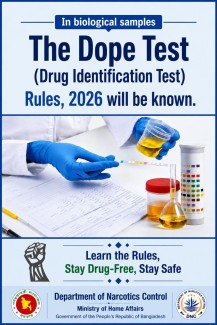
A drug test is the scientific analysis of biological samples to determine whether narcotic drugs, psychoactive substances, or their metabolites are present in the body. Samples may include urine, blood, hair, nails, breath, or other body fluids and tissues.
Why Is Drug Testing Conducted?
Drug testing may be required for:
-
Recruitment in government, semi-government, autonomous, local government, and private sector organizations.
-
Employees suspected of substance use.
-
Issuance and renewal of driving licences.
-
Drivers suspected of driving under the influence of drugs.
-
Students suspected of substance use.
-
Overseas employment where drug testing is required.
-
Issuance and renewal of firearms permits.
-
Licensing and renewal of licences for ships, boats, and aircraft.
-
Medical treatment under the advice of a physician.
-
Other circumstances specified by the government.
What Types of Samples Can Be Tested?
-
Urine
-
Blood
-
Hair
-
Nails
-
Breath (exhaled air)
-
Other body fluids or tissues
Who Can Request a Drug Test?
A drug test may be requested by:
-
The Director General of the Department of Narcotics Control (DNC) or an authorised officer.
-
Courts.
-
Physicians for treatment purposes.
-
Parents, guardians, spouses, or relatives under specific circumstances.
-
Employment recruitment authorities.
-
Regulatory bodies investigating suspected substance use among employees.
-
Driving licence authorities.
-
Overseas employment authorities.
-
Educational institutions where there are concerns about substance use.
-
Other authorities authorised by government order.
Sample Collection and Preservation
Individuals required to undergo a drug test must provide a biological sample.
-
Samples must be collected, transported, and stored according to approved procedures.
-
Multiple samples for the same examination should not be collected at different times.
-
If a positive result is challenged, the sample should be preserved for 30 days.
-
After 30 days, the laboratory may dispose of the sample in accordance with applicable regulations.
Referral for Treatment
Individuals identified as having substance dependence may be referred to:
-
Government-run treatment programmes.
-
Approved private rehabilitation centres.
-
Psychiatry departments in government medical colleges and hospitals.
-
Specialised mental health hospitals.
-
The National Institute of Mental Health.
-
Other approved treatment facilities.
Follow-Up Testing After Treatment
Following treatment, individuals may be required to undergo another drug test. If the result is negative, the treating physician may document this outcome in the treatment report.
Where Can Drug Testing Be Conducted?
Drug testing may be carried out:
-
In authorised laboratories or mobile laboratories operated by the Department of Narcotics Control.
-
At government-approved institutions designated through official orders.
Results from unauthorised facilities are generally not accepted, except for medical treatment purposes.
Testing Fee
The current fee for a drug test is 500 Taka. This amount may be revised by the government through official notification.
Consequences of a Positive Drug Test
Individuals identified as having substance dependence may:
-
Be referred for treatment or rehabilitation services.
-
Face legal consequences if they refuse treatment when required under applicable legislation.
-
Be deemed ineligible for certain employment opportunities in government, semi-government, autonomous, local government, or private organisations.
-
Face disciplinary measures under relevant employment regulations if they are existing government employees.