Ara
 Public Health
The organised efforts of governments, health systems, and communities to prevent substance-related harms, promote wellbeing, and improve population health outcomes. A public health approach focuses on prevention, early intervention, treatment, recovery support, and harm reduction, while also addressing the social, economic, and environmental factors that influence substance use. It relies on surveillance data, evidence-based interventions, policies, and cross-sector collaboration to reduce the overall burden of substance use disorders and promote healthier communities.



Substance Use Prediction Using Artificial Intelligence Techniques
The study examines whether artificial intelligence can reliably predict the use of specific substances in Finland, including cannabis, ecstasy, amphetamine, cocaine and non-prescribed medicines. Using data from the 2022 Finnish National...
Perceptions of Law Enforcement Personnel and Public Health Professionals on Synthetic Drug Use in Nigeria
BACKGROUND: Nigeria is one of the countries in the world severely impacted by synthetic drug production and use, yet lacks fundamental understanding of the synthetic drug market, how many people use, and how much they use. AIMS: The aims of...
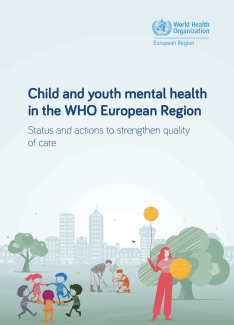
Child and youth mental health in the WHO European Region: Status and actions to strengthen quality of care
For the first time WHO Regional Office for Europe brings together all of data available at the Regional level on child and youth mental health. One in seven children and adolescents aged 0–19 years old lives with a mental health condition...
Day 2, 08:00 - 09:00, Plenary 6: Reducing Drug-Related Crime in Asia
Panel Presented at Indonesia 2025 on the 18th of September 2025
Moderator: Michele Worobiec
Presentations:
Tery Zakier Muslim: Reducing Drug-Related Crime
Grace Sopacua: The Situation of Drugs Law Enforcement in Indonesia
Augus...
The 2025 Global Adderall Shortage: Clinical Impact, Public Health Risks, and Implications for Substance Use Professionals
The 2025 Global Adderall Shortage: Clinical Impact, Public Health Risks, and Implications for Substance Use Professionals
Author: Benjamin Zohar, NCACIP – Nationally Certified Advanced Addiction Intervention Professional, Founder of Interv...

Integrated Care for Syndemics: Bringing SUD, HIV & HCV Treatment Together
ISSUP Global presents a webinar on Integrated Care for Syndemics: Bringing SUD, HIV & HCV Treatment Together with Dr Sarah Kattakuzhy
Alcohol increases your risk of premature death
Highlights how drinking alcohol increases the risk of dying before the age of 75 (also known as premature death). With simple visuals, shows how many people out of 1,000 could die early based on the number of standard drinks they consume...
digiPREV: Where Theory Meets Practice
The Czech national IPREV (Interactive Platform for Mental Health Support and Risk Behaviour Prevention) platform, which supports mental health and the prevention of risky behaviour, is becoming an important tool used by more and more...

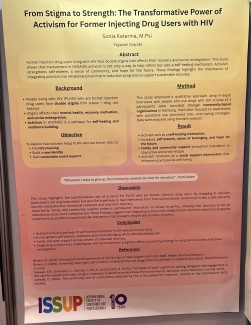
From Stigma to Strength: The Transformative Power of Activism for Former Injecting Drug Users with HIV
Injection drug users (IDUs) living with HIV/AIDS (PLWHA) often face multiple stigmas stemming from their HIV status and history of drug use. This stigma can impact their mental health, motivation to recover, and social integration. This...
From Parenting to Polysubstance Use: The Role of Attachment and Psychosocial Mechanisms in Addiction Vulnerability
Background:
Polysubstance use disorder (PSUD) in adolescents and young adults is often rooted in early family dynamics. Baumrind’s typology—later extended by Maccoby & Martin and the integrative model of Darling & Steinberg—offers a...

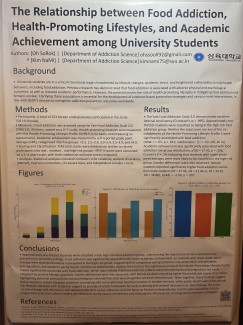
The Relationship between Food Addiction, Health Promoting Lifestyles, and Academic Achievement Among University Students
Background
University students are in a transitional stage characterized by lifestyle changes, academic stress, and increased vulnerability to risky health behaviors,
including food addiction. Food addiction has been linked to poor...
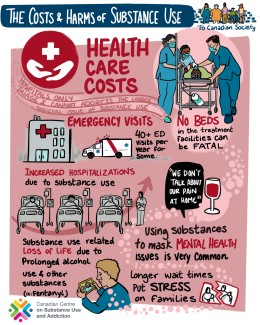
Personal Impacts of Substance Use
The Canadian Centre on Substance Use and Addiction (CCSA) transforms complex data into insights that reflect real human experiences. Every aspect of the Canadian Substance Use Cost and Harms (CSUCH) project represents individuals with lived...
Niñez, madres con TUS y sistemas de protección
ISSUP Argentina presenta su seminario web sobre Niñez, madres con TUS y sistemas de protección.
Adherence to mHealth quit smoking application ‘stopcoach’ on top of evidence based smoking cessation counselling: association with participant characteristics and long-term abstinence
Background
Smoking is more common in lower socioeconomic position (SEP) groups, but smoking cessation interventions are less effective for these groups. StopCoach, an mHealth intervention, supports people with lower SEP in quitting smoking...
Initial stakeholder perceptions around opioid settlement funds in Pennsylvania
Background
The opioid epidemic continues to pose significant challenges in the United States, with over 75% of nearly 107,000 drug overdose deaths in 2022 involving opioids. Recently, efforts to curb the epidemic have made strides...
Becoming a Member of the Prevention Club: Development of Interdisciplinary Prevention Terminology
Introduction
Prevention science is interdisciplinary, drawing upon multiple fields of research and practice to develop integrated knowledge. A challenge facing the field is the proliferation of different terms with the same meaning, and of...

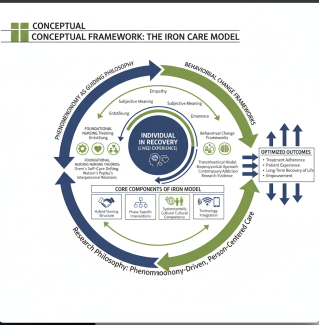
The Integrated Recovery-Oriented Nursing (IRON) Care Model: A Theoretical Framework for Optimizing Addiction Treatment Outcomes
Abstract
Title: The Integrated Recovery-Oriented Nursing (IRON) Care Model: A Theoretical Framework for Optimizing Addiction Treatment Outcomes
Authors: Ahmad Muneer, MSc, RN; Hessa Abdel Qader, MSc, RN
Affiliations: Maudsley Health, Al...
An Only Child versus a Child with a Sibling: Difference In Perfectionism and the Big Five Personality Traits
INTRODUCTION: Declining fertility and rising numbers of only children necessitate understanding their specific characteristics. The main objective of the present research study is to map the area of sibling constellations. It focuses on...
AddictologyIssue 1/2025
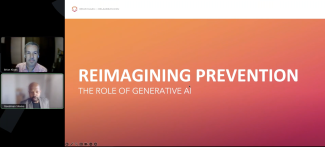
Webinar Reflection: Reimagining Prevention, The Role of Generative Artificial Intelligence
ISSUP, in partnership with the International Consortium of Universities for Drug Demand Reduction (ICUDDR), recently hosted an engaging and forward-looking webinar titled “Reimagining Prevention: The Role of Generative Artificial...