


Пошук
 Prevention
Evidence-informed strategies and interventions designed to reduce the likelihood of substance use and related harms. Prevention efforts aim to reduce risk factors and strengthen protective factors at the individual, family, community, and societal levels. These approaches may include education, family and school-based programmes, community initiatives, and policies that promote healthy environments. Prevention can be universal (targeting entire populations), selective (targeting groups at higher risk), or indicated (targeting individuals already showing early signs of risk). By addressing the factors that influence substance use before problems develop or escalate, prevention plays a key role in comprehensive responses to substance use disorders and related social and health challenges.


Youth Recovery: Supporting Adolescents and Young Adults – Reading List
In this reading list, we provide resources exploring recovery from substance use disorders among adolescents and young adults, with a particular focus on recovery capital, supportive educational environments, and community-based recovery...

Family Intervention Models for Young Adults with Substance Abuse: A Systematic Review
Published in the Indian Journal of Psychological Medicine, this systematic review examines the effectiveness of family-based interventions for addressing substance use among adolescents and young adults.
The researchers reviewed 41 studies...

Community support and youth recovery: the mediating role of peer and parental disapproval
This study, published in Frontiers in Adolescent Medicine, examines the relationship between community recovery support, parental and peer attitudes towards substance use, and recovery among young people.
Using data from the 2022 Illinois...

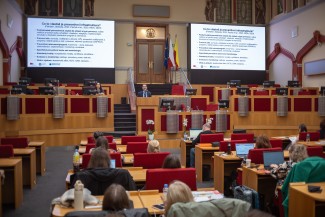
Czech Republic National Prevention Conference - October 2026
The National Chapter of the Czech Republic participated on the annual National Prevention Conference, held in Prague from 12 to 14 October 2026. The conference is one of the major events of its kind in central Europe and brings together...
IPREV: A National Interactive Platform for Promoting Mental Health and Preventing Risk Behaviour – A Case Study of a Comprehensive School- and Community-Based Prevention System
BACKGORUND: Infrastructural support has become a critical factor in the implementation of prevention at the regional and national level. The complexity of risk behaviour prevention requires a diverse and systematic approach.
AIM: This...
Fear of Missing Out on Social Networking Sites: Associations with Life Satisfaction, Problematic Social Media Use, Depressive Symptoms and Phubbing in Young Adulthood
INTRODUCTION: Social networking sites have become an integral part of everyday life. Their use is closely linked to the phenomena of FoMO (fear of missing out), phubbing, depressive symptoms, life satisfaction and problematic social media...
AddictologyIssue 2/2026
Educating Educators on Substance Use: Insights from the Blended Approach
The school-based drug prevention training program under study is about the combined use of an online learning format and a traditional face-to-face session. This study aims to identify the factors that facilitated or impeded the successful...
AddictologyIssue 2/2026
Call for Abstracts: Lisbon Addictions
The 2027 edition of Lisbon Addictions will take place from 20–22 October 2027 under the overarching theme ‘Addiction in times of disruption: science, technology and whole-of-society responses’.
Submission of abstracts
Potential...
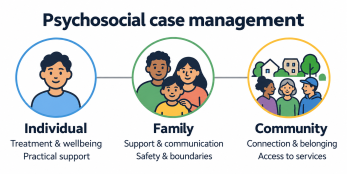
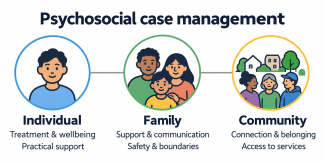
Psychosocial case management: connecting treatment, relationships and community recovery
Psychosocial case management connects evidence-based treatment with the practical and relational support needed for sustained recovery.
Its clearest benefits are helping people access services and remain engaged in care.
Individual care should consider housing, mental health, meaningful activity and continuity of support after discharge.
Families and affected communities also need support, with involvement guided by consent, safety and individual circumstances.
For treatment and prevention, interventions should address identified needs, draw on relevant evidence and be reviewed as circumstances change.
Prevención selectiva e indicada: ¿qué nivel preventivo elegir?
ISSUP España presenta su seminario web sobre 'Prevención selectiva y específica: ¿qué nivel de prevención debes elegir?'.
Para-Methoxymethamphetamine (PMMA) in tablets sold as ecstasy: Why this matters across our workforce
UNODC reports increasing PMMA detections in tablets sold as ecstasy in Europe, raising serious toxicity concerns. The alert encourages coordinated information sharing across prevention, treatment, recovery and law enforcement. It does not confirm local circulation, but prompts a review of local early warning responses.

Connecting Evidence, Prevention, Law Enforcement and Community Action: Key Insights from ISSUP 2026
How do we go about translating evidence into effective action, strengthen prevention, address drug-related crime, improve access to treatment and recovery support, and build safer, healthier communities?
This age-old question was explored...

Faith-Based Approaches: The Role of Faith and Religious Institutions in Addressing Substance Use
Faith, spirituality and faith-based organisations can play an important role in addressing substance use, supporting recovery and responding to related vulnerabilities as well as crime. Across different cultural and community settings, they...
Addressing Youth Substance Use and Crime: Risk Factors and Strategies
Protecting young people from substance use and crime: building safer communities and pathways to support
Young people's involvement in substance use and crime cannot be understood without considering the environments in which they grow up...
From Evidence to Practice: Advances in Substance Use Disorder Care
Evidence-based interventions can improve prevention, treatment and recovery outcomes, but knowing what works does not guarantee that people will benefit. Effective responses depend on trained professionals, supportive systems, coordinated...
Victimisation des jeunes et dynamiques urbaines de la violence
Dans un contexte urbain marqué par des transformations sociales, économiques et technologiques rapides, la compréhension des dynamiques de victimisation chez les jeunes dans l’agglomération de Montréal apparaît essentielle pour soutenir l...
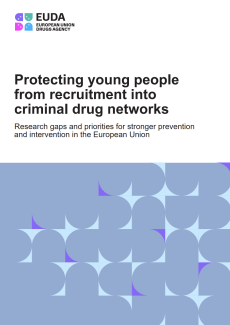
Protecting young people from recruitment into criminal drug networks: Research gaps and priorities for stronger prevention and intervention in the European Union
Safe futures is an initiative supported by the European Union Drugs Agency to strengthen shared understanding of, and responses to, the recruitment and exploitation of young people into criminal drugs networks across Europe. The initiative...
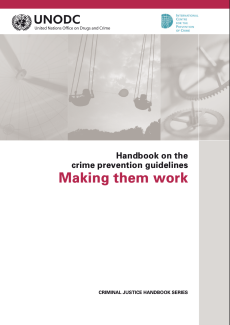
Handbook on the crime prevention guidelines: Making them work
The present Handbook is one of a series of practical tools developed by the United Nations Office on Drugs and Crime (UNODC) to support countries in the implementation of the standards and norms in crime prevention and criminal justice...
Call for Papers: Prevention Science Special Issue on Relational Health
This special issue responds to the Society for Prevention Research’s growing emphasis on multilevel prevention and systems change by advancing a global dialogue on how multilevel, relational health promoting interventions can be designed...
Session 4: Faith-Based Approaches: The Role of Faith and Religious Institutions in Addressing Substance Use
Chaired by: Mulka Nisic
- Faith in Young People? Understanding the Potential and Purpose of Faith in the Recovery and Desistance Journeys of Adolescents and Young Adults - Mr. Tim Rosier
- Latin American Pastoral Manual for Addiction Preven...