Παράκαμψη προς το κυρίως περιεχόμενο

User account menu

  • Είσοδος

Γλώσσες

  • English
  • Français
  • Português
  • Español
  • العربية
  • Pусский

Κεντρική πλοήγηση

  • About ISSUP

    • 10 Years of ISSUP
    • ISSUP Rationale
    • Membership
      • Membership Criteria
      • Code of Ethics
      • Who is ISSUP for?
    • News
      • Newsletters
    • ISSUP Events
    • International Partners
    • Governance
    • ISSUP Scientific Council
    • Friends of ISSUP (USA)
    • ISSUP Awards
      • Evidence-Based Award
      • Local Initiative Award
      • Services Award
      • Excellence in Training Provision
      • Outstanding Contribution to ISSUP Award
    • In Memoriam
    • Acknowledgements
    • ISSUP Website Guides
    • Contact ISSUP
    • FAQs - Frequently Asked Questions
  • Professional Development

    • Online Learning Hub
      • How to Register
      • UTC Self Led Courses
    • Universal Curricula (UC)
      • Currículo de Prevenção Universal
      • Currículo de Tratamento Universal
      • Universal Recovery Curriculum
    • Resources
      • Drug Data Hub
      • Glossary
      • The ISSUP Exchange
      • ISSUP Webinars
      • IEP
      • INEP Plus
      • Prevention Insights Video Series
      • Prevention Lists
      • Recovery Support
      • Quality in Treatment
      • ICAP certification
      • HealthEKnowledge
    • Jobs and Opportunities
  • Knowledge Share

    • Search in the Knowledge Share
    • ADDICTOLOGY Journal
      • Latest Issue
  • National Chapters

    • Africa
      • ISSUP Botswana
      • ISSUP Côte d’Ivoire
      • ISSUP Egypt
      • ISSUP Ethiopia
      • ISSUP The Gambia
      • ISSUP Ghana
      • ISSUP Kenya
      • ISSUP Liberia
      • ISSUP Mauritius
      • ISSUP Morocco
      • ISSUP Namibia
      • ISSUP Nigeria
      • ISSUP South Africa
      • ISSUP Tanzania
      • ISSUP Togo
      • ISSUP Uganda
      • ISSUP Zambia
    • The Americas
      • ISSUP Argentina
      • ISSUP The Bahamas
      • ISSUP Barbados
      • ISSUP Brazil
      • ISSUP Canada
      • ISSUP Chile
      • ISSUP Colombia
      • ISSUP Ecuador
      • ISSUP El Salvador
      • ISSUP Guatemala
      • ISSUP Mexico
      • ISSUP Panama
      • ISSUP Paraguay
      • ISSUP Peru
      • ISSUP United States
    • Asia
      • ISSUP Afghanistan
      • ISSUP Bangladesh
      • ISSUP India
      • ISSUP Indonesia
      • ISSUP Kazakhstan
      • ISSUP Korea
      • ISSUP Lebanon
      • ISSUP Malaysia
      • ISSUP in Pakistan
      • ISSUP Philippines
      • ISSUP Qatar
      • ISSUP Singapore
      • ISSUP Sri Lanka
      • ISSUP Thailand
      • ISSUP Türkiye
      • ISSUP United Arab Emirates
      • ISSUP Uzbekistan
      • ISSUP Vietnam
    • Europe
      • ISSUP Bosnia & Herzegovina
      • ISSUP Czech Republic
      • ISSUP Greece
      • ISSUP Italy
      • ISSUP Spain
      • ISSUP Ukraine
      • ISSUP United Kingdom
    • Oceania
      • ISSUP Australia
      • ISSUP Fiji
      • ISSUP New Zealand
    • How to Become a National Chapter
    • ISSUP National Chapters' Advisory Committee
    • ISSUP National Chapter Spotlight
  • Events

    • Search through all events
    • ISSUP Events
      • Accra 2026
      • Indonesia 2025
      • Thessaloniki 2024
      • Buenos Aires 2023
      • Manila 2022
      • Abu Dhabi 2022
      • Virtual 2021
      • Africa 2020
      • Vienna 2019
      • Nairobi 2018
      • Cancún 2017
      • Campinas 2016
      • Bangkok 2015
  • Networks

    • A–Z
  • My ISSUP

    • Member Directory
    • Αίτηση συμμετοχής

Drug Supply Reduction

ISSUP’s website serves as a dynamic hub for the latest evidence-based knowledge in the field of drug supply reduction, supporting professionals involved in law enforcement, policymaking, border control, and public health.

Moderators

Profile picture for user rasha_abihana
Rasha Abi Hana
ISSUP
Profile picture for user luciana.bruno
Luciana Bruno
ISSUP
Profile picture for user livia.edegger
Livia
ISSUP
Profile picture for user halanajm
Hala Najm
ISSUP
Profile picture for user goodman.sibeko
Goodman Sibeko
ISSUP
DiscussionsΑρχείαΕικόνεςVideosΣύνδεσμοιΓεγονόταKnowledge ShareΌλες
Rasha Abi Hana

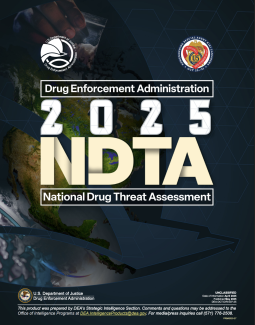
2025 National Drug Threat Assessment (NDTA) - Drug Enforcement Administration (DEA)

Shared by Rasha Abi Hana - 8 June 2026
The Drug Enforcement Administration (DEA)
Format
Report
Published by / Citation
The Drug Enforcement Administration (DEA)

The U.S. Drug Enforcement Administration (DEA) has released its 2025 National Drug Threat Assessment (NDTA), providing an overview of the threats posed by illicit drugs and the transnational criminal organizations involved in their production and trafficking. The report highlights the continuing impact of synthetic drugs, particularly fentanyl and methamphetamine, on public health, public safety, and national security.

While overdose deaths in the United States have declined significantly over the past year, synthetic drugs remain the leading driver of drug-related fatalities. The report also...

  • Διαβάστε περισσότερα για το 2025 National Drug Threat Assessment (NDTA) - Drug Enforcement Administration (DEA)
  • ISSUP members can join Networks to comment – Sign in or become a member
Rasha Abi Hana

UN Toolkit on Synthetic Drugs

Shared by Rasha Abi Hana - 3 June 2026
Format
Toolkit

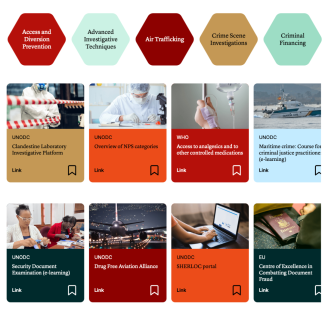
The UN Toolkit on Synthetic Drugs is a practical online resource coordinated by UNODC that brings together tools, guidance, and operational resources from across the UN system to support responses to the global synthetic drug problem. Covering topics such as diversion prevention, investigations, trafficking, criminal financing, and cybercrime, the Toolkit is regularly updated to help policymakers, law enforcement agencies, and practitioners address the rapidly evolving synthetic drug landscape.


ISSUP will be sharing selected modules, tools, and resources from the UN Toolkit on Synthetic...

  • Διαβάστε περισσότερα για το UN Toolkit on Synthetic Drugs
  • ISSUP members can join Networks to comment – Sign in or become a member
Rasha Abi Hana

New UNODC Toolkit Module on Security Document Examination: Launching event

Shared by Rasha Abi Hana - 3 June 2026
Event Date
7 Ιούλιος 2026
Location:
Online

UNODC has launched a new Security Document Examination module within the UN Toolkit on Synthetic Drugs to help law enforcement, border control, and forensic professionals detect and respond to document fraud linked to synthetic drug...

  • Διαβάστε περισσότερα για το New UNODC Toolkit Module on Security Document Examination: Launching event
  • ISSUP members can join Networks to comment – Sign in or become a member
Rasha Abi Hana

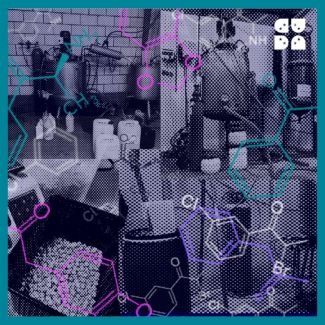
EU controls nine drug precursors following first EUDA assessments

Shared by Rasha Abi Hana - 18 May 2026
EUDA News
Format
News
Published by / Citation
EUDA

The European Commission has introduced new controls on nine high-risk chemical precursors used in illicit drug production under Delegated Regulation (EU) 2026/314. Most of these substances are linked to synthetic cathinones, while one is used in amphetamine production.

This measure responds to the growing scale of synthetic drug production in Europe, with dozens of production sites dismantled in recent years. The regulation is based on updated risk assessments that improve understanding of how precursor chemicals are sourced and diverted into illegal markets.

Overall, the new controls aim to...

  • Διαβάστε περισσότερα για το EU controls nine drug precursors following first EUDA assessments
  • ISSUP members can join Networks to comment – Sign in or become a member
Goodman Sibeko

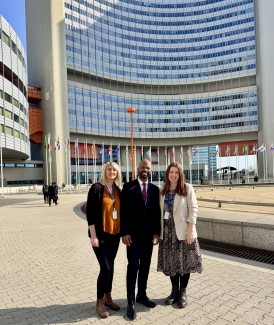
The Commission on Crime Prevention and Criminal Justice (CCPCJ) 2026

Shared by Goodman Sibeko - 5 May 2026
Joanna, Mulka and Goodman at the Vienna International Centre
The Commission on Crime Prevention and Criminal Justice (CCPCJ) is shaping global responses to drug-related crime through stronger international cooperation and more integrated justice systems. There is increasing emphasis on multi-sector approaches that link justice, prevention, treatment , and recovery . In this context, ISSUP has expanded its engagement with law enforcement, courts, and policymakers as key partners. At the 2026 CCPCJ, ISSUP will contribute through a side event focused on strengthening justice systems and workforce capacity. This highlights ISSUP’s role in advancing coordinated, workforce-driven responses to drug-related crime.
  • Διαβάστε περισσότερα για το The Commission on Crime Prevention and Criminal Justice (CCPCJ) 2026
  • ISSUP members can join Networks to comment – Sign in or become a member
Rasha Abi Hana

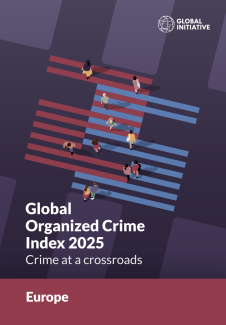
Global Organized Crime Index 2025 - Europe Overview

Shared by Rasha Abi Hana - 5 May 2026
Global Organized Crime Index 2025
Format
Report
Published by / Citation
Global Initiative Against Transnational Organized and Crime

The 2025 Global Organized Crime Index shows that overall crime levels in Europe remain stable, and the region continues to rank among the least affected globally. However, this stability hides a more complex reality, with criminal markets and actors evolving and expanding.

Financial crime is the most widespread threat, driven by online fraud and cross-border schemes, while cybercrime continues to grow, often linked to state-backed or hybrid actors. Drug markets are also shifting, with cocaine and synthetic drugs increasing, while trafficking and smuggling networks remain deeply entrenched.

A...

  • Διαβάστε περισσότερα για το Global Organized Crime Index 2025 - Europe Overview
  • ISSUP members can join Networks to comment – Sign in or become a member
Rasha Abi Hana

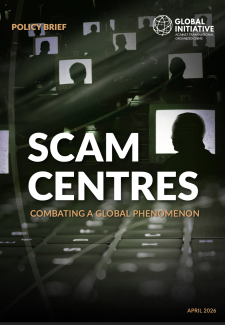
Policy Brief: Scam Centres – Combating a Global Phenomenon

Shared by Rasha Abi Hana - 5 May 2026
Format
Report
Published by / Citation
Global Initiative Against Transnational Organized Crime.

Short Summary

Scam centres are a fast-growing global organized crime threat, generating over $1 trillion in losses in 2024. They use technology and psychological manipulation to target victims worldwide, supported by global criminal networks and easy-to-access tools.

Despite enforcement efforts, scams are expanding and adapting, often moving to low-governance environments and exploiting geopolitical gaps.

Key Actions

  • Increase international coordination and intelligence sharing

  • Pressure safe havens and strengthen regulation of tech and financial platforms

  • Cooperate across...

  • Διαβάστε περισσότερα για το Policy Brief: Scam Centres – Combating a Global Phenomenon
  • ISSUP members can join Networks to comment – Sign in or become a member
Rasha Abi Hana

Medetomidine in the U.S. Illegal Fentanyl Supply Increasing Risk for Overdose and Severe Withdrawal Syndrome

Shared by Rasha Abi Hana - 20 April 2026
Format
News

The Centers for Disease Control and Prevention (CDC), in conjunction with the White House Office of National Drug Control Policy (ONDCP), is issuing this Health Advisory to notify public health professionals, clinicians, laboratorians, and people at risk for overdose about increasing reports from U.S. jurisdictions detecting medetomidine in the illegal drug supply and a severe withdrawal syndrome due to medetomidine exposure. Medetomidine (also known as 'rhino tranq,' 'mede,' or 'dex') is not approved for human use but is approved for sedation and analgesia in dogs. Its dextro-isomer...

  • Διαβάστε περισσότερα για το Medetomidine in the U.S. Illegal Fentanyl Supply Increasing Risk for Overdose and Severe Withdrawal Syndrome
  • ISSUP members can join Networks to comment – Sign in or become a member
Rasha Abi Hana

A Reading List on Responding to Drug-Related Offending through Science-Based Policy and Practice

Shared by Rasha Abi Hana - 13 March 2026
Format
Reading List
As justice systems increasingly shift their focus from punishment to rehabilitation , it becomes essential to understand the complex relationship between substance use, criminal behaviour, and treatment , particularly among individuals whose involvement with the system stems from substance use. 
  • Διαβάστε περισσότερα για το A Reading List on Responding to Drug-Related Offending through Science-Based Policy and Practice
  • ISSUP members can join Networks to comment – Sign in or become a member
Rasha Abi Hana

Training Team collaboration

Shared by Rasha Abi Hana - 30 January 2026
Quick off meeting 16-12-2025

A new chapter in training has begun at ISSUP. A new Training Team has been formed with the goal of improving the accessibility and relevance of ISSUP’s training, while ensuring it reflects the learning needs of members worldwide.

In the early months of its work, the team carried out a training needs assessment to better understand members’ online learning needs. At the same time, the team engaged with several Learning Management System (LMS) providers to explore options for a new platform that supports accessible, high-quality learning. The proposals received are now being reviewed.

This...

  • Διαβάστε περισσότερα για το Training Team collaboration
  • ISSUP members can join Networks to comment – Sign in or become a member
Goodman Sibeko

African Union Commission Drug Control Technical Experts Meeting: ISSUP Participation and Key Insights

Shared by Goodman Sibeko - 24 November 2025
African Union Commission Drug Control Technical Experts Meeting
The AUC convened a Drug Control Technical Experts Meeting in Maputo to review progress under the AUPA 2019–2025 and shape the next continental drug strategy. ISSUP, represented by Joanna Travis-Roberts and A/Prof Goodman Sibeko, contributed to discussions on strengthening both drug supply and demand reduction. Delegates highlighted persistent challenges, including limited capacity, weak data systems, and uneven access to treatment across Member States. The draft AU Drug Strategy 2026–2033 proposes ten strategic pillars centred on public health, data integration, youth engagement, coordinated governance, and addressing harms related to substance use disorders. ISSUP reaffirmed its commitment to capacity building, youth and community engagement, network strengthening, and improved data collection through tools such as the Web App ASSIST.
  • Διαβάστε περισσότερα για το African Union Commission Drug Control Technical Experts Meeting: ISSUP Participation and Key Insights
  • ISSUP members can join Networks to comment – Sign in or become a member
Luciana Bruno

Drug Supply Reduction: an Overview of EU Policies and Measures

Shared by Luciana Bruno - 17 September 2025
Format
Scientific article
Published by / Citation
European Monitoring Centre for Drugs and Drug Addiction (2017), Drug supply reduction: an overview of EU policies and measures, EMCDDA Papers

Illicit drug markets operate through a complex, global chain—from production and trafficking to consumption and the profits that fuel organised crime. At every stage, these activities compromise the health and security of countries worldwide. The European Union (EU) recognises these risks and has developed a range of policies and responses to address the challenges posed by the production and trafficking of illegal drugs, working closely with international partners.

The EU’s approach spans multiple strategic areas, including security, organised crime, maritime and regional cooperation, and...

  • Διαβάστε περισσότερα για το Drug Supply Reduction: an Overview of EU Policies and Measures
  • ISSUP members can join Networks to comment – Sign in or become a member
Luciana Bruno

Paris Pact - Phase IV and the Vienna Declaration

Shared by Luciana Bruno - 17 September 2025
Format
Report
Published by / Citation
UNODC

Since 2003, the Paris Pact Initiative (PPI) has grown into a key international coalition, now comprising 58 partner countries and 22 organisations, including UNODC. It provides a vital platform for consensus-building, linking high-level political commitment with practical technical assistance on the ground. By strengthening cooperation among counter-narcotics actors worldwide, the Paris Pact supports coordinated policy-making and evidence-based interventions to tackle the illicit traffic of opiates originating in Afghanistan.

The Initiative focuses on major opiate trafficking routes, with...

  • Διαβάστε περισσότερα για το Paris Pact - Phase IV and the Vienna Declaration
  • ISSUP members can join Networks to comment – Sign in or become a member
Luciana Bruno

The Global SMART Programme — A Strategic Response to the Synthetic Drug Problem, United Nations, New York

Shared by Luciana Bruno - 17 September 2025
Format
Leaflet, Infographic, Fact sheet, Poster
Published by / Citation
UNODC

The global market for synthetic drugs has grown rapidly in recent years, with amphetamine-type stimulants (ATS) and new psychoactive substances (NPS) becoming a significant concern worldwide. ATS, which include amphetamine, methamphetamine and ecstasy-type substances, are now the second most widely used drugs after cannabis. Meanwhile, NPS such as synthetic cannabinoids, cathinones and phenethylamines continue to emerge in large numbers, often outpacing substances under international control, and pose serious health risks across a wide geographical spread.

In response to this growing...

  • Διαβάστε περισσότερα για το The Global SMART Programme — A Strategic Response to the Synthetic Drug Problem, United Nations, New York
  • ISSUP members can join Networks to comment – Sign in or become a member
Luciana Bruno

The Future of Drug Supply Monitoring in Europe

Shared by Luciana Bruno - 17 September 2025
Format
Report
Published by / Citation
EMCDDA

Understanding drug markets in Europe requires monitoring both supply and demand. Traditionally, this has relied on data such as drug seizures, prices, purity and offences. However, because drug markets operate illicitly, gathering and interpreting reliable data remains a challenge. At the same time, modern drug policy increasingly focuses on reducing harm, which means monitoring must go beyond law enforcement indicators to also consider the wider impact on society.

To address this, the European Monitoring Centre for Drugs and Drug Addiction (EMCDDA) has developed a new framework to improve...

  • Διαβάστε περισσότερα για το The Future of Drug Supply Monitoring in Europe
  • ISSUP members can join Networks to comment – Sign in or become a member
Luciana Bruno

UNODC (2011a), The Paris Pact Initiative — Evaluating the Achievements: From Partnership to Policy, to Action

Shared by Luciana Bruno - 17 September 2025
Format
Website
Published by / Citation
UNODC

The Paris Pact Initiative (PPI), launched in 2003, is one of the leading international coalitions tackling the illicit trafficking of opiates from Afghanistan. Bringing together 58 countries and 23 organisations, including UNODC, it serves as a vital bridge between high-level political commitment and practical action on the ground. The partnership provides a platform for shaping policy, sharing expertise and aligning counter-narcotics efforts worldwide.

The PPI focuses on major trafficking routes, adapting its responses as trends evolve. Initially centred on the northern and Balkan routes, it...

  • Διαβάστε περισσότερα για το UNODC (2011a), The Paris Pact Initiative — Evaluating the Achievements: From Partnership to Policy, to Action
  • ISSUP members can join Networks to comment – Sign in or become a member
Luciana Bruno

UNODC-WCO (2015), Container Control Programme — Annual Report

Shared by Luciana Bruno - 16 September 2025
Format
Report
Published by / Citation
UNODC-WCO

In 2015, the UNODC-WCO Container Control Programme (CCP) expanded its reach with new Port Control Units (PCUs) across Asia and Europe, including in Bangladesh, Bosnia and Herzegovina, Georgia, Jordan, Nepal, Thailand and Viet Nam, as well as the first Air Cargo Control Unit in Pakistan. Alongside these milestones, the Programme advanced its use of technology through systems like ContainerCOMM and the Container Targeting System, while also launching the CCP Women’s Network to promote gender inclusion in its work.

Training remained central to the CCP’s mission, from core sessions on enforcement...

  • Διαβάστε περισσότερα για το UNODC-WCO (2015), Container Control Programme — Annual Report
  • ISSUP members can join Networks to comment – Sign in or become a member
Luciana Bruno

UNODC (2014a), Global SMART Update

Shared by Luciana Bruno - 16 September 2025
Format
Report
Published by / Citation
UNODC, Global SMART Update Volume 13, March 2015.

The rapid rise of synthetic drugs has become one of the world’s most pressing drug-related challenges. After cannabis, amphetamine-type stimulants (ATS) are the most widely used drugs globally, now surpassing cocaine and heroin. Alongside this, the market for new psychoactive substances (NPS) has expanded at an alarming pace, with reports of their presence in over 90 countries. These fast-changing trends make it difficult for governments to respond effectively, particularly as synthetic drugs continue to diversify and adapt.

To address this, the UNODC launched the Global SMART Programme in...

  • Διαβάστε περισσότερα για το UNODC (2014a), Global SMART Update
  • ISSUP members can join Networks to comment – Sign in or become a member
Luciana Bruno

UNODC (2012), In-Depth Evaluation of Paris Pact Phase III, United Nations, New York

Shared by Luciana Bruno - 16 September 2025
Format
Report
Published by / Citation
United Nations

The evaluation of Phase III of the Paris Pact Initiative (2010–2012), supported by UNODC’s Project GLO K31, examined how effectively this global partnership has addressed the trafficking and consumption of opiates, particularly those originating in Afghanistan. Bringing together 58 countries and 21 organisations, the Initiative has played a key role in strengthening international cooperation, improving data and analysis, and fostering better-informed policy decisions. Respondents acknowledged the importance of its consultative mechanisms — including the Policy Consultative Group and Expert...

  • Διαβάστε περισσότερα για το UNODC (2012), In-Depth Evaluation of Paris Pact Phase III, United Nations, New York
  • ISSUP members can join Networks to comment – Sign in or become a member
Luciana Bruno

International Narcotics Control Board (INCB), Precursors and chemicals frequently used in the illicit manufacture of narcotic drugs and psychotropic substances, United Nations, New York

Shared by Luciana Bruno - 16 September 2025
Format
Report
Published by / Citation
United Nations Publication Sales No. E.16.XI.4 ISBN: 978-92-1-148284-3 eISBN: 978-92-1-057749-6

The International Narcotics Control Board’s 2015 report on precursors highlights global efforts to stop chemicals being diverted into the illicit manufacture of drugs. It points to successes achieved through international cooperation, including platforms like the Precursor Task Force, Project Prism, Project Cohesion, and the PEN Online system, which has become a key tool for monitoring chemical trade worldwide.

Despite progress, the report warns that drug production is shifting towards new, non-scheduled chemicals that fall outside existing controls. To tackle this, the Board calls for more...

  • Διαβάστε περισσότερα για το International Narcotics Control Board (INCB), Precursors and chemicals frequently used in the illicit manufacture of narcotic drugs and psychotropic substances, United Nations, New York
  • ISSUP members can join Networks to comment – Sign in or become a member

Σελιδοποίηση

  • Τρέχουσα σελίδα 1
  • Σελίδα 2
  • Σελίδα 3
  • Next page Next ›
  • Last page Last »

Upcoming Events

There aren't any upcoming events
All Events
Contact Us

Stay Connected

Newsletter

ISSUP is funded by the U.S. Department of State via the Bureau of International Narcotics and Law Enforcement Affairs (INL). INL works to keep Americans safe by countering crime, illegal drugs, and instability abroad.

Copyright © International Society of Substance Use Prevention and Treatment Professionals Privacy Policy