As justice systems increasingly shift their focus from punishment to rehabilitation, it becomes essential to understand the complex relationship between substance use, criminal behaviour, and treatment, particularly among individuals whose involvement with the system stems from substance use.
Sitařová, P. & Obereignerů, R. (2025). Towards Comprehensive Sexuality Education in the Czech Republic: A Qualitative Study of Practitioners‘ Perspectives on Key Themes and Methods. Adiktologie, 25(4), 191–204
INTRODUCTION: This study explores the perspectives of Czech practitioners on sexuality education (SE) for upper primary school students (ISCED level 2). It focuses on the topics they consider relevant, including those currently underrepresented in school curricula as well as the approaches and methods they apply in practice. The framework of Comprehensive Sexuality Education (CSE) is used as a lens for interpreting their experiences and practices.
METHODS: Fourteen practitioners participated in two semi-structured focus groups (n = 4 per group, 8 in total) and six individual interviews...
Kloučková, K. & Barták, M. (2025). Alcohol Labelling: Czech Expert Perspectives and Recommendations. Adiktologie, 25(4), 181–190
INTRODUCTION: Consumption of alcohol has significant influence on the physical and mental health of the Czech population. Nevertheless, public awareness of alcohol-related consequences in the Czech Republic remains inadequate. One potential and promising strategy for increasing awareness and promoting prevention is the labelling of alcoholic beverages, which could serve as an educational tool for consumers. The aim of the present study was to find positive or negative consensus among experts in the Czech Republic regarding statements and recommendations on alcohol labelling and its potential...
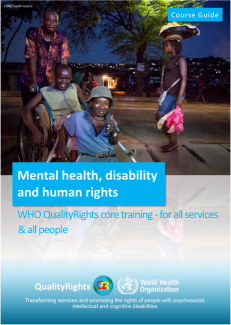
As part of the QualityRights Initiative, WHO has developed a comprehensive package of training and guidance materials. The materials can be used to build capacity among mental health practitioners, people with psychosocial, intellectual and cognitive disabilities, people using mental health services, families, care partners and other supporters, nongovernmental organizations, organizations of persons with disabilities and others on how to implement a human rights and recovery approach in the area of mental health in line with the UN Convention on the Rights of Persons with...
A new chapter in training has begun at ISSUP. A new Training Team has been formed with the goal of improving the accessibility and relevance of ISSUP’s training, while ensuring it reflects the learning needs of members worldwide.
In the early months of its work, the team carried out a training needs assessment to better understand members’ online learning needs. At the same time, the team engaged with several Learning Management System (LMS) providers to explore options for a new platform that supports accessible, high-quality learning. The proposals received are now being reviewed.
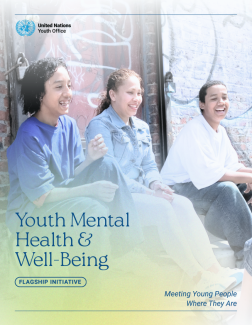
The United Nations Youth Office launched the flagship initiative on Youth Mental Health and Wellbeing! The initiative promotes an ecosystem model for youth mental health and wellbeing, using a whole-of-society approach.
The initiative was launched at the Second World Summit for Social Development in Doha. The launch video is available here
This flagship initiative by the UN Youth office reframes the conversation to a broader vision grounded in care, connection and community. This effort bridges policy leadership with youth-led movements across the world centering young people as equal...
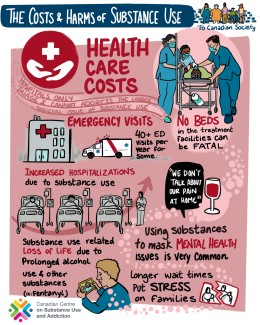
The Canadian Centre on Substance Use and Addiction (CCSA) transforms complex data into insights that reflect real human experiences. Every aspect of the Canadian Substance Use Cost and Harms (CSUCH) project represents individuals with lived or living experience of substance use, along with their families, workplaces, and communities.
A new resource highlights these journeys and the human cost of substance use through illustrated stories from people with lived experience and their families. The illustrations cover three key areas of the CSUCH project: healthcare, lost productivity, and...
More than 100 million people — including at least 15 million children — are now using e-cigarettes, according to the World Health Organisation (WHO).
Children are nine times more likely than adults to vape, raising serious concerns about early nicotine dependence. WHO officials warn that e-cigarettes, often marketed as “harm reduction,” are in fact hooking a new generation on nicotine and undermining decades of progress in tobacco control.
While traditional tobacco use continues to decline globally, vaping is rapidly increasing, especially in high-income countries. Yet by the end of 2024, 62...
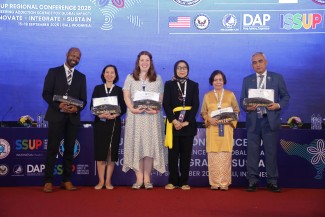
We recently (15-19 September 2025) had the pleasure of attending the ISSUP Indonesia 2025 Regional Event , a dynamic gathering that convened policymakers, practitioners, academics, and civil society actors from across the globe. In this report, I reflect on the themes and discussions that resonated throughout the conference, with particular attention to the plenary sessions I had the privilege of moderating: Plenaries 3, 5, and 11.
The conference as a whole was marked by excellent participation, lively discussion, and an energetic exchange of ideas. Attendees were able to engage across a...
In this reading list, we provide resources to help engage our members with the latest knowledge, tools, and case studies on quality standards in substance use disorder treatment. These materials highlight international frameworks, research-backed practices, and country-level initiatives designed to improve access, strengthen systems, and ensure safe, ethical, and effective care.
Together, they offer a practical foundation for policy-makers, service providers, researchers, and healthcare professionals to reflect on what “quality” means in treatment and how to achieve it across diverse...
Council of the European Union, CORDROGUE 139, doc.18020/13
The European Union and Central Asian countries have joined forces through the EU–Central Asia Action Plan on Drugs 2014–2020, building on earlier cooperation dating back to 2002. This plan recognises the shared challenges posed by drug trafficking, drug abuse and the security risks linked to developments in neighbouring Afghanistan. With law enforcement and judicial systems in need of modernisation, the Action Plan focuses on reducing both the demand for and supply of illicit drugs, while also strengthening national capacities to respond effectively.
The 2025 Annual Report to the Parliament on Drug Addictions in Italy offers a comprehensive overview of the current drug addiction landscape. Despite a slight decline in youth drug use for the first time since 2018, the report highlights ongoing challenges, particularly with substances like cocaine, synthetic opioids, and high-potency cannabis derivatives. Law enforcement and judicial efforts remain strong, and Italy continues to be a key collaborator in global anti-drug initiatives, particularly with countries in South America and the Indo-Pacific region.
The WHO Global Status Report on Alcohol and Health and Treatment of Substance Use Disorders provides a comprehensive snapshot of global trends in alcohol consumption, related harms, and national policy responses, alongside the availability and quality of treatment services for alcohol and drug use disorders.
Key Highlights:
Presents the latest data from WHO Member States, aligned with SDG Health Target 3.5: “Strengthen prevention and treatment of substance abuse, including narcotic drug abuse and harmful use of alcohol.”
Offers updated insights on global alcohol consumption patterns...
The ICUDDR Center for Credentialing & Accreditation (CCA) has announced that all ICAP Exams will be offered in Bali, Indonesia, on 18 September 2025, during the upcoming ISSUP 2025 event.
The objective of the study was to compare the use of medical and dental services by seniors residing at a seniors-only living facility and in the general community. It was a quantitative study, among 50 residents of the living facility and 173 in the general community. The data were collected between November 2011 and February 2012 through a questionnaire, and subjected to statistical analysis. Performance of clinical exams and satisfaction with health services was greater among seniors living in the general community; however, physical therapy treatment was more common among those living in...
Tomic D, Shaw JE, Magliano DJ. The burden and risks of emerging complications of diabetes mellitus. Nat Rev Endocrinol. 2022 Sep;18(9):525-539. doi: 10.1038/s41574-022-00690-7. Epub 2022 Jun 6. PMID: 35668219; PMCID: PMC9169030.
Abstract:
While the traditional complications of diabetes mellitus—such as cardiovascular disease—are well recognized, advances in treatment and increased life expectancy have revealed a new set of lesser-known complications that are becoming more prominent.
As mortality from vascular disease declines, conditions like cancer and dementia have emerged as leading causes of death among people with diabetes in several countries. In addition, growing evidence shows strong associations between diabetes and a range of comorbidities, including:
Lee, EH., Yu, HJ. Effectiveness of nurse-initiated smoking cessation intervention: a systematic review and meta-analysis. Subst Abuse Treat Prev Policy 20, 18 (2025). https://doi.org/10.1186/s13011-025-00648-8
Background
Smoking is one of the top causes of preventable death and is linked to many serious health problems, including cancer and chronic diseases. Nurses can play a big role in helping people quit smoking by offering support through counselling, education, and mental health care. These nurse-led programs have been shown to increase quit rates. Training nurses to deliver these programs is important, and reviewing past studies helps us understand what works best.
Methods
Researchers searched eight major health databases between March 27 and August 1, 2024, to find studies on nurse-led...