

جستجو
 Prevention
Evidence-informed strategies and interventions designed to reduce the likelihood of substance use and related harms. Prevention efforts aim to reduce risk factors and strengthen protective factors at the individual, family, community, and societal levels. These approaches may include education, family and school-based programmes, community initiatives, and policies that promote healthy environments. Prevention can be universal (targeting entire populations), selective (targeting groups at higher risk), or indicated (targeting individuals already showing early signs of risk). By addressing the factors that influence substance use before problems develop or escalate, prevention plays a key role in comprehensive responses to substance use disorders and related social and health challenges.

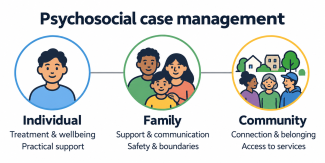
Psychosocial case management: connecting treatment, relationships and community recovery
Psychosocial case management connects evidence-based treatment with the practical and relational support needed for sustained recovery.
Its clearest benefits are helping people access services and remain engaged in care.
Individual care should consider housing, mental health, meaningful activity and continuity of support after discharge.
Families and affected communities also need support, with involvement guided by consent, safety and individual circumstances.
For treatment and prevention, interventions should address identified needs, draw on relevant evidence and be reviewed as circumstances change.
Para-Methoxymethamphetamine (PMMA) in tablets sold as ecstasy: Why this matters across our workforce
UNODC reports increasing PMMA detections in tablets sold as ecstasy in Europe, raising serious toxicity concerns. The alert encourages coordinated information sharing across prevention, treatment, recovery and law enforcement. It does not confirm local circulation, but prompts a review of local early warning responses.

Connecting Evidence, Prevention, Law Enforcement and Community Action: Key Insights from ISSUP 2026
How do we go about translating evidence into effective action, strengthen prevention, address drug-related crime, improve access to treatment and recovery support, and build safer, healthier communities?
This age-old question was explored...

Faith-Based Approaches: The Role of Faith and Religious Institutions in Addressing Substance Use
Faith, spirituality and faith-based organisations can play an important role in addressing substance use, supporting recovery and responding to related vulnerabilities as well as crime. Across different cultural and community settings, they...
Addressing Youth Substance Use and Crime: Risk Factors and Strategies
Protecting young people from substance use and crime: building safer communities and pathways to support
Young people's involvement in substance use and crime cannot be understood without considering the environments in which they grow up...
From Evidence to Practice: Advances in Substance Use Disorder Care
Evidence-based interventions can improve prevention, treatment and recovery outcomes, but knowing what works does not guarantee that people will benefit. Effective responses depend on trained professionals, supportive systems, coordinated...
Victimisation des jeunes et dynamiques urbaines de la violence
Dans un contexte urbain marqué par des transformations sociales, économiques et technologiques rapides, la compréhension des dynamiques de victimisation chez les jeunes dans l’agglomération de Montréal apparaît essentielle pour soutenir l...
Protecting young people from recruitment into criminal drug networks: Research gaps and priorities for stronger prevention and intervention in the European Union
Safe futures is an initiative supported by the European Union Drugs Agency to strengthen shared understanding of, and responses to, the recruitment and exploitation of young people into criminal drugs networks across Europe. The initiative...
Handbook on the crime prevention guidelines: Making them work
The present Handbook is one of a series of practical tools developed by the United Nations Office on Drugs and Crime (UNODC) to support countries in the implementation of the standards and norms in crime prevention and criminal justice...
Call for Papers: Prevention Science Special Issue on Relational Health
This special issue responds to the Society for Prevention Research’s growing emphasis on multilevel prevention and systems change by advancing a global dialogue on how multilevel, relational health promoting interventions can be designed...
Session 4: Faith-Based Approaches: The Role of Faith and Religious Institutions in Addressing Substance Use
Chaired by: Mulka Nisic
- Faith in Young People? Understanding the Potential and Purpose of Faith in the Recovery and Desistance Journeys of Adolescents and Young Adults - Mr. Tim Rosier
- Latin American Pastoral Manual for Addiction Preven...
Session 2: Addressing Youth Substance Use and Crime: Risk Factors and Strategies
Chaired by: Guido Prósperi and Radolf Nortey
- Understanding Youth Recruitment to Inform Prevention: Insights from EUCPN - Dr. Maxime Hennen
- National Dialogue for Peace in Mexico: for a shared and habitable future - Dr. Ana Paula...
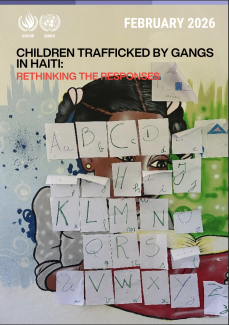
Children Trafficked by Gangs in Haiti: Rethinking the Responses
This joint report by the United Nations Integrated Office in Haiti (BINUH) and the Office of the United Nations High Commissioner for Human Rights (OHCHR) examines the trafficking and exploitation of children by gangs in Haiti. It...
Faith, Hope and Recovery: Building a Life Worth Living
ABSTRACT
Faith communities can play a distinctive role in recovery from substance use problems, not as a substitute for evidence-based treatment, but as part of the wider social, relational and spiritual resources that help people build...
"Proclaim Liberty to the Captives": Reflections on the Christian Contribution—Its Strengths and Vulnerabilities
ABSTRACT
Christians have played a significant and pioneering role in addressing substance use and supporting people on the journey of recovery. Drawing on the speaker’s experience leading addiction recovery work in the UK and Latin America...
Strengthening Faith-Based Responses to Drugs and Youth Criminal Recruitment: CICAD's Experience in the Americas
ABSTRACT
This presentation examines the experience of the Inter-American Drug Abuse Control Commission (CICAD) in strengthening the role of faith-based organizations in addressing substance use and the growing challenge of youth...
Latin American Pastoral Manual for Addiction Prevention and Support
ABSTRACT
Presentation of the Latin American Pastoral Manual for Addiction Prevention and Support, a resource that brings together science, faith and community experience. Developed through a synodal process involving representatives from...
Faith in young people? Understanding the potential and purpose of faith in the recovery and desistance journeys of adolescents and young adults.
ABSTRACT
Holistic transformation and wholesale change are the ultimate goals of those who work with substance users. But what does it mean to be truly holistic? And what does it look like to engage young people holistically including in...
Public Health Alert: Cychlorphine, a Highly Potent Emerging Synthetic Opioid
This public health alert from Addiction Policy Forum highlights cychlorphine, a highly potent emerging synthetic opioid detected in the unregulated drug supply in the United States, including alongside fentanyl and other substances. The...

Addressing Youth Substance Use and Crime: Prevention and Recovery Lessons from Kinshasa
ABSTRACT
Youth substance use and involvement in crime rarely result from a single risk factor. Vulnerability can increase when individual, family, peer, school, community, and socio-economic risks accumulate, particularly where protective...