

جستجو
Community-Based
Community-level awareness, altering social norms, and building resilience.



Session 2: Addressing Youth Substance Use and Crime: Risk Factors and Strategies
Chaired by: Guido Prósperi and Radolf Nortey
- Understanding Youth Recruitment to Inform Prevention: Insights from EUCPN - Dr. Maxime Hennen
- National Dialogue for Peace in Mexico: for a shared and habitable future - Dr. Ana Paula...
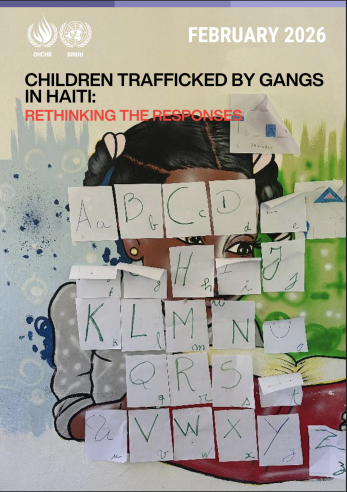
CHILDREN TRAFFICKED BY GANGS IN HAITI: RETHINKING THE RESPONSES
This joint report by the United Nations Integrated Office in Haiti (BINUH) and the Office of the United Nations High Commissioner for Human Rights (OHCHR) examines the trafficking and exploitation of children by gangs in Haiti. It...
Addressing Youth Substance Use and Crime: Prevention and Recovery Lessons from Kinshasa
ABSTRACT
Youth substance use and involvement in crime rarely result from a single risk factor. Vulnerability can increase when individual, family, peer, school, community, and socio-economic risks accumulate, particularly where protective...
National Dialogue for Peace in Mexico: for a shared and habitable future
ABSTRACT
Mexico is facing a profound crisis of violence, disappearance, impunity, and social fragmentation. One of its most painful expressions is the recruitment of children, adolescents, and young people by organized crime. This...
Breaking Silos: Building Multi-Sector Partnerships to Address Substance Use Disorders
|
Substance use disorders (SUDs) pose significant challenges in academic environments, impacting students' health, academic performance, and campus well-being. This panel presentation outlines the collaborative efforts of Trinity... |

Connecting Sectors Creating Impact: A Community-Driven Drug Abuse Prevention Model From Ewu-Ekiti, Nigeria
|
The use of psychoactive substances by young people is a rising environmental health concern in many Nigerian communities. Prevention efforts have shown fragmentation across institutions, thus curtailing their impact. It has... |

Dream-Catchers: A Scalable Youth Mentoring Model for Substance Use Prevention in Nigeria
|
Background |

Assets Coming Together for Adolescents and Young Adult Health and Wellness (ACT NOW!!!): Engaging Community Actors in a Mapping Exercise to bridge the gap between drug prevention science and practice
|
ACT NOW!!! is a community drug prevention initiative rooted in an asset mapping exercise that serves as a foundation for identifying effective intervention strategies. The presentation emphasizes leveraging insights gained from... |

MeWeSports: A community sports-based intervention for preventing adolescent substance use and promoting mental health - Development and pilot insights from India
|
Background |

Youth Engagement as a Strategic Tool for Strengthening Evidence-Based Drug Prevention in Africa
|
Africa has the youngest population in the world, with over 60% of its population under the age of 25 (United Nations, 2022). At the same time, drug use is rising globally, with an estimated 296 million people using drugs in... |

Rehabilitation and Re-entry Programmes for Justice-Involved Individuals and Their Effectiveness in Social Reintegration: A Systematic Review
Prison rehabilitation and community re-entry programmes implemented during incarceration or in the transitional period serve as significant mechanisms for facilitating justice-involved individuals in their post-release adaptation. This...

The Changing Approach to Addiction — From Incarceration to Treatment and Recovery Support
It’s been more than 50 years since the United States launched a “war on drugs.” History has demonstrated the ineffectiveness of “tough-oncrime” drug-use policies, including laws requiring mandatory minimum sentencing for possession of...
Community-based substance use treatment programs for reentering justice-involved adults: A scoping review
Introduction:
For adults involved with the criminal justice system who are reentering their communities postincarceration, there is a large need for community-based substance use treatment. Little is known, however, about the types...

Building Safer Communities: The Role of Community Policing in Substance Use, Violence and Crime Prevention in Uganda
ISSUP Uganda presents its webinar, " Building Safer Communities: The Role of Community Policing in Substance Use, violence and Crime Prevention in Uganda"
The Role of Faith Communities in Addressing Substance Use and Crime – Reading List (Part 2)
In this second reading list, we continue exploring the growing evidence on the role and contribution of faith communities and faith-based organisations in addressing substance use and crime, with a particular focus on treatment engagement...

Spirituality and Harmful or Hazardous Alcohol and Other Drug Use
This meta-analysis synthesises evidence from 55 longitudinal studies involving more than 540,000 participants to examine the relationship between spirituality and harmful or hazardous alcohol and other drug (AOD) use. The findings...

Association Between Religiosity and Spirituality and Cocaine Use: A Systematic Review
This systematic review examines the association between religiosity, spirituality, and cocaine use by analysing findings from 20 observational studies involving adults and adolescents. Most studies found that higher levels of religiosity...

Youth Narratives Concerning Drug Trafficking in Sinaloa: Joining, Risks, and Plans
This qualitative study explores the experiences of young people involved in drug trafficking in Culiacán, Sinaloa, Mexico. Based on interviews with 16 young adults, the research examines why they joined drug trafficking, how they perceived...

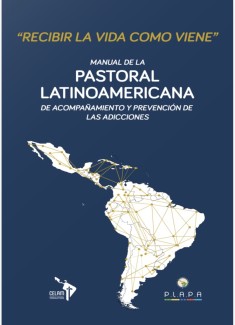
Manual de la Pastoral Latinoamericana de Acompañamiento y Prevención de las Adicciones
Nos complace compartir el lanzamiento del Manual de Pastoral de Adicciones, una iniciativa desarrollada por la Pastoral Latinoamericana de las Adicciones (PLAPA) y el CELAM.
Este manual ofrece una guía pastoral para la prevención, el...
Protecting Youth from Mexican Drug Cartel Recruitment: The Prospects of Educational Interventions
This investigation considers the impact of Mexico’s War on Drugs since 2006 and the influence of widespread cartel networks on the youth population. As both victims and perpetrators of drug-related crime, the young individuals of Mexico are...