

Tìm kiếm
Treatment Settings
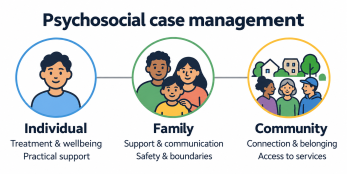
Various treatment formats, either in a live-in facility or through regular visits to a clinic, are designed for ongoing support, to help maintain recovery, and to prevent relapse.


£421 million to boost drug and alcohol treatment across England
It has been announced that local authorities across England will benefit from an extra £421 million government funding through to 2025 to improve drug and alcohol addiction treatment and recovery.
The extra funding will enable the creation...
Repetitive transcranial magnetic stimulation (rTMS) is associated with increased abstinence in substance use disorders and comorbid depression
BACKGROUND: Substance use disorders (SUDs) are associated with high rates of comorbid depression. Finding effective treatments for many of the substances of abuse is still an area of developing research. Repetitive transcranial magnetic...
GRAMÁTICA DE LA PREVENCIÓN: Presentación del libro de Alfonso Ramírez de Arellano, preguntas y debate posterior
ISSUP España le invita a su Webinar sobre la Gramática de la Prevención.
Nationally representative surveys on cannabis use lack product details relevant to public health
Abstract
Objectives
Many annual, nationally representative US surveys that assess cannabis use do not collect information on product characteristics despite varying health risks and benefits. Capitalizing on a rich dataset of primarily...
What Are The Five Stages Of Change?- A Blog Dedicated to Educate the Families of people with Addiction
The blog is a rich source of learning.
You may read the information at your pace.
Share with the clients and their families to equip themselves with the simple strategies to take steps towards more recovery and less relapse.
Here- https...

Drug Policy in the UK: A Matter of Crime or Health
ISSUP UK are pleased to present their Webinar on Drug Policy in the UK.
Safeguarding people from the use of Tobacco for Tobacco-Free generations: Tobacco-free Initiative Pakistan
ISSUP Pakistan present this Webinar on Safeguarding from the use of Tobacco.: Tobacco-free Initiative Pakistan
New Psychoactive Substances – Designer Benzodiazepines
ISSUP Pakistan present their Webinar on New Psychoactive Substances – Designer Benzodiazepines.
Gamma Hydroxybutyrate (GHB) as a new storm for Mental Health and Addiction Professionals: Insight from Developing Countries
ISSUP Pakistan are pleased to present their webinar on Gamma Hydroxybutyrate (GHB).
Factors related to substance use treatment attendance after peer recovery coach intervention in the emergency department
Abstract
Introduction
Brief intervention with peer recovery coach support has been used to generate referrals to substance use disorder treatment from the emergency department (ED). This retrospective study evaluated factors associated...
Profiles of quality of outpatient care use, associated sociodemographic and clinical characteristics, and adverse outcomes among patients with substance-related disorders
Abstract
Background
This study identified patient profiles in terms of their quality of outpatient care use, associated sociodemographic and clinical characteristics, and adverse outcomes based on frequent emergency department (ED) use...
Provider self-efficacy in delivering evidence-based psychosocial interventions: A scoping review
Abstract
Background:
Among the many variables that affect implementation of evidence-based interventions in real-world settings, self-efficacy is one of the most important factors at the provider level of the social ecology. Yet, research...
Recovery Research Institute Infographics
The Recovery Research Institute have put together a series of pamphlets presenting and discussing all issues relating to recovery support

Measuring and Operationalising Recovery Capital
Recovery capital helps us better understand the process of recovering from a substance use disorder and determine the success of recovery and treatment interventions, improve coping strategies, and enhance an individuals’ quality of life in...
ISAM at Lisbon Addictions 2022
Here you can find a collection of ISAM presentation recordings that took place during Lisbon Addictions 2022
Recording 1: An introduction to ISAM Global Expert Network (ISAM-GEN) – Hamed Ekhtiari
Recording 2: Development of a Global...
ISAM neuroscience interest group webinar series
In ISAM-NIG's new monthly talk series "In Love with Addiction Neuroscience”, addiction neuroscientists from across the world share their personal stories/experiences on the beauty of addiction neuroscience and how/why they have decided to...
ISAM Neuroscience Interest Group in collaboration with ENIGMA Addiction Working Group
Here, you can find a series of webinar recordings put together by ISAM Neuroscience Interest Group in collaboration with ENIGMA Addiction Working Group.
Webinar 1: International Network on Neuroscience for Addiction Medicine
Webinar 2: Co...
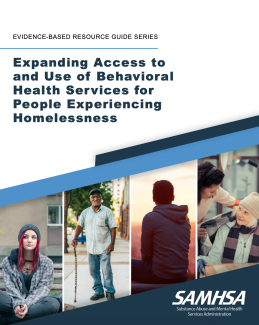
Expanding Access to and Use of Behavioural Health Services for People At Risk for or Experiencing Homelessness
This guide highlights strategies for behavioural health and housing providers to conduct outreach and engage with individuals experiencing homelessness, initiate use of behavioural health treatment as they wait to receive stable housing and...
Professionals of Centros de Integración Juvenil (CIJ) receive training in Universal Treatment Curriculum (UTC)
During 2022, the Training of Trainers for the Universal Treatment Curriculum (UTC), which is promoted by the Inter-American Drug Abuse Control Commission of the Organization of American States (CICAD/OAS) and the International Society of...

Integrantes del equipo de Centros de Integración Juvenil reciben capacitación en Currícula Universal de Tratamiento
Se llevó a cabo la Capacitación de Capacitadores del Currículum Universal de Tratamiento (UTC, por sus siglas en inglés), que es promovido por la Comisión Interamericana para el Control del Abuso de Drogas de la Organización de los Estados...
