


Hledat
 Treatment
The range of medical, psychological, and social services designed to help individuals reduce or stop substance use and manage substance use disorders. Treatment may include assessment, counselling and behavioural therapies, medication-assisted treatment, withdrawal management, and support for co-occurring mental or physical health conditions. Effective treatment is typically person-centred and evidence-informed, and may be provided in outpatient, community, or residential settings. Treatment aims to improve health and functioning, reduce substance-related harms, and support individuals in moving toward recovery and long-term wellbeing.


Harm Reduction Framework: Intervention Strategy for Substance Use Disorders
The purpose of this article is to outline an intervention strategy for substance use disorders using Harm Reduction as a framework. This paper provides guidelines for the reader on Harm Reduction, Principles of Harm Reduction, and how to...
Annual Drug Report
Summary
Drug addiction is a complex and multidimensional social problem. Drug-addicted families never fully recover from the anxiety and...
Webinar Reflection: Reimagining Prevention, The Role of Generative Artificial Intelligence
ISSUP, in partnership with the International Consortium of Universities for Drug Demand Reduction (ICUDDR), recently hosted an engaging and forward-looking webinar titled “Reimagining Prevention: The Role of Generative Artificial...
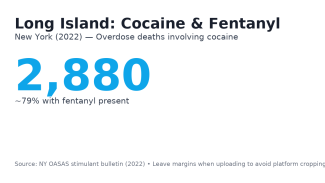
Cocaine & Fentanyl on Long Island
Cocaine-related harms on Long Island (Nassau & Suffolk) are increasingly polysubstance, with fentanyl present in most fatal cocaine overdoses in New York. Nationally, cocaine-involved mortality has nearly doubled since 2018. This fact sheet compiles verified NY/CDC sources and practical steps for families and providers: carry and train on naloxone, arrange benefits/transport to speed placement, screen for co-occurring mental health, and use evidence-based care (Contingency Management + CBT).
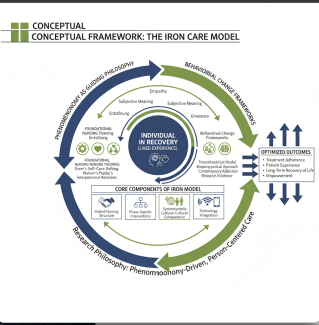
The Integrated Recovery-Oriented Nursing (IRON) Care Model: A Theoretical Framework for Optimizing Addiction Treatment Outcomes
I was honoured to participate in the EHS International Mental Health Conference 2025 as a poster presenter. My presentation reflected the core principles of the Integrated Recovery-Oriented Nursing (IRON) Care Model, emphasizing the...
A Decade of Impact, A Future of Possibility: ISSUP at 10 Pt. 3
Building the Future Together: Joanna Travis-Roberts on 10 Years of ISSUP
In the final episode of the series, Associate Professor Goodman Sibeko sits down once again with ISSUP Chief Executive Joanna Travis-Roberts to look back on a decade...

Drug Treatment Courts: An Evidence-Based Review with Recommendations for Improvement
This policy brief by the Canadian Centre on Substance Use and Addiction critically evaluates the role and effectiveness of Drug Treatment Courts (DTCs) in Canada. DTCs are intended to divert individuals with substance use disorders (SUDs)...
NIJ’s Courts Research: Examining Alternatives to Incarceration for Veterans and Other Policy Innovation
This article presents key studies from the National Institute of Justice’s (NIJ) Courts Research Portfolio that examine pretrial, prosecution, and sentencing policies promoting alternatives to incarceration, such as Veterans Treatment...
Evaluación de Programas de prevención en Colombia: evidencia, resultados y lecciones para la prevención del consumo de sustancias en jóvenes.
ISSUP Colombia presenta su seminario web sobre Evaluación de Programas de prevención en Colombia: evidencia, resultados y lecciones para la prevención del consumo de sustancias en jóvenes.
Guía para la respuesta policial en crisis de salud mental relacionadas con el consumo de drogas
ISSUP Argentina presenta su seminario web sobre Guía para la respuesta policial en crisis de salud mental relacionada con el consumo de drogas.
Reimagining Prevention: The Role of Generative AI
ISSUP, in collaboration with ICUDDR, present a webinar on Reimagining Prevention: The Role of Generative AI.
Building a Global Home: The Birth and Growth of ISSUP Pt.2
Building the Future Together: Joanna Travis-Roberts on 10 Years of ISSUP
A special three-part series celebrating 10 years of of the International Society of Substance Use Professionals (ISSUP).
In this second episode, host Associate...

Call for Nominations: Youth Representatives for ISSUP National Chapters Advisory Committee
ISSUP is pleased to announce the call for nominations for four (4) Youth Representatives to serve on the National Chapters Advisory Committee (NCAC). These positions will represent Africa, Asia, Europe, and the Americas, ensuring that young...

Effects of medication-assisted treatment on mortality among opioids users: a systematic review and meta-analysis
ABSTRACT
Opioid use disorder (OUD) is associated with a high risk of premature death. Medication-assisted treatment (MAT) is the primary treatment for opioid dependence. We comprehensively assessed the effects of different MAT-related...
Probation clients’ barriers to access and use of opioid use disorder medications
ABSTRACT
Background
There is a gap between evidence-based treatment with medications for opioid use disorders (OUDs) and current practices of probation departments who supervise individuals with OUDs. Many probationers with OUDs cannot...
Substance use profile, treatment compliance, treatment outcomes and related factors in probation: a retrospective file review
Abstract
Objective
In this study, we aimed to investigate the sociodemographic characteristics of the individuals who mandated to the probation unit as the substances they use, their compliance with the programs, treatment outcomes and...
Substance use treatment services utilization and outcomes among probationers in drug courts compared to a matched cohort of probationers in traditional courts
Abstract
Background and objectives: Drug courts provide an array of substance use treatments and community-based services for probationers struggling with substance use disorders. We assessed substance use treatment services utilization...
Effectiveness of a computerized motivational intervention on treatment initiation and substance use: Results from a randomized trial
Highlights
- Motivational computer intervention (MAPIT) increased treatment initiation at 2-month follow-up.
- The significance of MAPIT diminished by the 6-month follow-up.
- Motivational interviewing (MI) was not significant in any model. ...
Substance Involvement and Probation Outcomes: Evidence From a Cohort Study
Abstract
Substance use disorders are common among justice-involved populations, the majority of whom are under community supervision in the form of probation. Substance involvement can amplify the challenges of complying with requirements...
A randomized study of the use of screening, brief intervention, and referral to treatment (SBIRT) for drug and alcohol use with jail inmates
Abstract
Background
Screening, brief intervention, and referral to treatment (SBIRT) is an evidence-based practice that has been shown to reduce alcohol and drug use in healthcare, educational, and other settings, but research on the...