

Hledat
 Psychoactive Substances
Psychoactive substances are natural or synthetic substances that act on the central nervous system and alter mental processes such as mood, perception, cognition, consciousness, and behaviour. These substances may be legally prescribed medications (e.g., pain medications or sedatives), legally available substances such as alcohol or caffeine, or controlled or illicit drugs. Psychoactive substances can be used for medical, social, cultural, or recreational purposes, but some carry risks of misuse, dependence, and health or social harms when used in harmful ways.
Big Five Personality Traits of Adolescents aged 11–19 Years from the Czech and Slovak Republics: Age, Sex and Nationality Specifications
The article explores basic personality characteristics in accordance with the Big Five inventory; it concerns the age category of adolescence, i.e. the ages 11–19. Particular attention is paid to the variables of age, sex, and nationality...
AddictologyIssue 4/2024
The Impact of Drug Addiction on Afghan Refugees in Pakistan: A Comprehensive Analysis
Drug addiction and its associated consequences, such as long-term dependence, bloodborne illnesses, HIV, sexually transmitted diseases, social isolation, and criminal activity, are gradually being recognised as serious issues that need to...
AddictologyIssue 4/2024
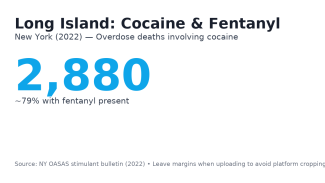
Cocaine & Fentanyl on Long Island
Cocaine-related harms on Long Island (Nassau & Suffolk) are increasingly polysubstance, with fentanyl present in most fatal cocaine overdoses in New York. Nationally, cocaine-involved mortality has nearly doubled since 2018. This fact sheet compiles verified NY/CDC sources and practical steps for families and providers: carry and train on naloxone, arrange benefits/transport to speed placement, screen for co-occurring mental health, and use evidence-based care (Contingency Management + CBT).
Alarming number of people now vape, says WHO
More than 100 million people — including at least 15 million children — are now using e-cigarettes, according to the World Health Organisation (WHO).
Children are nine times more likely than adults to vape, raising serious concerns about...
Evaluación de Programas de prevención en Colombia: evidencia, resultados y lecciones para la prevención del consumo de sustancias en jóvenes.
ISSUP Colombia presenta su seminario web sobre Evaluación de Programas de prevención en Colombia: evidencia, resultados y lecciones para la prevención del consumo de sustancias en jóvenes.
Guía para la respuesta policial en crisis de salud mental relacionadas con el consumo de drogas
ISSUP Argentina presenta su seminario web sobre Guía para la respuesta policial en crisis de salud mental relacionada con el consumo de drogas.
Reimagining Prevention: The Role of Generative AI
ISSUP, in collaboration with ICUDDR, present a webinar on Reimagining Prevention: The Role of Generative AI.
Effect of screening, brief intervention and referral to treatment for unhealthy alcohol and other drug use in mental health treatment settings: a randomized controlled trial
Abstract
Aims
To test the efficacy of a brief intervention to reduce alcohol or drug use and to promote use of addiction services among patients seeking mental health treatment.
Design and setting
A multi-centre, longitudinal, two-group...
Quality Standards in Drug Use Disorder Treatment – Reading List
In this reading list, we provide resources to help engage our members with the latest knowledge, tools, and case studies on quality standards in substance use disorder treatment. These materials highlight international frameworks, research...

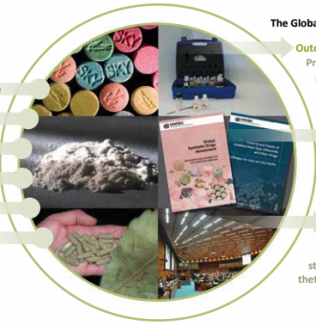
The Global SMART Programme — A Strategic Response to the Synthetic Drug Problem, United Nations, New York
The global market for synthetic drugs has grown rapidly in recent years, with amphetamine-type stimulants (ATS) and new psychoactive substances (NPS) becoming a significant concern worldwide. ATS, which include amphetamine, methamphetamine...
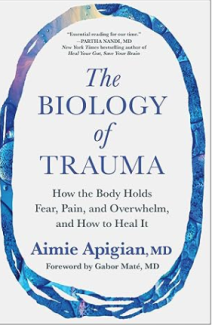
The Biology of Trauma
This groundbreaking book breaks down the latest research to reveal how trauma impacts our bodies on a cellular level and offers an empowering path to whole-body healing.
Today, we know more about mental health than ever before, but...
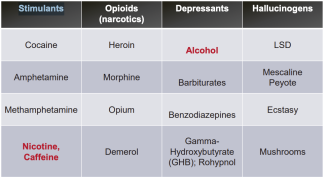
Classification of Psychoactive Substances
This section from the UPC 2 Physiology and Pharmacology for Prevention Professionals (p130-133) introduces the main types of psychoactive substances, explains their effects on the brain and body, and clarifies that some commonly used legal...
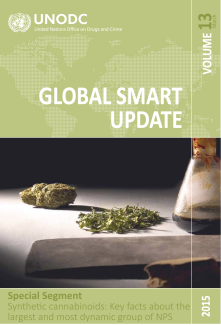
UNODC (2014a), Global SMART Update
The rapid rise of synthetic drugs has become one of the world’s most pressing drug-related challenges. After cannabis, amphetamine-type stimulants (ATS) are the most widely used drugs globally, now surpassing cocaine and heroin. Alongside...
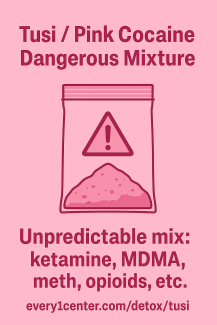
⚠️ Tusi (“Cocaína Rosa”): Qué es, Riesgos y Dónde Obtener Ayuda
⚠️ Tusi (“Cocaína Rosa”): Qué es, Riesgos y Dónde Obtener Ayuda
Global Launch – Universal Nurses Addiction Curriculum (UNAC)
On June 26, 2025, the International Consortium of Universities for Drug Demand Reduction (ICUDDR) marked an important milestone with the global launch of the Universal Nurses Addiction Curriculum (UNAC). This initiative, supported by the U...
ISSUP Nigeria Knowledge Update Series (29th Session): Beyond Tokenistic Roles: Harnessing The Power of Young People in Drug Use Prevention
ISSUP Nigeria presents the 29th session of its bi-monthly webinar in the Knowledge Update Series. This webinar will focus on the topic 'Beyond Tokenistic Roles: Harnessing The Power of Young People in Drug Use Prevention'.
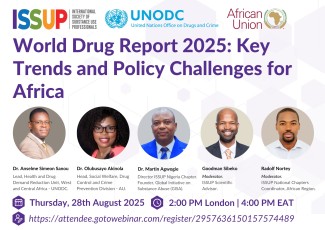
World Drug Report 2025: Webinar on Key Trends and Policy Challenges for Africa
As a follow-up to our previous webinar outlining the Key Findings of the World Drug Report 2025, ISSUP on 28 August 2025 presented a review of the World Drug Report 2025 through an African lens. The webinar was moderated by Radolf Nortey...
Primera Ayuda Psicológica (PAP) para Personas Privadas de la Libertad con Trastorno por Uso de Sustancias (TUS)
ISSUP Argentina presenta su seminario web sobre Primera Ayuda Psicológica (PAP) para Personas Privadas de la Libertad con Trastorno por Uso de Sustancias (TUS).
Interventions to reduce harms related to drug use among people who experience incarceration: systematic review and meta-analysis
Abstract
Background: Mortality, suicide, self-harm, and substance use are elevated among people who are incarcerated. There is a wide range of heterogeneous interventions aimed at reducing these harms in this population. Previous reviews...
Fellowship in the International Academy of Addictions Nursing
Mission & Purpose
The mission of the FIAAN Leadership Assembly is to promote the vision of IntNSA’s high standards of addiction nursing care by advancing and disseminating addiction science through evidence-based practice, education...