


Hledat
Treatment Settings
Various treatment formats, either in a live-in facility or through regular visits to a clinic, are designed for ongoing support, to help maintain recovery, and to prevent relapse.

Prevention Programs for Eating Disorders and Obesity in Germany
Luise Adametz, Felicitas Richter, Julia Mühleck, Katharina Wick, Bernhard Strauß, Uwe Berger
Disordered eating and partial eating disorder (ED) syndromes are widespread in childhood and adolescence. They are associated with decreased...
Predictors of Treatment Response Following Parent Management Training: Child, Context, and Therapy Factors
Terje Gunnar Ogden, Kristine Amlund Hagen
Parent Management Training- the Oregon model (PMTO) was introduced as a treatment alternative to families in both child welfare services and child psychiatric out-patient clinics in Norway, in 2001...
Antiretroviral Therapy (ART) Is the Most Essential Intervention among People Who Inject Drugs (PWID) to Achieve Reduction HIV Transmission through Pwid to Others in Myanmar
Rosie Myint, Wah Wah Lwin
Background: There is a sustained downward trend in HIV prevalence among the sentinel groups which include People Who Inject Drugs (PWID) reflecting the effectiveness of programme for safer sexual behaviors and...
NIDA Humphrey Fellows se účastní třetího workshopu ISSUP
Humphrey Fellows z Virginia Commonwealth University se zúčastnili třetího výročního zasedání Mezinárodní společnosti profesionálů v oblasti užívání látek. Setkání odborníků na léčbu a prevenci drogové závislosti se zúčastnilo více než 3 000...

Pokyny pro farmakologickou léčbu pacientů s poruchou užívání alkoholu Americká psychiatrická asociace
Odůvodnění
Cílem tohoto pokynu je zlepšit kvalitu péče a výsledků léčby u pacientů s poruchou užívání alkoholu (AUD), jak je definována v DSM-5 (Americká psychiatrická asociace 2013). Pokyny se zaměřují konkrétně na farmakologickou léčbu...
Universal School-Based Implementation of Screening Brief Intervention and Referral to Treatment to Reduce and Prevent Alcohol, Marijuana, Tobacco, and Other Drug Use
Abstract
Screening, Brief Intervention, and Referral to Treatment (SBIRT) is an evidence-based approach to reducing substance use in adolescents. An emerging literature shows the promise of school-based SBIRT. However, most school-based...
Effectiveness Bank Matrix Cell: Managing Transformation
Key studies on the role of management and supervision in the treatment of problem drug use. Commentary asks, “Is there anything more instructive than *being* the patient?”, explores the role of patient choice and preferences in treatment...
Substance Use, Sleep and Intervention Design
Abstract
Background: Alcohol and other drug use is associated with poor sleep quality and quantity, but there is limited qualitative research exploring substance users’ experiences of sleep and few psychosocial sleep interventions for them...
Iberoamerická iniciativa pro duální poruchy ke zlepšení programů veřejné léčby
Abstraktní:
Úvod: Duální poruchy (DD) jsou definovány jako souběžný výskyt poruch spojených s užíváním návykových látek s jinými psychiatrickými poruchami po celou dobu života. DD představují diagnostický rozměr s klinickými zvláštnostmi...
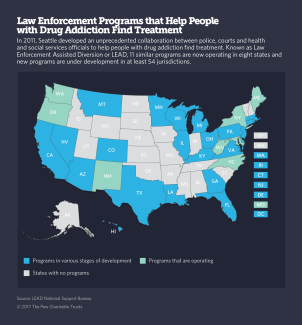
Overburdened Mental Health Providers Thwart Police Push for Drug Treatment
This article highlights the overburdened health system in West Virginia, including a shortage of behavioral treatment professionals.
Sex Differences in Cannabis Use Disorder Diagnosis Involved Hospitalizations in the United States
ABSTRACT
Objectives: The study examined sex differences in trend and clinical characteristics of cannabis use disorder (CUD) diagnosis involved hospitalizations among adult patients.
Methods: We analyzed hospitalization data from the 2007...
Appropriate Use of Drug Testing in Clinical Addiction Medicine
Purpose
The purpose of the Appropriate Use of Drug Testing in Clinical Addiction Medicine is to provide guidance about the effective use of drug testing in the identification, diagnosis, treatment, and promotion of recovery for patients...
Quality Measurers of Therapeutic Communities for Substance Dependence
Abstract
Background
In Latin America, substance related disorders are highly prevalent and one of the treatment strategies is the Therapeutic Communities (TCs), however, in Latin America there is scarce data about this treatment...
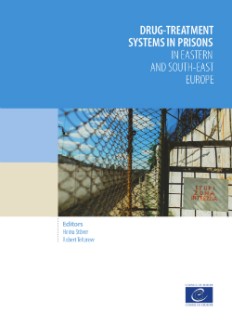
Drug-Treatment Systems in Prisons in Eastern and South-East Europe
This research project on drug-treatment systems in prisons in Eastern and South-East Europe looks in detail into the situation of drug users among criminal justice populations and the corresponding health-care responses in nine countries in...
Effectiveness Bank Hot Topic: The ‘Forgotten’ Carers
One of our selection of hot topics on important issues which sometimes generate heated debate. Both as a treatment resource for the patient and a group needing support in their own right, families affected by substance use are, claimed a UK...
Effectiveness Bank Hot Topic: Does It Matter If Addiction Is a Brain Disease?
Seizing on the theory’s propaganda value, in 1997 the head of the US National Institute on Drug Abuse proclaimed, “Addiction Is a Brain Disease, and It Matters.” His contention has been hailed as a breakthrough or condemned as a...
Changes in Specific Substance Involvement Scores among SBIRT Recipients in an HIV Primary Care Setting
Abstract
Background
Substance use is common among people living with HIV (PLHIV) and is associated with worse outcomes along the HIV care continuum. One potentially effective clinic-based approach to addressing unhealthy substance use is...
Effectiveness Bank Matrix Cell: The Face of Drug Addiction Treatment
At the front line the practitioner is to the patient the face of addiction treatment. Key research shows they can matter enormously - not so much in their formal qualifications, but in their manner with the patients. Other times it seems a...

Delivery of Screening and Brief Intervention for Unhealthy Alcohol Use in an Urban Academic Federally Qualified Health Center
Abstract
Background
Screening and brief intervention (SBI) for unhealthy drinking has not been widely implemented in primary care partly due to reliance on physicians to perform it.
Methods
We implemented a model of nursing staff...
No Clear Role for Medications in Less Dependent Drinkers
In 2013 nalmefene was authorised for moderating drinking among patients not in need of detoxification, extending pharmacotherapy to less dependent drinkers. Though uniquely authorised for this purpose, this review found other (and probably...