

Αναζήτηση
 Psychoactive Substances
Psychoactive substances are natural or synthetic substances that act on the central nervous system and alter mental processes such as mood, perception, cognition, consciousness, and behaviour. These substances may be legally prescribed medications (e.g., pain medications or sedatives), legally available substances such as alcohol or caffeine, or controlled or illicit drugs. Psychoactive substances can be used for medical, social, cultural, or recreational purposes, but some carry risks of misuse, dependence, and health or social harms when used in harmful ways.
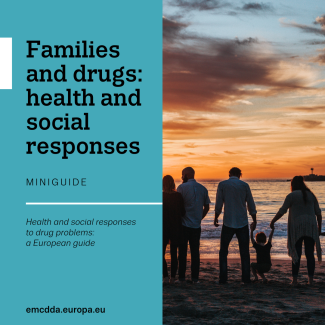
Families of people who use drugs: health and social responses
This miniguide is one of a larger set, which together comprise Health and social responses to drug problems: a European guide.
It provides an overview of the most important aspects to consider when planning or delivering health and social...
Brief counselling by a doctor can reduce drinking
A new systematic review and meta-analysis has found that alcohol-targeted brief interventions (short, structured, one-to-one conversations about drinking designed to motivate changes in risky behaviour) delivered in doctors’ offices and...

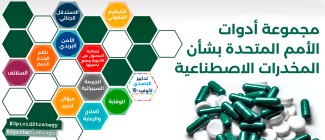
مجموعة أدوات الأمم المتحدة بشأن المخدرات الاصطناعية
تدعم مجموعة أدوات الأمم المتحدة بشأن المخدرات الاصطناعية المجتمع الدولي في تنفيذ تدابير استجابة شاملة لمواجهة مشكلة المخدرات الاصطناعية.
وضعت مجموعة الأدوات استجابة لقراري لجنة المخدرات 8/61 (2018) و4/62 (2019) اللذين دعيا مكتب الأمم...
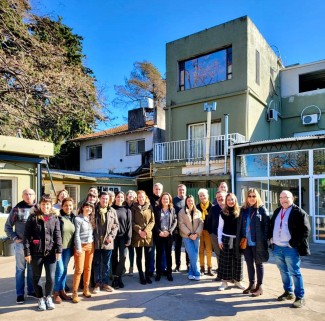
ISSUP Mexico participate at the opening of the Master in Substance Abuse Prevention led by ISSUP Argentina
The launch of the new master's degree "Problematic Consumption of Psychoactive Substances from a Social and Health Perspective" was held.
Miriam Carrillo, Director of Prevention at Centros de Integración Juvenil, A.C. (CIJ, acronym...
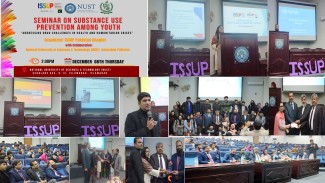
Σεμινάριο με θέμα «Πρόληψη της χρήσης ουσιών μεταξύ των νέων» στις 8 Δεκεμβρίου 2022 στο Εθνικό Πανεπιστήμιο Επιστημών και Τεχνολογίας, Ισλαμαμπάντ-Πακιστάν
Το ISSUP Pakistan Chapter διοργάνωσε σεμινάριο με θέμα «Πρόληψη της χρήσης ουσιών μεταξύ των νέων» με θέμα «Αντιμετώπιση των προκλήσεων των ναρκωτικών στην υγεία και τις ανθρωπιστικές κρίσεις» σε συνεργασία με το TABA NUST SDG Student Hub...
Legal responses to novel psychoactive substances implemented by ten European countries: An analysis from legal epidemiology
Abstract
Introduction
Novel psychoactive substances (NPS) continue to pose challenges to law enforcement authorities, public health officers and policymakers as suppliers continuously adapt to control measures, thus remaining highly...
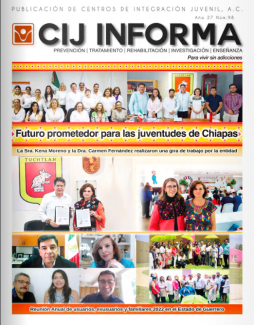
CIJ Informa 98
Ya está disponible el número más reciente de la Revista CIJ Informa, publicación trimestral de Centros de Integración Juvenil (CIJ), institución anfitriona del Capítulo ISSUP México.
Además de una variedad de temas sobre el trabajo que...
Ναρκωτικά κατάχρησης
Τα ναρκωτικά κατάχρησης παρέχουν σαφείς, επιστημονικές πληροφορίες σχετικά με τα ναρκωτικά με πραγματικό, απλό τρόπο.
Με τις πληροφορίες σε αυτόν τον οδηγό, οι γονείς και οι φροντιστές μπορούν να βοηθήσουν τα παιδιά τους να κάνουν έξυπνες...
Experts’ views on how to design a tobacco control fund in the UK
Abstract
Objective To explore expert views on the potential value, and approaches to establishing and administering a tobacco control fund in the UK.
Design Semistructured interviews and follow-up discussion groups.
Subjects Twenty-four...
The power of connection: collaboration and co-design in clinical services
This presentation explored a co-design process that was implemented in clinical services in metropolitan Australia from 2019-2022.
The challenge of successfully implementing integrated care in mental health (MH) and alcohol and other drug...
Reaching smoke-free: how can we improve smoking cessation treatment?
This webinar explored the provision of smoking cessation treatments, including e-cigarettes, in the context of primary care.
It provided an overview of investigations into how smoking cessation treatment provision in the UK could be...
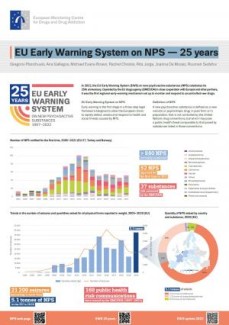
EU Early Warning System on NPS- Poster
Summary
This poster, presented during the IX International Conference on NPS(24 to 26 Oct 2022, Panama), showcases some of the work of the EU Early Warning System on new psychoactive substances. Operated by the EMCDDA, in close cooperation...
Recreational use of nitrous oxide — a growing concern for Europe
Summary
The purpose of this report is to examine the current situation, risks and responses to the recreational use of nitrous oxide in Europe. To support this, the report also provides a state-of-the-art review of the chemistry...
Correction: Interdisciplinary collaboration in the treatment of alcohol use disorders in a general hospital department: a mixed-method study
Background
Interdisciplinary collaborations (i.e., where various disciplines work coordinated and interdependently toward shared goals) are stated to yield higher team effectiveness than multidisciplinary approaches (i.e., where various...
Κατανόηση της ενέσιμης χρήσης ναρκωτικών στο Αφγανιστάν: Επισκόπηση του πεδίου εφαρμογής
Φόντο
Αρκετές εκθέσεις έχουν περιγράψει μια αυξανόμενη επικράτηση της χρήσης παράνομων ναρκωτικών στο Αφγανιστάν, με αναγνώριση της πρόσφατης μετάβασης από τους παραδοσιακούς τρόπους κατανάλωσης που περιλαμβάνουν εισπνοή και κατάποση από...
Correlates of treatment engagement and client outcomes: results of a randomised controlled trial of nabiximols for the treatment of cannabis use disorder
Introduction and aims
There is increasing interest and evidence for the use of cannabinoid medications in the treatment of cannabis use disorder, but little examination of the correlates of successful treatment. This paper is a secondary...
Διαταραχές στον ρόλο της τοπικής δημόσιας υγείας των ΗΠΑ στην πρόληψη και την αντιμετώπιση της χρήσης ουσιών με βάση τον πληθυσμό κατά τη διάρκεια της πανδημίας COVID-19
Φόντο
Η κατάσταση έκτακτης ανάγκης COVID-19 έχει δοκιμάσει τις υποδομές δημόσιας υγείας, ιατρικής και δημόσιας ασφάλειας των Ηνωμένων Πολιτειών (ΗΠΑ) με πρωτοφανείς τρόπους. Ως σημείο εστίασης για τη δημόσια υγεία στις κοινότητές τους, τα...
Integrated brief interventions for noncommunicable disease risk factors in primary care: the manual
Abstract
Brief interventions are recognized by WHO as an effective measure to help people quit tobacco, reduce or stop alcohol use and increase physical activity. They can also help to achieve and maintain healthy eating behaviours and...
Θνησιμότητα και έτη ζωής που χάνονται μετά από επακόλουθη σωματική συννοσηρότητα σε άτομα με προϋπάρχουσες διαταραχές χρήσης ουσιών: αναδρομική μελέτη κοόρτης βάσει εθνικού μητρώου σε νοσηλευόμενα άτομα στην Τσεχία
Περίληψη
Φόντο
Οι διαταραχές χρήσης ουσιών αποτελούν μείζον παγκόσμιο πρόβλημα δημόσιας υγείας, το οποίο αποδίδεται σε μεγάλο βαθμό στην επακόλουθη συννοσηρότητά τους με άλλες παθήσεις. Η μελέτη αυτή είχε ως στόχο να διερευνήσει τον...
Patterns of Health Care Use 5 Years After an Intervention Linking Patients in Addiction Treatment With a Primary Care Practitioner
Abstract
Importance Substance use disorders are associated with high rates of emergency department (ED) use and challenges engaging with primary care services.
Objective To examine 5-year health care engagement and utilization outcomes...