

Search
 Psychoactive Substances
Psychoactive substances are natural or synthetic substances that act on the central nervous system and alter mental processes such as mood, perception, cognition, consciousness, and behaviour. These substances may be legally prescribed medications (e.g., pain medications or sedatives), legally available substances such as alcohol or caffeine, or controlled or illicit drugs. Psychoactive substances can be used for medical, social, cultural, or recreational purposes, but some carry risks of misuse, dependence, and health or social harms when used in harmful ways.
Prevention and Treatment of HIV Among People Living with Substance Use and/or Mental Disorders
Focus of this guide
People with mental illness and/or SUD are disproportionally affected by HIV. They may participate in behaviours that increase risk for contracting and transmitting HIV, such as sharing injection drug equipment or...
Centre for disease control prevention factsheets: HIV and substance use
Sharing needles, syringes, or other drug injection equipment—for example, cookers—puts people at risk for getting or transmitting HIV and other infections.
In addition to being at risk for HIV and viral hepatitis, people who inject drugs...
HIV and Substance Use
This summary page, developed by HIV info and NIH’s Office of AIDS Research, explores HIV and substance use.
The fact sheet addresses the following questions:
- What is the connection between HIV and substance use?
- How does substance use...
Ending Inequalities for People who Use Drugs: How the Global HIV Response can Transform Drug Policy
This side event for the 65th Commission on Narcotic Drugs was originally presented on 14 March, 2022. Organised by INPUD, it was co-sponsored by Médecins du Monde, UNAIDS, UNODC HIV/AIDS Section, the Netherlands and Australia.
In 2021...
Responding to drug-related infectious diseases: EMCDDA mini guide
Sharing drug injecting equipment increases the risk of transmitting and acquiring blood-borne infections, such as HIV and hepatitis B and C. While hepatitis C is the most prevalent blood-borne viral infection among people who inject drugs...
HIV Prevention, Treatment, Care and Support for People Who Use Stimulant Drugs
Since the beginning of the HIV epidemic, the focus on HIV prevention, treatment and care among people who use drugs has concentrated on the needs of people who inject drugs, and mainly on those who inject opioids. However, data show that...
UNODC work relating to substance use and HIV
UNODC has put together summaries of the work that they are doing relating to Drug use and HIV.
Here, you can find out more about the work that UNODC has done relating to

Moving towards a continuum of safer supply options for people who use drugs: A qualitative study exploring national perspectives on safer supply among professional stakeholders in Canada
Background
Novel public health interventions are needed to address the toxic drug supply and meet the needs of people who use drugs amidst the overdose crisis. Safer supply – low-barrier distribution of pharmaceutical grade substances –...
The Canadian Community Epidemiology Network on Drug Use (CCENDU) Bulletin: An Update on Stimulant Use and Related Harms in Canada and the United States
The Canadian Community Epidemiology Network on Drug Use (CCENDU) is a pan-Canadian network of community partners co-ordinated by the Canadian Centre on Substance Use and Addiction (CCSA). The network has sites in British Columbia, Manitoba...

Families of people who use drugs: health and social responses
This miniguide is one of a larger set, which together comprise Health and social responses to drug problems: a European guide.
It provides an overview of the most important aspects to consider when planning or delivering health and social...
Brief counselling by a doctor can reduce drinking
A new systematic review and meta-analysis has found that alcohol-targeted brief interventions (short, structured, one-to-one conversations about drinking designed to motivate changes in risky behaviour) delivered in doctors’ offices and...

United Nations Synthetic Drug Toolkit
The United Nations Synthetic Drug Toolkit supports the international community in implementing comprehensive response measures to address the synthetic drug problem.
The toolkit was developed in response to Commission on Narcotic Drugs ...
ISSUP Mexico participate at the opening of the Master in Substance Abuse Prevention led by ISSUP Argentina
The launch of the new master's degree "Problematic Consumption of Psychoactive Substances from a Social and Health Perspective" was held.
Miriam Carrillo, Director of Prevention at Centros de Integración Juvenil, A.C. (CIJ, acronym...

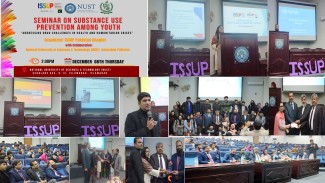
Seminar on "Substance Use Prevention Among Youth" on December 8th, 2022 at National University of Sciences and Technology, Islamabad-Pakistan
ISSUP Pakistan Chapter organized a seminar on "Substance Use Prevention Among Youth" following the theme "Addressing Drug Challenges in Health and Humanitarian Crises" in collaboration with TABA NUST SDG Student Hub NUST at the National...
Legal responses to novel psychoactive substances implemented by ten European countries: An analysis from legal epidemiology
Abstract
Introduction
Novel psychoactive substances (NPS) continue to pose challenges to law enforcement authorities, public health officers and policymakers as suppliers continuously adapt to control measures, thus remaining highly...
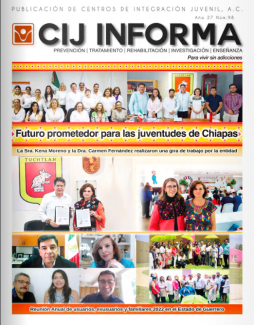
ICJ Informs 98
The most recent issue of CIJ Informa Magazine, a quarterly publication of Youth Integration Centers (CIJ), host institution of the ISSUP Mexico Chapter, is now available.
In addition to a variety of topics on CIJ's work in Mexico, the inte...
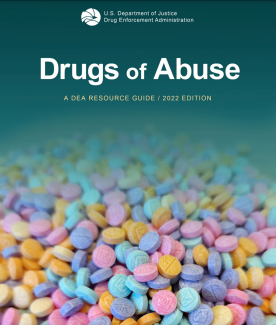
Drugs of Abuse
Drugs of Abuse delivers clear, scientific information about drugs in a factual, straightforward way.
With the information in this guide, parents and caregivers can help their children make smart choices and avoid the consequences of drug...
Experts’ views on how to design a tobacco control fund in the UK
Abstract
Objective To explore expert views on the potential value, and approaches to establishing and administering a tobacco control fund in the UK.
Design Semistructured interviews and follow-up discussion groups.
Subjects Twenty-four...
The power of connection: collaboration and co-design in clinical services
This presentation explored a co-design process that was implemented in clinical services in metropolitan Australia from 2019-2022.
The challenge of successfully implementing integrated care in mental health (MH) and alcohol and other drug...
Reaching smoke-free: how can we improve smoking cessation treatment?
This webinar explored the provision of smoking cessation treatments, including e-cigarettes, in the context of primary care.
It provided an overview of investigations into how smoking cessation treatment provision in the UK could be...