رفتن به محتوای اصلی

User account menu

  • ورود
  • Join ISSUP

زبان‌ها

  • English
  • Français
  • Português
  • Español
  • العربية
  • Pусский

پیمایدنۀ اصلی

  • About ISSUP

    • 10 Years of ISSUP
    • ISSUP Rationale
    • Membership
      • Membership Criteria
      • Code of Ethics
      • Who is ISSUP for?
    • News
      • Newsletters
    • ISSUP Events
    • International Partners
    • Governance
    • ISSUP Scientific Council
    • Friends of ISSUP (USA)
    • ISSUP Awards
      • Evidence-Based Award
      • Local Initiative Award
      • Services Award
      • Excellence in Training Provision
      • Outstanding Contribution to ISSUP Award
    • In Memoriam
    • Acknowledgements
    • ISSUP Website Guides
    • Contact ISSUP
    • FAQs - Frequently Asked Questions
    • Donate to ISSUP
  • Professional Development

    • ISSUP Academy
      • What is ISSUP Academy?
    • Universal Curricula (UC)
      • Currículo de Prevenção Universal
      • Currículo de Tratamento Universal
      • Universal Recovery Curriculum
      • UTC Self Led Courses
    • Resources
      • Drug Data Hub
      • Your Professional Hub
      • The ISSUP Exchange
      • ISSUP Webinars
      • Glossary
      • IEP
      • INEP Plus
      • Prevention Insights Video Series
      • Prevention Lists
      • Recovery Support
      • Quality in Treatment
      • ICAP certification
      • HealthEKnowledge
    • Jobs and Opportunities
  • Knowledge Share

    • Search in the Knowledge Share
    • ADDICTOLOGY Journal
      • Latest Issue
  • National Chapters

    • Africa
      • ISSUP Botswana
      • ISSUP Côte d’Ivoire
      • ISSUP Egypt
      • ISSUP Ethiopia
      • ISSUP The Gambia
      • ISSUP Ghana
      • ISSUP Kenya
      • ISSUP Liberia
      • ISSUP Mauritius
      • ISSUP Morocco
      • ISSUP Namibia
      • ISSUP Nigeria
      • ISSUP South Africa
      • ISSUP Tanzania
      • ISSUP Togo
      • ISSUP Uganda
      • ISSUP Zambia
    • The Americas
      • ISSUP Argentina
      • ISSUP The Bahamas
      • ISSUP Barbados
      • ISSUP Brazil
      • ISSUP Chile
      • ISSUP Colombia
      • ISSUP Ecuador
      • ISSUP El Salvador
      • ISSUP Guatemala
      • ISSUP Mexico
      • ISSUP Panama
      • ISSUP Paraguay
      • ISSUP Peru
      • ISSUP United States
    • Asia
      • ISSUP Afghanistan
      • ISSUP Bangladesh
      • ISSUP India
      • ISSUP Indonesia
      • ISSUP Kazakhstan
      • ISSUP Korea
      • ISSUP Lebanon
      • ISSUP Malaysia
      • ISSUP in Pakistan
      • ISSUP Philippines
      • ISSUP Qatar
      • ISSUP Singapore
      • ISSUP Sri Lanka
      • ISSUP Thailand
      • ISSUP Türkiye
      • ISSUP United Arab Emirates
      • ISSUP Uzbekistan
      • ISSUP Vietnam
    • Europe
      • ISSUP Bosnia & Herzegovina
      • ISSUP Czech Republic
      • ISSUP Greece
      • ISSUP Italy
      • ISSUP Spain
      • ISSUP Ukraine
      • ISSUP United Kingdom
    • Oceania
      • ISSUP Australia
      • ISSUP Fiji
      • ISSUP New Zealand
    • How to Become a National Chapter
    • ISSUP National Chapters' Advisory Committee
    • ISSUP National Chapter Spotlight
  • Events

    • Search through all events
    • ISSUP Events
      • ISSUP 2026
      • Indonesia 2025
      • Thessaloniki 2024
      • Buenos Aires 2023
      • Manila 2022
      • Abu Dhabi 2022
      • Virtual 2021
      • Africa 2020
      • Vienna 2019
      • Nairobi 2018
      • Cancún 2017
      • Campinas 2016
      • Bangkok 2015
  • Networks

    • A–Z
  • My ISSUP

    • Member Directory
    • Apply for membership

Data

Data

Moderators

Profile picture for user joanna
Joanna Travis-Roberts
ISSUP
ISSUP Staff
Discussionsفایل‌ها‌تصاویرVideosواصلیهاEventsKnowledge Shareهمه
Goodman Sibeko

Exploring U.S. drug trends and emerging threats through ONDCP’s Information & Resources portal

Shared by Goodman Sibeko - 27 November 2026

A public health analyst reviews an illustrative dashboard with a U.S. map and trend charts
Format
Website
Published by / Citation
The White House
The U.S. Office of National Drug Control Policy’s Information & Resources page brings together emerging drug alerts, interactive dashboards, research updates and information on U.S. programmes and funding. ISSUP members can use it to put new alerts in context, brief their teams and discuss emerging trends across prevention, treatment, recovery, public health and law enforcement. Members outside the United States can read these alerts alongside local surveillance and service data, using the ISSUP Drug Data Hub to find relevant sources.
  • Read more about Exploring U.S. drug trends and emerging threats through ONDCP’s Information & Resources portal
  • ISSUP members can join Networks to comment – Sign in or become a member
Rasha Abi Hana

Understanding Youth Deflection & Pre-Arrest Diversion

Shared by Rasha Abi Hana (ISSUP staff) - 24 November 2026
Format
Leaflet, Infographic, Fact sheet, Poster
Published by / Citation
Police, Treatment, and Community Collaborative (PTACC). (2025). Understanding Youth Deflection & Pre-Arrest Diversion. PTACC Youth Deflection Strategy Area.

This resource introduces youth deflection and pre-arrest diversion as early intervention strategies designed to support young people at risk of entering or progressing further into the criminal justice system. It explores challenges and risk factors that may contribute to youth offending, including substance use, mental health difficulties, peer pressure, bullying, family instability, trauma and adverse social environments. The publication highlights how law enforcement, schools, social services, families and community organisations can work together to connect young people with appropriate...

  • Read more about Understanding Youth Deflection & Pre-Arrest Diversion
  • ISSUP members can join Networks to comment – Sign in or become a member
Rasha Abi Hana

National Survey of First Responder Deflection Programs: Key Findings

Shared by Rasha Abi Hana (ISSUP staff) - 24 November 2026
Format
Leaflet, Infographic, Fact sheet, Poster
Published by / Citation
Center for Health and Justice at TASC & NORC at the University of Chicago. (2021). Report of the National Survey to Assess First Responder Deflection Programs in Response to the Opioid Crisis. Bureau of Justice Assistance (BJA).

This infographic presents key findings from a national survey of more than 300 first responder agencies in the United States, examining the development and implementation of deflection programmes in response to the opioid crisis. Findings indicate that more than 85% of responding programmes were launched from 2016 onwards, approximately three-quarters were led by law enforcement agencies, and 90% offered connections to substance use disorder treatment. More than 95% had at least two collaborative service partners, while only around one in six had conducted an independent programme evaluation...

  • Read more about National Survey of First Responder Deflection Programs: Key Findings
  • ISSUP members can join Networks to comment – Sign in or become a member
Rasha Abi Hana

Want to Reduce Drugs in Your Community? You Might Want to Deflect Instead of Arrest

Shared by Rasha Abi Hana (ISSUP staff) - 24 November 2026
Format
Opinion piece, commentary
Published by / Citation
Charlier, J. (2015). Want to reduce drugs in your community? You might want to deflect instead of arrest. The Police Chief, 82(9), 30–31.

In this foundational article, Jac Charlier introduces deflection as an alternative law enforcement response to individuals experiencing substance use disorders who repeatedly come into contact with the criminal justice system.

The article presents the Montgomery County Deflection Model, developed through collaboration between law enforcement, criminal justice and public health partners. The model seeks to address the underlying needs of individuals through community-based treatment and support rather than relying exclusively on arrest and incarceration.

The author distinguishes between two...

  • Read more about Want to Reduce Drugs in Your Community? You Might Want to Deflect Instead of Arrest
  • ISSUP members can join Networks to comment – Sign in or become a member
Rasha Abi Hana

Leveraging Arrest Data for Youth Deflection

Shared by Rasha Abi Hana (ISSUP staff) - 24 November 2026
Format
Leaflet, Infographic, Fact sheet, Poster
Published by / Citation
Center for Health and Justice at TASC

This resource from the Center for Health and Justice at TASC explores how youth arrest data can inform the development of deflection strategies that prevent unnecessary involvement in the criminal justice system.

Drawing on juvenile arrest data from the United States, with a particular focus on 2018–2020, the resource identifies opportunities for early intervention among young people experiencing substance use, behavioural health challenges, family conflict and other unmet social needs.

It highlights how alternatives to arrest can help young people remain connected to their families, schools...

  • Read more about Leveraging Arrest Data for Youth Deflection
  • ISSUP members can join Networks to comment – Sign in or become a member
Rasha Abi Hana

Non-invasive vagus nerve stimulation for substance use disorder: A narrative review

Shared by Rasha Abi Hana (ISSUP staff) - 11 November 2026
Format
Scientific article
Published by / Citation
Thompson-Lake, D. G., Snetkov, G., Johnson, L., Ait-Daoud, N., & Mahoney III, J. J. (2026). Non-Invasive Vagus Nerve Stimulation for Substance Use Disorder: A Narrative Review. Drug and Alcohol Dependence, 113244.

Abstract

Background

Recent technological advances have led to increased experimentation in non-invasively modulating the brain to reduce craving and drug use in substance use disorder (SUD). However, many forms of neuromodulation remain costly and require administration in a medical setting, limiting scalability. Vagus nerve stimulation (VNS) circumvents these limitations. A substantial body of neurobiological and clinical evidence suggests that VNS may be well-suited to target core mechanisms underlying substance use, including craving, mood, and stress dysregulation.

Methods

Fifty-two...

  • Read more about Non-invasive vagus nerve stimulation for substance use disorder: A narrative review
  • ISSUP members can join Networks to comment – Sign in or become a member
Rasha Abi Hana

Drug & Precursor Trafficking: A Field Guide for Frontline Officers

Shared by Rasha Abi Hana (ISSUP staff) - 30 October 2026
UNODC
Format
Guide
Published by / Citation
UNODC

Drug & Precursor Trafficking: A Field Guide for Frontline Officers is a practical resource designed to support law enforcement personnel in identifying, investigating and responding to drug trafficking and the illicit movement of precursor chemicals used in drug manufacture.

Recognising the significant challenges posed by transnational drug trafficking, the guide provides quick-reference tools to help frontline officers handle suspected trafficking cases safely, professionally and effectively.

The guide covers 20 operational topics, including intelligence gathering and sharing, managing...

  • Read more about Drug & Precursor Trafficking: A Field Guide for Frontline Officers
  • ISSUP members can join Networks to comment – Sign in or become a member
Rasha Abi Hana

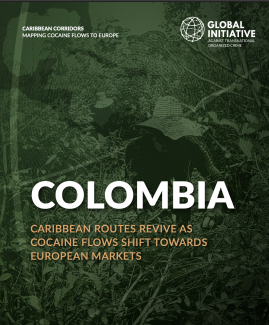
Colombia: Caribbean Routes Revive as Cocaine Flows Shift Towards European Markets

Shared by Rasha Abi Hana (ISSUP staff) - 29 October 2026
Format
Report
Published by / Citation
© 2026 Global Initiative Against Transnational Organized Crime.

The report examines the resurgence of the Colombian Caribbean as a strategic corridor for cocaine trafficking towards European markets. It explores how criminal networks are adapting established trafficking routes in response to changing market demand, increased border controls and evolving regional security conditions.

Drawing on interviews, fieldwork and secondary data, the research traces cocaine flows from production areas in Colombia through maritime, land and air routes, highlighting the growing importance of Venezuela, the Dominican Republic and the Lesser Antilles as transit points.

...
  • Read more about Colombia: Caribbean Routes Revive as Cocaine Flows Shift Towards European Markets
  • ISSUP members can join Networks to comment – Sign in or become a member
Rasha Abi Hana

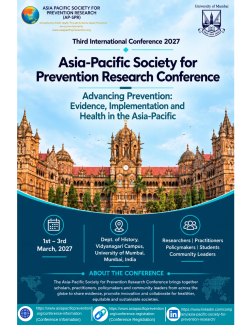
Asia-Pacific Society for Prevention Research conference

Shared by Rasha Abi Hana (ISSUP staff) - 23 October 2026
Location:
University of Mumbai, Mumbai, India
India
Event Date
1 مارس 2026

The Asia-Pacific Society for Prevention Research (APSPR) is inviting abstract submissions and registrations for the 3rd International Asia-Pacific Society for Prevention Research Conference, taking place on 1–3 March 2027 in Mumbai, India.

...
  • Read more about Asia-Pacific Society for Prevention Research conference
  • ISSUP members can join Networks to comment – Sign in or become a member
Rasha Abi Hana

Connecting Evidence, Prevention, Law Enforcement and Community Action: Key Insights from ISSUP 2026

Shared by Rasha Abi Hana (ISSUP staff) - 14 October 2026
Format
Reading List

How do we go about translating evidence into effective action, strengthen prevention, address drug-related crime, improve access to treatment and recovery support, and build safer, healthier communities?

This age-old question was explored during ISSUP's 2026 Virtual Conference, held on 22–23 September 2026 under the theme Connecting Sectors, Creating Impact: A United Response on Drugs.

Bringing together researchers, practitioners, policymakers, law enforcement professionals and community representatives from different regions, the conference provided an opportunity to exchange evidence...

  • Read more about Connecting Evidence, Prevention, Law Enforcement and Community Action: Key Insights from ISSUP 2026
  • ISSUP members can join Networks to comment – Sign in or become a member
Rasha Abi Hana

From Evidence to Practice: Advances in Substance Use Disorder Care

Shared by Rasha Abi Hana (ISSUP staff) - 12 October 2026
Format
Report

Evidence-based interventions can improve prevention, treatment and recovery outcomes, but knowing what works does not guarantee that people will benefit. Effective responses depend on trained professionals, supportive systems, coordinated services and the ability to translate research into everyday practice. Even when appropriate interventions exist, gaps in implementation, access and continuity of care can limit their impact.

These challenges were at the centre of From Evidence to Practice: Advances in Substance Use Disorder Care, held on 22 September during ISSUP’s 2026 virtual conference...

  • Read more about From Evidence to Practice: Advances in Substance Use Disorder Care
  • ISSUP members can join Networks to comment – Sign in or become a member
Kwadwo Adu Boakye-Yiadom

World Drug Report 2026: Key Trends and Policy Challenges for Africa

Shared by Kwadwo Adu Boakye-Yiadom - 8 October 2026
Format
ISSUP Webinar
ISSUP Global, in collaboration with the African Union, presents World Drug Report 2026: Key Trends and Policy Challenges for Africa.
  • Read more about World Drug Report 2026: Key Trends and Policy Challenges for Africa
  • ISSUP members can join Networks to comment – Sign in or become a member
Rasha Abi Hana

New Synthetic Drugs Increase Overdose Risks in Scotland

Shared by Rasha Abi Hana (ISSUP staff) - 21 September 2026
Format
Website
Published by / Citation
James Cook, BBC

Scotland’s illicit drug market is becoming increasingly complex with the emergence of highly potent synthetic substances, including synthetic cannabinoids and opioids such as nitazenes. Some of these substances can be considerably more potent than heroin, increasing the risk of severe and fatal overdose.

The article highlights concerns that synthetic substances are being mixed with other drugs, sometimes without the knowledge of the person using them. Their rapid development and changing composition create additional challenges for drug monitoring, health services, law enforcement, and...

  • Read more about New Synthetic Drugs Increase Overdose Risks in Scotland
  • ISSUP members can join Networks to comment – Sign in or become a member
Rasha Abi Hana

Drug Diversion Schemes Linked to Lower Reoffending Rates, New Research Finds

Shared by Rasha Abi Hana (ISSUP staff) - 19 August 2026
Format
News
Published by / Citation
The Guardian

New research examining more than 62,000 criminal incidents across 13 police forces in England found that police-led drug diversion schemes are associated with significantly lower reoffending rates than traditional prosecution for drug possession. Individuals who were referred to treatment or education services through diversion programmes were around one-third less likely to reoffend than those who were prosecuted.

The study also found that diversion schemes remain underused, with many eligible individuals not being referred despite established programmes in some police forces. Researchers...

  • Read more about Drug Diversion Schemes Linked to Lower Reoffending Rates, New Research Finds
  • ISSUP members can join Networks to comment – Sign in or become a member
Rasha Abi Hana

Do Drug Diversion Schemes Work? Insights from the Thames Valley Police Drugs Diversion Pilot

Shared by Rasha Abi Hana (ISSUP staff) - 19 August 2026
Format
Scientific article
Published by / Citation
Thames Valley Police Journal

This paper examines the development and early outcomes of the Thames Valley Police Drugs Diversion Pilot in West Berkshire, which offers people found in possession of drugs an opportunity to engage with treatment rather than receive a conventional criminal justice sanction. It places the initiative within the wider evolution of UK drug policy and compares it with similar police-led diversion schemes in England and Wales.

Early findings show mixed engagement with treatment: while many eligible individuals initially accepted the offer, 55% did not go on to enter treatment. However, among those...

  • Read more about Do Drug Diversion Schemes Work? Insights from the Thames Valley Police Drugs Diversion Pilot
  • ISSUP members can join Networks to comment – Sign in or become a member
Rasha Abi Hana

The introduction of drug Arrest Referral schemes in London: A partnership between drug services and the police

Shared by Rasha Abi Hana (ISSUP staff) - 19 August 2026
Format
Scientific article
Published by / Citation
Gillian Hunter, Tim McSweeney, Paul J. Turnbull, The introduction of drug Arrest Referral schemes in London: A partnership between drug services and the police, International Journal of Drug Policy, Volume 16, Issue 5, 2005, Pages 343-352, ISSN 0955-3959, https://doi.org/10.1016/j.drugpo.2005.06.008.

Arrest Referral (AR) schemes in London were established to connect people who use drugs with treatment services at the point of arrest through collaboration between police and drug service providers. Based on interviews with police officers and drug workers, the study explores the practical challenges of delivering treatment referrals within police custody settings, differences in professional perspectives, and the development of effective working relationships over time. The findings highlight the value of collaboration between health and criminal justice agencies in improving referral...

  • Read more about The introduction of drug Arrest Referral schemes in London: A partnership between drug services and the police
  • ISSUP members can join Networks to comment – Sign in or become a member
Rasha Abi Hana

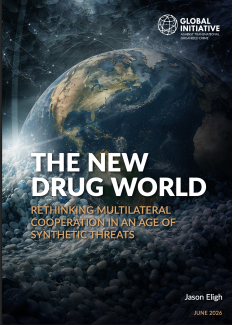
The New Drug World: Strengthening Collaboration to Address Synthetic Drug Threats

Shared by Rasha Abi Hana (ISSUP staff) - 30 July 2026
Global Initiative Against Transnational Organized Crime
Format
Report
Published by / Citation
Global Initiative Against Transnational Organized Crime.

This report examines how the rapid growth of synthetic drug markets is transforming the global drug landscape and challenging traditional approaches to drug control. Unlike plant-based drugs such as cocaine and heroin, synthetic drugs can be manufactured almost anywhere using a wide range of precursor chemicals, making production more flexible and difficult to disrupt.

The report highlights that synthetic drug markets are now present in almost every country and have experienced the fastest growth of any criminal market since 2021. Lower barriers to production have enabled both organised...

  • Read more about The New Drug World: Strengthening Collaboration to Address Synthetic Drug Threats
  • ISSUP members can join Networks to comment – Sign in or become a member
Rasha Abi Hana

Assessment of the threat posed by highly potent synthetic opioids in Europe

Shared by Rasha Abi Hana (ISSUP staff) - 30 July 2026
EUDA
Format
Report
Published by / Citation
EUDA

This threat assessment examines the potential risks posed by highly potent synthetic opioids (HPSOs) in Europe over the next two years. Drawing on early warning data, forensic and clinical evidence, and expert input, the report explores how opioid-related harms could develop under different scenarios and identifies key uncertainties that may influence future trends.

The assessment highlights the emergence of these substances as a significant public health and security concern due to their extreme potency, the risk of overdose at very low doses, and their presence in counterfeit or...

  • Read more about Assessment of the threat posed by highly potent synthetic opioids in Europe
  • ISSUP members can join Networks to comment – Sign in or become a member
Kwadwo Adu Boakye-Yiadom

Highlights from the 2026 UNODC World Drug Report

Shared by Kwadwo Adu Boakye-Yiadom - 2 July 2026
Format
ISSUP Webinar
This webinar highlighted key findings from the 2026 edition of the UNODC World Drug Report. The session was presented by Giovanna Campello, Chief of the Prevention, Treatment and Rehabilitation Section at the United Nations Office on Drugs and Crime (UNODC).
Translations
Español
  • Read more about Highlights from the 2026 UNODC World Drug Report
  • ISSUP members can join Networks to comment – Sign in or become a member
Rasha Abi Hana

Explore the UNODC World Drug Report 2026: Drug Market Patterns and Trends

Shared by Rasha Abi Hana (ISSUP staff) - 30 June 2026
UNODC WDR
Format
Website
Published by / Citation
UNODC

The UNODC World Drug Report 2026 introduces a new interactive platform that allows users to explore the latest global, regional, and subregional trends in drug demand and supply through dynamic data visualisations, maps, graphs, and downloadable datasets.


The Drug Market Patterns and Trends platform presents concise, evidence-based analyses across a range of topics, enabling users to examine emerging developments in drug markets, patterns of use, production, trafficking, and related indicators. Each finding is supported by interactive visualisations, with the underlying data available for...

  • Read more about Explore the UNODC World Drug Report 2026: Drug Market Patterns and Trends
  • ISSUP members can join Networks to comment – Sign in or become a member

صفحه بندی

  • صفحه جاری 1
  • صفحه 2
  • Next page Next ›
  • صفحۀ آخر Last »

Upcoming Events

There aren't any upcoming events
All Events
Contact Us

Stay Connected

ISSUP Newsletter

Subscribe

Support ISSUP

Donate

ISSUP is funded by the U.S. Department of State via the Bureau of International Narcotics and Law Enforcement Affairs (INL). INL works to keep Americans safe by countering crime, illegal drugs, and instability abroad.

Copyright © International Society of Substance Use Professionals Privacy Policy