

جستجو
 Prevention
Evidence-informed strategies and interventions designed to reduce the likelihood of substance use and related harms. Prevention efforts aim to reduce risk factors and strengthen protective factors at the individual, family, community, and societal levels. These approaches may include education, family and school-based programmes, community initiatives, and policies that promote healthy environments. Prevention can be universal (targeting entire populations), selective (targeting groups at higher risk), or indicated (targeting individuals already showing early signs of risk). By addressing the factors that influence substance use before problems develop or escalate, prevention plays a key role in comprehensive responses to substance use disorders and related social and health challenges.


Rapid Adaptation to Prevent Drug Use (RAPD): protocol of a pilot randomized trial to enhance the impact of an evidence-based intervention for youth
Background
Drug use trends among youth change rapidly, making it difficult for experts to respond quickly. Delays in addressing these issues can lead to preventable health problems and deaths. The COVID-19 pandemic highlighted the need for...
ISSUP Nigeria Knowledge Update Series (26th Session): The Role of Family in Substance Use Prevention
ISSUP Nigeria presents the 26th session of its bi-monthly webinar in the Knowledge Update Series. This webinar focuses on the topic of 'The Role of Family in Substance Use Prevention'.
2025 NIDA International Forum: Research Poster Abstract Submission and Travel Award Requests
Join the National Institute on Drug Abuse (NIDA) International Program for the 2025 NIDA International Forum, which will be held June 13–14, 2025, at the Sheraton New Orleans Hotel in New Orleans, Louisiana, USA.
The Forum research...
NAADAC 2025 Annual Conference: Call for Presentations
We invite you to submit a proposal at the NAADAC Annual Conference: Addiction Pros 2025! NAADAC, the Association for Addiction Professionals, will hold its 2025 Annual Conference on October 11-13, 2025, in Seattle, WA, at the Hyatt Regency...
Building the Foundation of Evidence-Based Practice: A Guide to Evidence-Based Substance Use Prevention Resources
Evidence-based practice (EBP) serves as the foundation for effective prevention strategies, ensuring interventions, programmes, and policies are grounded in the best available scientific knowledge.
This guide presents a curated collection...

Buddhist Psychology of Prevention and Recovery Part 1
https://youtu.be/g4WXRfts7mg?si=_lYiuyhPTMCHcY8N
This presentation is on Buddhist Psychology for prevention and addiction recovery. Please be kind enough to share this with interested parties.
2025 NIDA International Forum Call for Research Poster Abstract Submissions and Travel Award Requests
The NIDA International Program invites researchers from around the world to present their international drug use and addiction research during the 2025 NIDA International Forum.

Women and Drugs
3 hours Educational Training Proposal
Women and Drugs
A productive world demands happy children with drug-free mothers
--
Agenda:
Target 3.5 in SDG for addiction, the aim is to strengthen the prevention and treatment of substance...

Teacher Training Program Series - Collage of Teacher Training, Sariputta
Preventive Education and Training Division of National Dangerous Drugs Control Board collaborate with Collage of Teacher Training – Sariputta has Conducted three one day training programs on 09th ,10th and 11th of December 2024 at...

Teacher Training Program Series - Collage of Teacher Training, Sariputta
Preventive Education and Training Division of National Dangerous Drugs Control Board collaborate with Collage of Teacher Training – Sariputta has Conducted three one day training programs on 09th ,10th and 11th of December 2024 at...

Connecting Research, Policy, and Prevention: Key Insights into Adolescent Substance Use from ESPAD and MedSPAD Projects
ISSUP Italy presents its webinar on Connecting Research, Policy, and Prevention: Key Insights into Adolescent Substance Use from ESPAD and MedSPAD Projects.
Feasibility Study of Linking Anonymous Data of Children in Longitudinal School-Based Prevention Research
INTRODUCTION: Longitudinal prevention research in adolescents often involves sensitive data collection, necessitating anonymity. Self-Generated Identification Codes (SGICs) have emerged as a tool for linking anonymous data while preserving...
AddictologyIssue 2/2024
UNODC Friends in Focus Brochure
Active youth engagement is not only beneficial for the community or society; it also benefits the participating youths themselves, through their own growth, learning, and self-realization. And this is why UNODC is preparing the Friends in Focus initiative.
A rationale for an orientation towards systems of prevention
Prevention aligned with science and standards advocates for a person-focused rather than a drug-focused perspective when articulating responses and services. Such a perspective follows a narrative that early initiation to substance use is...

Prevention Systems: An ISSUP Scientific Council Discussion
The ISSUP Scientific Council presents its inaugural webinar, "Prevention Systems: An ISSUP Scientific Council Discussion."
A Reflection on Prevention Systems: A European perspective
Prevention science over the past years has accumulated evidence on the effectiveness of drug prevention interventions (Sloboda et al. 2014). In Europe this improvement has been a consequence of priorities defined by EU drug strategies since...
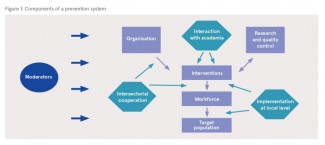
Community-based prevention systems
Community-based models form an important component in alcohol, tobacco and illicit drug (substance) abuse prevention systems. Community models target both place-based communities and distinct sub-populations (e.g., defined by common...

Community-based prevention systems
Community-based models form an important component in alcohol, tobacco and illicit drug (substance) abuse prevention systems. Community models target both place-based communities and distinct sub-populations (e.g., defined by common...

INEP Plus Training - Introduction to Evidence-based Prevention
Learn the science of evidence-based prevention and start your journey to earn global recognition as a prevention specialist.
Equip yourself with the know-how to develop and implement evidence-based prevention intervention.
No more...
A review of the Science of Substance Use Surveillance and Monitoring: Exploring advancements, Limitations and Future Directions
Authors
Dr. Nadine Harker (⚑ South Africa) 1
1. University of Cape Town
Abstract
Substance use surveillance and monitoring are essential for comprehending the extent, patterns, and consequences of drug and alcohol consumption. Data...