
Tìm kiếm
 Data
Systematically collected information used to understand patterns of substance use, substance use disorders, treatment needs, and drug market dynamics. This may include epidemiological data, service utilisation records, treatment outcomes, law enforcement intelligence, and public health surveillance. Data helps identify emerging trends, assess the effectiveness of prevention and treatment programmes, monitor trafficking and market activity, and guide evidence-informed policy and decision-making. Reliable data systems are essential for improving responses to substance use and ensuring that interventions are targeted, effective, and responsive to population needs.


Success in Deflection Programs: A Policy Brief
This policy brief examines the available evidence on the effectiveness of deflection programmes and provides recommendations for their implementation, evaluation and sustainability. Drawing on a review of 12 quantitative programme...
National Survey of First Responder Deflection Programs: Key Findings
This infographic presents key findings from a national survey of more than 300 first responder agencies in the United States, examining the development and implementation of deflection programmes in response to the opioid crisis. Findings...
Want to Reduce Drugs in Your Community? You Might Want to Deflect Instead of Arrest
In this foundational article, Jac Charlier introduces deflection as an alternative law enforcement response to individuals experiencing substance use disorders who repeatedly come into contact with the criminal justice system.
The article...
Leveraging Arrest Data for Youth Deflection
This resource from the Center for Health and Justice at TASC explores how youth arrest data can inform the development of deflection strategies that prevent unnecessary involvement in the criminal justice system.
Drawing on juvenile arrest...
Using Police Data to Highlight Deflection Opportunities
Using Police Data to Highlight Deflection Opportunities, developed by the Center for Health and Justice at TASC, explores how police data can inform the development of deflection initiatives that connect individuals with community-based...
2025 National Drug Threat Assessment (NDTA)
The Drug Enforcement Administration (DEA) presents the 2025 National Drug Threat Assessment (NDTA), a comprehensive report that provides a national-level perspective on the threats posed by deadly illicit drugs and the violent transnational...
Pilot Training of Stakeholders on Alternatives to Incarceration for People Who Use Drugs in Contact with the Criminal Justice System in Nigeria: Lessons Learned and Future Directions
BACKGROUND: Studies have reported a high prevalence of substance misuse among people who use drugs (PWUD) in contact with the Criminal Justice System (CJS) in Nigeria. Further, there is limited access to treatment resulting in high rates of...
AddictologyIssue 2/2026
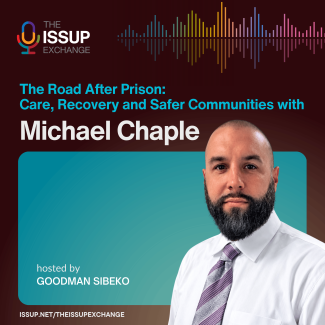
The Road After Prison: Care, Recovery and Safer Communities with Michael Chaple Pt.4
In this fourth and final episode of The Road After Prison: Care, Recovery and Safer Communities, Professor Goodman Sibeko is joined by Michael Chaple to explore how re-entry success can be measured beyond recidivism. Michael discusses the importance of treatment engagement, health and wellbeing, stable housing, employment, financial security, and social reintegration in understanding how people rebuild their lives after incarceration.
Connecting Evidence, Prevention, Law Enforcement and Community Action: Key Insights from ISSUP 2026
How do we go about translating evidence into effective action, strengthen prevention, address drug-related crime, improve access to treatment and recovery support, and build safer, healthier communities?
This age-old question was explored...

WHO Expert Committee on Drug Dependence: forty-eighth report
The forty-eighth meeting of the WHO Expert Committee on Drug Dependence (ECDD) was convened from 20 to 22 October 2025 and was coordinated from WHO headquarters in Geneva. The forty-eighth WHO ECDD critically reviewed four substances...
TRAJECTOIRES SOUS EMPRISE : COMPRENDRE L’EXPLOITATION CRIMINELLE DES MINEURS DANS UN ÉCOSYSTÈME CRIMINEL FRAGMENTÉ DEPUIS 2018
Le Centre international pour la prévention de la criminalité publie Trajectoires sous emprise : comprendre l’exploitation criminelle des jeunes dans un écosystème criminel fragmenté depuis 2018, un nouveau rapport qui examine les...
Victimisation des jeunes et dynamiques urbaines de la violence
Dans un contexte urbain marqué par des transformations sociales, économiques et technologiques rapides, la compréhension des dynamiques de victimisation chez les jeunes dans l’agglomération de Montréal apparaît essentielle pour soutenir l...
Protecting young people from recruitment into criminal drug networks: Research gaps and priorities for stronger prevention and intervention in the European Union
Safe futures is an initiative supported by the European Union Drugs Agency to strengthen shared understanding of, and responses to, the recruitment and exploitation of young people into criminal drugs networks across Europe. The initiative...
Handbook on the crime prevention guidelines: Making them work
The present Handbook is one of a series of practical tools developed by the United Nations Office on Drugs and Crime (UNODC) to support countries in the implementation of the standards and norms in crime prevention and criminal justice...
Session 3: Intersectoral Collaboration for Effective Substance Use Responses
Chaired by: Goodman Sibeko
- Psychosocial Care for Offenders with Mild Substance Use Disorders - Dr. Apinun Aramrattana
- Exploring the Court-Mandated and Police Request Forms Induction at Shimo Mat Clinic for a Period of 2020-2025 - Mr...
Deflection and Cross-Sector Collaboration
ABSTRACT
Jac Charlier will explore deflection as a collaborative approach to addressing substance use, highlighting how communities can connect individuals with appropriate health, treatment, recovery, and social support services while...
The Road After Prison: Care, Recovery and Safer Communities with Michael Chaple Pt.3
In this third episode, Professor Goodman Sibeko and Michael Chaple look at what happens when re-entry support exists but the systems around it do not work together. Michael shares his experience of the barriers that can limit successful reintegration, from gaps in resources and competing priorities to organisations working in isolation.
The Road After Prison: Care, Recovery and Safer Communities with Michael Chaple Pt.2
In this second episode, Professor Goodman Sibeko is joined by Michael Chaple to explore the critical first weeks after release and what continuity of care looks like in practice.
New Synthetic Drugs Increase Overdose Risks in Scotland
Scotland’s illicit drug market is becoming increasingly complex with the emergence of highly potent synthetic substances, including synthetic cannabinoids and opioids such as nitazenes. Some of these substances can be considerably more...

Recent U.S. drug alerts: Turning emerging evidence into workforce preparedness
Recent United States alerts on fentanyl analogues, medetomidine, cychlorphine, drug mixtures and concentrated 7-OH products highlight evolving challenges across the substance use workforce. They invite us to review local preparedness, understand testing limitations and strengthen links between frontline services, laboratories and public-health partners. A useful response brings together clinical, prevention, recovery and peer perspectives, with clear responsibilities for turning relevant findings into action. For the global ISSUP community, these alerts offer lessons in preparedness while requiring careful consideration of local evidence, resources and service arrangements. Staying informed through trusted sources and sharing practical responses through ISSUP can help translate emerging knowledge into safer care and more responsive support for individuals, families and communities.