
Tìm kiếm
 Policy
The laws, regulations, strategies, and governance frameworks that guide how governments and institutions address substance use, substance use disorders, and illicit drug trafficking. These policies shape coordinated responses across prevention, treatment, recovery support, public health, regulatory control, and law enforcement. Effective substance use policies aim to reduce health and social harms, ensure access to prevention and treatment services, regulate controlled substances, and disrupt illicit drug markets. They are typically informed by scientific evidence, public health principles, and cross-sector collaboration to promote safer and healthier communities.

Psychosocial case management: connecting treatment, relationships and community recovery
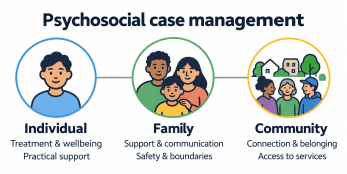
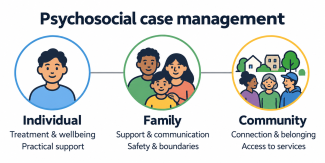
Psychosocial case management connects evidence-based treatment with the practical and relational support needed for sustained recovery.
Its clearest benefits are helping people access services and remain engaged in care.
Individual care should consider housing, mental health, meaningful activity and continuity of support after discharge.
Families and affected communities also need support, with involvement guided by consent, safety and individual circumstances.
For treatment and prevention, interventions should address identified needs, draw on relevant evidence and be reviewed as circumstances change.
Connecting Evidence, Prevention, Law Enforcement and Community Action: Key Insights from ISSUP 2026
How do we go about translating evidence into effective action, strengthen prevention, address drug-related crime, improve access to treatment and recovery support, and build safer, healthier communities?
This age-old question was explored...

From Evidence to Practice: Advances in Substance Use Disorder Care
Evidence-based interventions can improve prevention, treatment and recovery outcomes, but knowing what works does not guarantee that people will benefit. Effective responses depend on trained professionals, supportive systems, coordinated...
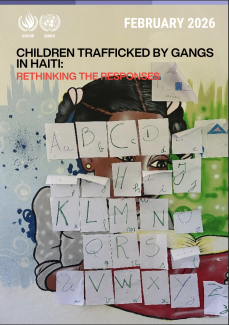
Children Trafficked by Gangs in Haiti: Rethinking the Responses
This joint report by the United Nations Integrated Office in Haiti (BINUH) and the Office of the United Nations High Commissioner for Human Rights (OHCHR) examines the trafficking and exploitation of children by gangs in Haiti. It...
EXPLORING THE COURT-MANDATED AND POLICE REQUEST FORMS INDUCTION AT SHIMO MAT CLINIC FOR A PERIOD OF 2020-2025.
EXPLORING THE COURT-MANDATED AND POLICE REQUEST FORMS INDUCTION AT SHIMO MAT CLINIC FOR A PERIOD OF 2020-2025.
AUTHORS AND AFFILIATION
JUSTUS OTIENO1
1 MOMBASA COUNTY DEPARTMENT OF HEALTH - SHIMO MAT CLINIC
BACKGROUND
Injection of...
Psychosocial Care for Offenders with Mild Substance Use Disorders
ABSTRACT
Thailand’s justice system has long faced challenges in addressing drug-related offenses, as punishment alone is insufficient to address the psychological and social factors underlying repeated offending. In response to evolving...
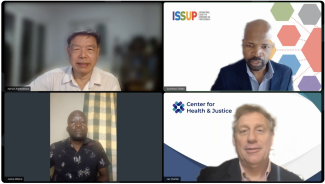
Making intersectoral collaboration work: connecting people, services and communities
ISSUP’s 2026 conference session on intersectoral collaboration explored how health, justice and community services can work together to help people access and stay connected to appropriate support. Presentations from Thailand, Kenya and Ghana, alongside an introduction to deflection, highlighted clearer referral pathways, shared responsibilities, workforce wellbeing and earlier opportunities for care. These themes connected with the wider conference discussions on evidence-informed practice, youth prevention, recovery and faith-based support. Members were encouraged to adapt the learning to their roles and local circumstances, involve people using services in improvements, and assess changes in health, relationships and everyday life alongside service activity. The session recording offers a starting point for further learning, discussion across professions and practical collaboration through ISSUP National Chapters and professional networks.
Recent U.S. drug alerts: Turning emerging evidence into workforce preparedness
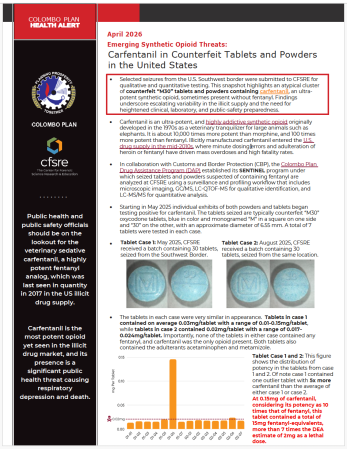
Recent United States alerts on fentanyl analogues, medetomidine, cychlorphine, drug mixtures and concentrated 7-OH products highlight evolving challenges across the substance use workforce. They invite us to review local preparedness, understand testing limitations and strengthen links between frontline services, laboratories and public-health partners. A useful response brings together clinical, prevention, recovery and peer perspectives, with clear responsibilities for turning relevant findings into action. For the global ISSUP community, these alerts offer lessons in preparedness while requiring careful consideration of local evidence, resources and service arrangements. Staying informed through trusted sources and sharing practical responses through ISSUP can help translate emerging knowledge into safer care and more responsive support for individuals, families and communities.

Synthetic cannabinoids: Reflections from Mauritius
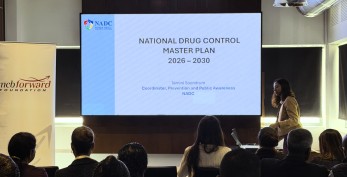
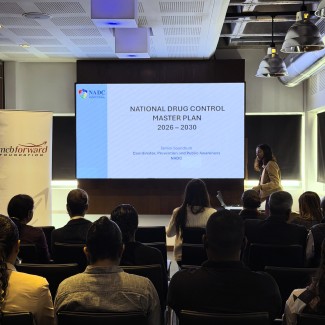
During a recent engagement in Mauritius, I had the opportunity to hear the National Agency for Drug Control (NADC) present the National Drug Control Master Plan 2026–2030 and to share the suite of resources available through ISSUP. This...
World Drug Report 2026: Key Trends and Policy Challenges for Africa
ISSUP Global, in collaboration with the African Union, presents World Drug Report 2026: Key Trends and Policy Challenges for Africa.
Organized crime groups: A systematic review of individual-level risk factors related to recruitment
Background:
Studies from multiple contexts conceptualize organized crime as comprising different types of criminal organizations and activities. Notwithstanding growing scientific interest and increasing number of policies aiming at...

Connecting Civil Society with the United Nations: Opportunities for Engagement in Drug Policy, Crime Prevention and Criminal Justice
ISSUP Global, in collaboration with the Vienna NGO Committee on Drugs (VNGOC), present a webinar on onnecting Civil Society with the United Nations: Opportunities for Engagement in Drug Policy, Crime Prevention and Criminal Justice.
Psychosocial determinants of recidivism risk among incarcerated individuals with a history of substance use: A systematic review
The prevalence of recidivism among individuals with a history of substance use and incarceration remains a significant concern for criminal justice systems worldwide. With significant social and economic ramifications, preventing people...

Rehabilitation and Re-entry Programmes for Justice-Involved Individuals and Their Effectiveness in Social Reintegration: A Systematic Review
Prison rehabilitation and community re-entry programmes implemented during incarceration or in the transitional period serve as significant mechanisms for facilitating justice-involved individuals in their post-release adaptation. This...

Community-based substance use treatment programs for reentering justice-involved adults: A scoping review
Introduction:
For adults involved with the criminal justice system who are reentering their communities postincarceration, there is a large need for community-based substance use treatment. Little is known, however, about the types...

International Youth Day 2026: Launch of the Global Youth Survey
ISSUP Global Youth Network, in collaboration with Drug Free America Foundation, World Federation Against Drugs and Fourth Wave Foundation, presented a webinar to celebrate International Youth Day on 12 August.
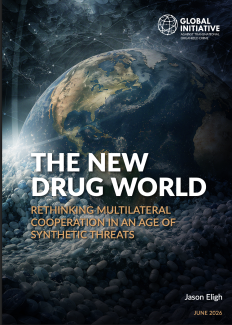
The New Drug World: Strengthening Collaboration to Address Synthetic Drug Threats
This report examines how the rapid growth of synthetic drug markets is transforming the global drug landscape and challenging traditional approaches to drug control. Unlike plant-based drugs such as cocaine and heroin, synthetic drugs can...
Heroin Trafficking Along the Northern and Southern Routes: Emerging Trends and Strategic Implications
This paper examines how heroin trafficking routes from Afghanistan into Europe have evolved following the Taliban's return to power in 2021. It explores the changing dynamics of the northern and southern trafficking routes, highlighting how...
The Role of Faith Communities in Addressing Substance Use and Crime – Reading List (Part 2)
In this second reading list, we continue exploring the growing evidence on the role and contribution of faith communities and faith-based organisations in addressing substance use and crime, with a particular focus on treatment engagement...

Religion, Crime, and Criminal Justice
This chapter reviews the evidence on the relationship between religion, crime, and the criminal justice system. It highlights a growing body of research showing a consistent inverse association between religiosity and criminal behaviour...