
Making intersectoral collaboration work: connecting people, services and communities
Effective substance use responses depend on what happens between services as much as what happens within them. A referral can open a door, but practical barriers, unclear responsibilities and limited follow-up can prevent someone from receiving support. Intersectoral collaboration means making those connections work for the people who need them.
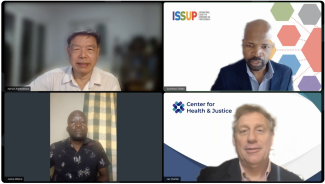
This was the focus of Intersectoral Collaboration for Effective Substance Use Responses, that I had the privilege to chair on 23 September during ISSUP’s 2026 virtual conference. Contributions from Thailand, Kenya, Ghana and the field of deflection brought together perspectives relevant to health professionals, justice practitioners, researchers, service managers and community organisations.
The session provided a practical connection between the wider conference themes. Discussions about translating evidence into care raise questions about how people reach appropriate services. Youth prevention and responses to crime require coordination across families, communities and institutions. Faith-based approaches bring further opportunities to consider how community support connects with professional care. The conference programme, including its posters on prevention, rehabilitation and community engagement, offered different settings in which these connections matter.
Four perspectives on collaboration
Dr Apinun Aramrattana described Thailand’s approach to psychosocial care for people with mild substance use disorders involved in the justice system. His presentation outlined court-linked counselling, screening, brief intervention and referral, supported by trained counsellors and links with families and other services. It illustrated the organisational work required to connect justice processes with an appropriate health response.
A useful practice lesson is that collaboration needs defined roles and skills: recognising needs, engaging people respectfully, providing support within one’s competence and knowing when to refer. The number of people reached shows how widely the programme has been implemented. To understand how well it works, we also need to follow participants over time to see whether they stay connected to care and experience improvements in their health, relationships and everyday lives.
Mr Justus Otieno examined court-mandated and police-requested referrals to Shimo MAT Clinic in Kenya. His case study described participants’ experiences of engaging with treatment, including reported improvements in their health and reconnection with family. It also highlighted difficulties they faced in accessing care, such as transport costs, stigma and problems with referral procedures..
These experiences highlight the need to look at what happens after someone is referred for care. Can they afford to attend appointments? Do the organisations making and receiving referrals understand each other’s procedures? Who checks in if the person stops attending?
The presentation highlighted the need for clearer referral procedures and joint training for the organisations involved. However, the study examined a small group of cases selected specifically for the research. Their experiences offer useful insights, but do not establish that requiring someone to attend treatment leads to better outcomes.
Mr Samuel Kwakye focused on the wellbeing of those providing care, sharing research on substance use among psychiatric staff in Accra. He explored working conditions, workplace attitudes and the support available to staff, encouraging services to consider how they care for their own teams.
For managers and educators, this is an opportunity to review workplace policies, make confidential support easier to access and create space for staff to discuss their concerns. The study captured experiences at one point in time, so it cannot show that particular working conditions caused substance use. It also reminds us to avoid assumptions: substance use does not necessarily mean that someone has a substance use disorder or that their ability to work is affected.
Jac Charlier’s presentation explored how people can be connected with support earlier, before an arrest or crisis brings them into contact with services. He introduced deflection as a community-based approach in which police and other first responders work with local services to help people access treatment, housing, recovery support and other assistance.
He also explained the difference between deflection, which focuses on connecting people with support in the community, and diversion, which operates within legal processes. For practitioners interested in these approaches, a useful starting point is to understand how they work, what the evidence shows and how they could fit local needs and services. He emphasised involving communities in developing these responses and shared resources for further learning and participation.
Putting the learning into practice
ISSUP members work in many different professions, communities and cultural settings, with different resources available to them. The session offered practical ideas that members can adapt to their own roles and the needs of the people they support:
- Health and social care practitioners, treatment providers and those coordinating referrals and ongoing support can work with partner organisations and people using services to understand what happens at each step of a referral. Together, they can identify where people lose contact with care, agree who will follow up and try a practical change to make the process easier.
- Justice professionals and first responders can explore ways to connect people with assessment and support earlier. Joint training with health and community partners can help everyone understand when and how to refer someone, who can access each service, how consent and confidentiality will be handled, and who is responsible for the next step.
- Community, faith-based and peer organisations can consider how the support they provide connects with health and social services. They can help shape referral arrangements that reflect people’s languages, everyday circumstances and preferences, making it easier for people to find and continue receiving appropriate support.
- Managers and educators can include staff wellbeing in everyday service planning and training. This means listening to the pressures staff face and using that understanding to provide relevant learning, practical support and confidential routes to help.
- Researchers, students and policymakers can explore which approaches work, who benefits and what helps them succeed in different settings. Useful questions include how programmes are put into practice, what they cost, who struggles to access them and whether improvements last over time. People using services and their communities should help decide which outcomes matter and how success is assessed.
Across these roles, evaluation should follow people beyond the referral. Measures might include time to first contact, continued engagement, experiences of care, health and wellbeing, family relationships and participation in community life. Different partners will need different information, but shared measures should remain meaningful to the people receiving support.
ISSUP members could use the recording to start a discussion with colleagues from different professions about how these ideas relate to their work. One practical next step would be to bring a local referral challenge to their National Chapter or professional network and work with relevant partners to agree on a small change to try. Sharing what worked, what proved difficult and what they learned would help other members consider how to adapt the approach to their own settings.
Further learning and investigation
- PTACC’s suite of deflection resources: introductory materials, pathways, research resources and policy briefs, including peer involvement. Consider their applicability within local legal and service contexts.
- A Multi-Site Evaluation of Law Enforcement Deflection in the United States: further reading for those examining implementation and outcomes.
- Enhancing Well-being and Preventing Burnout Amongst Treatment Practitioners: an ISSUP resource for continuing the workforce wellbeing discussion.
- UNODC–WHO International Standards for the Treatment of Drug Use Disorders: a reference for reviewing the quality, coordination and ethical foundations of treatment provision.