A new chapter in training has begun at ISSUP. A new Training Team has been formed with the goal of improving the accessibility and relevance of ISSUP’s training, while ensuring it reflects the learning needs of members worldwide.
In the early months of its work, the team carried out a training needs assessment to better understand members’ online learning needs. At the same time, the team engaged with several Learning Management System (LMS) providers to explore options for a new platform that supports accessible, high-quality learning. The proposals received are now being reviewed.
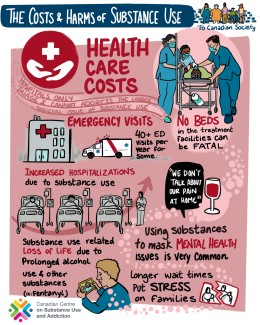
The Canadian Centre on Substance Use and Addiction (CCSA) transforms complex data into insights that reflect real human experiences. Every aspect of the Canadian Substance Use Cost and Harms (CSUCH) project represents individuals with lived or living experience of substance use, along with their families, workplaces, and communities.
A new resource highlights these journeys and the human cost of substance use through illustrated stories from people with lived experience and their families. The illustrations cover three key areas of the CSUCH project: healthcare, lost productivity, and...
ISSUP Global, UNODC, and the African Union presents their webinar on the World Drug Report 2025, focusing on key trends and policy challenges for Africa.
The 2025 Annual Report to the Parliament on Drug Addictions in Italy offers a comprehensive overview of the current drug addiction landscape. Despite a slight decline in youth drug use for the first time since 2018, the report highlights ongoing challenges, particularly with substances like cocaine, synthetic opioids, and high-potency cannabis derivatives. Law enforcement and judicial efforts remain strong, and Italy continues to be a key collaborator in global anti-drug initiatives, particularly with countries in South America and the Indo-Pacific region.
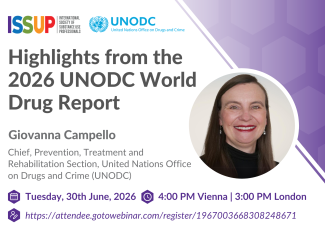
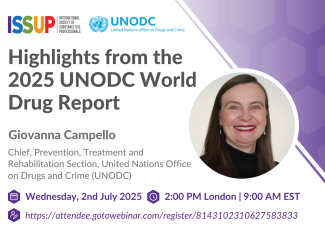
ISSUP in collaboration with UNODC present a webinar highlighting key findings from the 2025 edition of the UNODC World Drug Report. The session is presented by Giovanna Campello, Chief of the Prevention, Treatment and Rehabilitation Section at the United Nations Office on Drugs and Crime (UNODC).
Join our upcoming webinar highlighting key findings from the 2025 edition of the UNODC World Drug Report. The session will be presented by Giovanna Campello, Chief of the Prevention, Treatment and Rehabilitation Section at the United Nations Office on Drugs and Crime (UNODC).
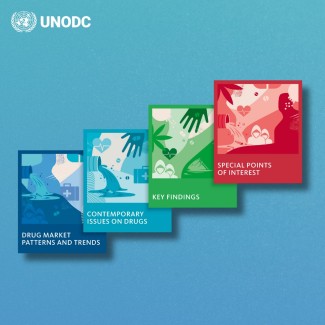
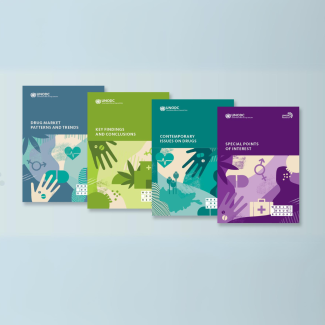
A global reference on drug markets, trends and policy developments, the World Drug Report offers a wealth of data and analysis and in 2025 comprises several elements tailored to different audiences.
Lee, EH., Yu, HJ. Effectiveness of nurse-initiated smoking cessation intervention: a systematic review and meta-analysis. Subst Abuse Treat Prev Policy 20, 18 (2025). https://doi.org/10.1186/s13011-025-00648-8
Background
Smoking is one of the top causes of preventable death and is linked to many serious health problems, including cancer and chronic diseases. Nurses can play a big role in helping people quit smoking by offering support through counselling, education, and mental health care. These nurse-led programs have been shown to increase quit rates. Training nurses to deliver these programs is important, and reviewing past studies helps us understand what works best.
Methods
Researchers searched eight major health databases between March 27 and August 1, 2024, to find studies on nurse-led...
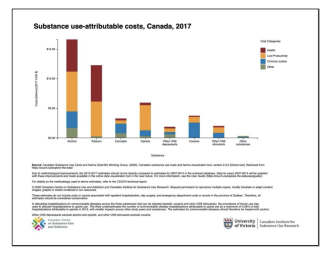
CSUCH’s data visualisation tool can be used to estimate substance use trends across the country. The data helps inform programs, practices, and research to protect communities, save lives, and improve the well-being of people in Canada.
Spotlight: Top 3 causes of death due to substance use in Canada
More than 200 people died each day due to substance use (SU) in 2020 (the latest year for which data are available). That works out to 73,994 deaths that year. The average age of death due to SU was 45 years. Tobacco use caused 63% (46,366) of SU-related deaths, followed by alcohol at 23%...
Addiction and obesity share similar neurological pathways, both linked to compulsive behaviors and the brain's reward system. Research has highlighted the potential of GLP-1 receptor agonists, originally developed for diabetes, to help manage both appetite and addictive cravings. These medications, such as semaglutide, may regulate addictive behaviors by influencing reward circuits in the brain. However, they come with potential side effects, and their long-term effects are still under investigation.
In addition, a new compound, 5-Methoxy-2-aminoindane (MEAI), is being researched for its...
Abay Woday Tadesse, Berihun Assefa Dachew, Getinet Ayano, Kim Betts, Rosa Alati, Maternal cannabis use disorder and offspring behavioral outcomes: findings from a linked data cohort study, Psychiatry Research, Volume 346, 2025, 116404, ISSN 0165-1781, https://doi.org/10.1016/j.psychres.2025.116404.
Few studies have looked into how cannabis use during pregnancy affects the development of disruptive behavioral disorders (DBDs) in children, often using small sample sizes and self-reported data. This study aimed to understand the link between maternal cannabis use disorder (CUD) during pregnancy and after childbirth, and the risk of DBDs in children. We used health data from New South Wales, Australia, for children born between 2003 and 2005. We compared children whose mothers had CUD to those whose mothers did not, and assessed the risk of DBDs in these children. Both CUD and DBDs were...
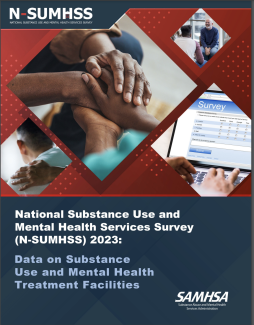
The National Survey of Substance Use and Mental Health Services (N-SUMHSS) is a voluntary, annual survey that collects data from all active substance use and mental health treatment facilities across the United States, its territories, and Washington D.C. The annual report provides valuable insights into key operational characteristics of these treatment facilities, including the use of pharmacotherapies, availability of language assistance services, and the provision of suicide prevention assistance. This comprehensive survey helps to inform policymakers, researchers, and service providers on...
A study was conducted to examine how patterns of alcohol and cannabis use are associated with bystander intervention in situations involving the risk of sexual and relationship violence among college students. Researchers aimed to explore whether students' substance use influenced their awareness of risky situations (referred to as bystander opportunities) and their likelihood of taking action (bystander behaviors). Two key hypotheses guided this investigation: the first being that the frequency of bystander opportunities would vary depending on the students’ patterns of alcohol and cannabis...
ISSUP Nigeria presents the 24th session of its bi-monthly webinar in the Knowledge Update Series. This webinar will focus on the topic of 'Cannabis Use Disorder - Changing Trends and Treatment Approaches'.
A global reference on drug markets, trends and policy developments, the World Drug Report offers a wealth of data and analysis and in 2024 comprises several elements tailored to different audiences.
The Cannabis, Mental Health, and Substance Use Health: Research Knowledge Exchange Event Summary Report presents the findings and themes discussed at an event jointly hosted by CCSA (Canadian Centre on Substance Use and Addiction) and the Mental Health Commission of Canada. With funding from Health Canada, the two organizations supported approximately 70 research teams in exploring the potential benefits, harms, and risks of cannabis on substance use health and mental health. The event provided a platform for these research teams to share their project results, observations, and experiences...
SAMHSA report discusses the evidence supporting the effectiveness of screening, brief intervention, and referral to treatment (SBIRT) as a comprehensive approach, as well as for the implementation and effectiveness of the individual components of SBIRT for different behavioural health conditions.
The report describes briefly the underlying research that has been conducted in the prevention and early intervention of risky alcohol, substance abuse and tobacco consumption, as well as commonly reported mental health problems, and describes existing studies/models for specific populations and...