
Іздестіру
 Treatment
The range of medical, psychological, and social services designed to help individuals reduce or stop substance use and manage substance use disorders. Treatment may include assessment, counselling and behavioural therapies, medication-assisted treatment, withdrawal management, and support for co-occurring mental or physical health conditions. Effective treatment is typically person-centred and evidence-informed, and may be provided in outpatient, community, or residential settings. Treatment aims to improve health and functioning, reduce substance-related harms, and support individuals in moving toward recovery and long-term wellbeing.


Nabiximols Combined with Motivational Enhancement/Cognitive Behavioral Therapy for the Treatment of Cannabis Dependence
Abstract
Background
The current lack of pharmacological treatments for cannabis use disorder (CUD) warrants novel approaches and further investigation of promising pharmacotherapy. We previously showed that nabiximols (27 mg/ml Δ9...
Measuring Treatment Outcomes in Gambling Disorders
Abstract
Background and Aims
Considerable variation of outcome variables used to measure recovery in the gambling treatment literature has precluded effective cross-study evaluations and hindered the development of best-practice treatment...
Rural and Appalachian Disparities in Neonatal Abstinence Syndrome Incidence and Access to Opioid Abuse Treatment
Abstract
Objective
Incidence of neonatal abstinence syndrome (NAS) is increasing due to the rise in opioid use. Rural states like Kentucky have been disproportionally impacted by opioid abuse, and this study determines NAS burden...
Contemporary Routes of Cannabis Consumption: A Primer for Clinicians
Abstract
Although cannabis use is federally prohibited, medical cannabis is legal in some form in 30 states and the District of Columbia, and recreational use is legal in 8 states and the District of Columbia. The increasing legal...
Reported Theory Use by Digital Interventions for Hazardous and Harmful Alcohol Consumption, and Association with Effectiveness
ABSTRACT
Background: Applying theory to the design and evaluation of interventions is likely to increase effectiveness and improve the evidence base from which future interventions are developed, though few interventions report this.
Obje...
Effectiveness Bank Matrix Cell: Can Medications Make It *Too* Easy to Recover?
Drug-based treatments dominate opiate addiction treatment but are far from universally accepted. Referring to chemical ‘solutions’ to addiction, the ‘bite’ commentary on this cell ends with the “curious possibility that precisely because a...
Guía de intervención mhGAP para los trastornos mentales, neurológicos y por consumo de sustancias en el nivel de atención de salud no especializada. Versión 2.0
Los trastornos mentales, neurológicos y por consumo de sustancias (MNS) son muy frecuentes y representan una gran carga de enfermedad y discapacidad a nivel mundial. Subsiste una amplia brecha entre la capacidad de los sistemas de salud y...
mhGAP Intervention Guide - Version 2.0 for Mental, Neurological and Substance Use Disorders in Non-Specialized Health Settings
Overview
This is the second version (2016) of the mhGAP Intervention Guide (mhGAP-IG) for mental, neurological and substance use (MNS) disorders in non-specialist health settings. It is for use by doctors, nurses, other health workers as...
Наркологиялық оңалту орталықтарында зорлық-зомбылық қатері
Реферат
Аясы
2009 жылы Мексика жеке пайдалану үшін қаралған есірткіні сақтауды ішінара қылмыстық сипаттан арылту және бас бостандығынан айыру орнына сертификатталған наркологиялық оңалту орталықтарына міндетті жолдамаларды ұлғайту...
Guía de práctica clínica: Tratamiento del síndrome de abstinencia alcohólica, 2ª edición
Este documento responde a la necesidad de tener en la práctica clínica herramientas estandarizadas para el manejo integral del síndrome de abstinencia alcohólica. El grupo de trabajo que desarrolló este documento se basó en la Guía de...
The Health and Social Effects of Nonmedical Cannabis Use
Foreword
Cannabis is globally the most commonly used psychoactive substance under international control. In 2013, an estimated 181.8 million people aged 15-64 years used cannabis for nonmedical purposes globally (UNODC, 2015). There is an...
Reduction of Mortality Following Better Detection of Hypertension and Alcohol Problems in Primary Health Care in Spain
Abstract
Through a simulation study, we estimated the potential effects of better detection of hypertension and improved screening for alcohol problems with subsequent interventions. Results showed that if 50% of Spanish males between 40...
Reducción de la mortalidad mediante una mejor detección de la hipertensión y los problemas con el alcohol en atención primaria de salud en España
Resumen
Se estudian mediante una simulación los potenciales beneficios que puede comportar una mejora en la detección y tratamiento de la hipertensión y de los problemas relacionados con el alcohol. Los resultados muestran que si el 50% de...
Францияда 2008-2013 жылдары алкогольді тұтынудың бұзылуының деменция ауыртпалығындағы үлесі
Түйіндеме
Аясы
Деменция 60 және одан жоғары жастағы адамдардың 5-7%-ына әсер ететін басым жағдай және ғаламдық деңгейде 60 және одан жоғары жастағы адамдарда мүгедектіктің негізгі себебі болып табылады. Біз ерте басталатын ақыл-есінің...
Mujeres y Tratamiento de Drogas
Guía de asesoría clínica para programas de tratamiento y rehabilitación en drogas en población específica de mujeres adultas.
Are you an ISSUP member? If not, you can join ISSUP by registering here: https://www.issup.net/membership/apply
...
Is Smoking a Risk Factor for Tinnitus? A Systematic Review, Meta-Analysis and Estimation of the Population Attributable Risk in Germany
Abstract
Objective: To assess the epidemiological association of smoking status and tinnitus with a systematic review and meta-analysis and to estimate the population attributable risk in Germany.
Data sources: A systematic literature...
Certification of Addiction Professionals in Africa: An Overview of the Process in Kenya
Abstract
This paper focuses on Kenya’s course of action to address the drug problem, specifically, treatment and rehabilitation of persons with Substance Use Disorders (SUDs). Treatment and rehabilitation of persons with SUDs was formally...
Extent and Patterns of Drug Use among Persons with Disabilities in Kenya
Abstract
Background: Although some data existed suggesting that there was high prevalence of drug use among the general population in Kenya with 39-48% of 15-65 year olds having used alcohol and at least one other substance, there was a...
Supervised Dosing with a Long-Acting Opioid Medication in the Management of Opioid Dependence
Trials challenge the need for the widely accepted policy of making opioid-dependent patients take their methadone or other opioid substitutes at the clinic or pharmacy, but ‘no difference’ findings may be due to the limitations of the...
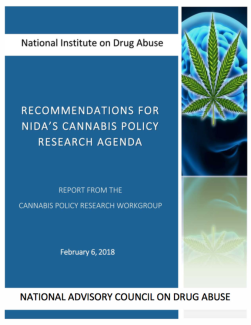
Recommendations for NIDA's Cannabis Policy Research Agenda
The National Institute on Drug Abuse (NIDA) has released a new report Recommendations for NIDA's Cannabis Policy Research Agenda.
The document has been prepared by the National Advisory Council on Drug Abuse Workgroup which was formed in...