

Search
 Treatment
The range of medical, psychological, and social services designed to help individuals reduce or stop substance use and manage substance use disorders. Treatment may include assessment, counselling and behavioural therapies, medication-assisted treatment, withdrawal management, and support for co-occurring mental or physical health conditions. Effective treatment is typically person-centred and evidence-informed, and may be provided in outpatient, community, or residential settings. Treatment aims to improve health and functioning, reduce substance-related harms, and support individuals in moving toward recovery and long-term wellbeing.


Differences between Psychotic Disorders with Concurrent Cannabis Use and Cannabis-Induced Psychoses
Abstract
Background: The fact that Cannabis use can lead to psychotic symptoms has been recognized years ago. Moreover, when the patient is using cannabis, the distinction between a primary psychotic disorder and a cannabis-induced...
Transcranial Magnetic Stimulation of Medial Prefrontal and Cingulate Cortices Reduces Cocaine Self-Administration: A Pilot Study
Background: Previous studies have shown that repetitive transcranial magnetic stimulation (rTMS) to the dorsolateral prefrontal cortex may serve as a potential treatment for cocaine use disorder (CUD), which remains a public health problem...
Diagnosis of Stroke Due to Cocaine and Its Complications
Introduction: Cocaine is an independent cerebrovascular risk factor both for ischaemic and haemorrhagic events, above all among persons under 55 years of age.
Report: A case report of stroke due to the consumption of cocaine is used to...
A Randomized, Open Label Trial of Methadone Continuation versus Forced Withdrawal in a Combined US Prison and Jail
Highlights
- MMT during incarceration leads to lower injection drug and heroin use.
- MMT during incarceration leads to fewer non-fatal overdoses.
- MMT during incarceration leads to higher rates of engagement in treatment.
Abstract
Recen...
Workforce Development: Is There a Paradigm Shift?
This editorial examines whether training and education in the addictions field has considerably made a difference in workforce development. It concludes that transformational change has not occurred because beyond training and education, a...
Enhanced Amygdala-Striatal Functional Connectivity during the Processing of Cocaine Cues in Male Cocaine Users with a History of Childhood Trauma
Background and Aims: Childhood trauma is associated with increased levels of anxiety later in life, an increased risk for the development of substance use disorders, and neurodevelopmental abnormalities in the amygdala and frontostriatal...
Supporting Nurse Mentors to Reduce the Barriers to Implementing Alcohol Interventions and Brief Advice (IBA) in Primary Care
Key Findings
- The findings of this project suggest that providing a relatively low level of support to nurse mentors based in primary care leads to a significant increase in the delivery of IBA.
- There was a marked increase in the...
How Do People with Mood and Anxiety Disorders Perceive and Interpret the Drinking Motives Questionnaire?
Abstract
Background
Research has identified drinking motives as the final common pathway to alcohol use, and associations between specific drinking motives and drinking patterns have consistently been demonstrated. Data on drinking...
Prevalence and Factors Associated with Exposure to Secondhand Smoke (SHS) among Young People
Abstract
Background: Annually, 600 000 deaths are attributed to exposure of non-smokers to secondhand smoke (SHS). These include 165 000 among children, about 60% of which occur in Africa and Southeast Asia. As of 2017, only seven...
Effectiveness Bank Matrix Cell: Bridging the Chasm; Legal Drug Prescribers Relating to Illegal Drug Users
In 1960s Britain a chasm of opposing agendas and social distance opened up between doctors treating drug addiction and their patients. This cell of the Drug Treatment Matrix examines how bridging such chasms makes treatment more effective...
A Randomized, Open Label Trial of Methadone Continuation versus Forced Withdrawal in a Combined US Prison and Jail
Effectiveness Bank Analysis: Keep Maintaining Opiate-Dependent Prisoners
From the USA, a rare randomised trial found in favour of continuing methadone maintenance when patients entered prison rather than compulsory withdrawal. The...
Stressful Experiences Affect Likelihood of Remission of Drug Dependence, Continued Drug Use, and Relapse
Researchers at the University of Michigan’s Centre for the Study of Drugs, Alcohol, Smoking and Health have been exploring the link between drug dependence, ongoing drug use, relapse and exposure to stress or experience of stressful events...
Treatment for Opioid Use and Outcomes in Older Adults: A Systematic Literature Review
A new study published in the Drug and Alcohol Dependence journal focuses on an often-neglected topic – opioid use in older adults. This systematic literature review, Treatment for Opioid Use and Outcomes in Older Adults, included 76 papers...
Research Suggests Changes to the Way Opioids Are Prescribed after Surgery Could Prevent Misuse
A team of researchers from Harvard Medical School in Boston has published a new study suggesting changes to the way opioids are prescribed after surgery could be a way to reduce misuse.
Featured in the British Medical Journal, the study Po...
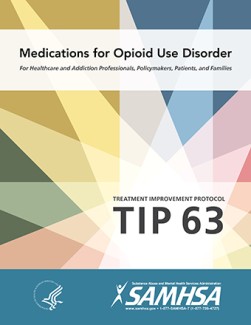
New from SAMHSA: Medications for Opioid Use Disorders
SAMHSA has released a new publication as part of the Treatment Improvement Protocol series.
Repeated Exposure to the “Spice” Cannabinoid JWH-018 Induces Tolerance and Enhances Responsiveness to 5-HT1A Receptor Stimulation in Male Rats
Naphthalen-1-yl-(1-pentylindol-3-yl)methanone (JWH-018) is a synthetic compound found in psychoactive “spice” products that activates cannabinoid receptors. Preclinical evidence suggests that exposure to synthetic cannabinoids increases 5...
National Trends in Alcohol Consumption in Mexico
Abstract:
Introduction: Worldwide, binge drinking of alcohol has increased, especially among young people. In Mexico, various epidemiological sources allow us to account for the growth this pattern of consumption has had. Given this...
The Influence of Hazardous Drinking on Psychological Functioning, Stress and Sleep during and after Treatment in Patients with Mental Health Problems
Abstract
Objectives: Hazardous drinking could negatively affect health and lead to alcohol use disorders, but it is unclear how hazardous drinking affects treatment outcomes of depression and anxiety and stress-related mental health...
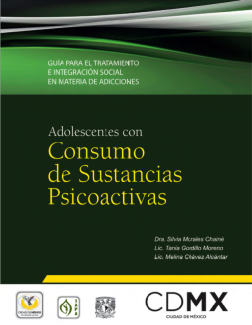
Guide to treatment and social integration in the field of addictions
The aim of this guide is to facilitate the understanding of the problem of adolescent substance use, as well as present practices based on clinical evidence more effective guidance and intervention with this population.
The guide is...
Nabiximols Combined with Motivational Enhancement/Cognitive Behavioral Therapy for the Treatment of Cannabis Dependence
Abstract
Background
The current lack of pharmacological treatments for cannabis use disorder (CUD) warrants novel approaches and further investigation of promising pharmacotherapy. We previously showed that nabiximols (27 mg/ml Δ9...