Пошук
 Populations
Distinct groups of people within a society who share certain characteristics such as age, gender, geographic location, socioeconomic status, cultural background, or exposure to particular risk factors that may influence patterns of substance use, vulnerability to substance use disorders, and access to services. In the context of substance use systems, identifying and understanding different populations helps guide the design of prevention, treatment, recovery, and policy responses that are appropriate, equitable, and responsive to specific needs. Examples may include youth, women, people experiencing homelessness, individuals in the criminal justice system, or communities affected by specific social or economic conditions.

Advancing the science of evaluating Collegiate Recovery Program processes and outcomes: A recovery capital perspective
Collegiate recovery programs (CRPs) offer resources and programming for postsecondary students in addiction recovery to ensure they can initiate or maintain their recovery and complete college. To achieve these goals, CRPs offer a variety...
Collegiate Recovery Communities Programs: What do we know and what do we need to know?
As the broad construct of recovery increasingly guides addiction services and policy, federal agencies have called for the expansion of peer-driven recovery support services. The high prevalence of substance use and abuse in colleges and...
Are Collegiate Recovery Programs worth the investment?
The first collegiate recovery program was founded at Brown University in 1977. Since then, these programs have seen explosive growth, with 136 currently in operation. Universities are often tasked with determining whether programs are worth...
Recovery High Schools: A Descriptive Study of School Programs and Students
High schools specifically designed for students recovering from a substance use disorder (substance abuse or dependence) have been emerging as a continuing care resource since 1987. This study of 17 schools provides the first systematic...
A systematic review of recovery high schools and collegiate recovery programs for building recovery capital among adolescents and emerging adults
Introduction:
Educational settings represent a prime opportunity for reaching adolescents and young adults (ages 12–27) experiencing substance use disorders (SUD). Recovery high schools (RHSs) were established to help adolescents in...
What is a Recovery High School?
This resource from the The Association of Recovery Schools explains the role of recovery high schools, which are secondary schools designed specifically to support students recovering from substance use disorders and co-occurring mental...
Recovery schools for improving behavioral and academic outcomes among students in recovery from substance use disorders: a systematic review
This Campbell systematic review examines the effects of recovery schools on student behavioral and academic outcomes, compared to the effects of non-recovery schools. The review summarizes evidence from one quasi-experimental study (with a...
A qualitative examination of social identity and stigma among adolescents recovering from alcohol or drug use
Introduction
Alcohol and other drug (AOD) use disorders are stigmatized conditions, but little is known about youth’s experience of this stigma, which may threaten their developing social identity and recovery process. This study...
Understanding recovery capital for addiction recovery in adolescence and young adulthood
In 2017, the Recovery Capital for Adolescents Model (RCAM) was proposed to highlight needs of adolescents in recovery (1), building on the seminal work of William Cloud and Robert Granfield (2). Research since the RCAM was proposed has...
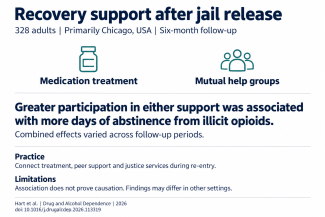
Adults with Problematic Opioid Use Released from Jail: Mutual Help Groups and Medication Support Contribute to a Greater Likelihood of Opioid Abstinence
A recent study found that medication treatment and mutual help group participation were each associated with more days of abstinence from illicit opioids after jail release. Their combined benefits were less clear and varied across follow-up periods. For ISSUP practitioners, the findings highlight the value of connecting treatment, recovery support and justice services during re-entry. The study does not establish causation, and findings from this US sample may not apply equally in other settings.
Connecting Evidence, Prevention, Law Enforcement and Community Action: Key Insights from ISSUP 2026
How do we go about translating evidence into effective action, strengthen prevention, address drug-related crime, improve access to treatment and recovery support, and build safer, healthier communities?
This age-old question was explored...

Addressing Youth Substance Use and Crime: Risk Factors and Strategies
Protecting young people from substance use and crime: building safer communities and pathways to support
Young people's involvement in substance use and crime cannot be understood without considering the environments in which they grow up...
TRAJECTOIRES SOUS EMPRISE : COMPRENDRE L’EXPLOITATION CRIMINELLE DES MINEURS DANS UN ÉCOSYSTÈME CRIMINEL FRAGMENTÉ DEPUIS 2018
Le Centre international pour la prévention de la criminalité publie Trajectoires sous emprise : comprendre l’exploitation criminelle des jeunes dans un écosystème criminel fragmenté depuis 2018, un nouveau rapport qui examine les...
Victimisation des jeunes et dynamiques urbaines de la violence
Dans un contexte urbain marqué par des transformations sociales, économiques et technologiques rapides, la compréhension des dynamiques de victimisation chez les jeunes dans l’agglomération de Montréal apparaît essentielle pour soutenir l...
Protecting young people from recruitment into criminal drug networks: Research gaps and priorities for stronger prevention and intervention in the European Union
Safe futures is an initiative supported by the European Union Drugs Agency to strengthen shared understanding of, and responses to, the recruitment and exploitation of young people into criminal drugs networks across Europe. The initiative...
Call for Papers: Prevention Science Special Issue on Relational Health
This special issue responds to the Society for Prevention Research’s growing emphasis on multilevel prevention and systems change by advancing a global dialogue on how multilevel, relational health promoting interventions can be designed...
Session 2: Addressing Youth Substance Use and Crime: Risk Factors and Strategies
Chaired by: Guido Prósperi and Radolf Nortey
- Understanding Youth Recruitment to Inform Prevention: Insights from EUCPN - Dr. Maxime Hennen
- National Dialogue for Peace in Mexico: for a shared and habitable future - Dr. Ana Paula...
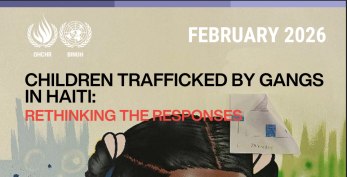
Children Trafficked by Gangs in Haiti: Rethinking the Responses
This joint report by the United Nations Integrated Office in Haiti (BINUH) and the Office of the United Nations High Commissioner for Human Rights (OHCHR) examines the trafficking and exploitation of children by gangs in Haiti. It...
Addressing Youth Substance Use and Crime: Prevention and Recovery Lessons from Kinshasa
ABSTRACT
Youth substance use and involvement in crime rarely result from a single risk factor. Vulnerability can increase when individual, family, peer, school, community, and socio-economic risks accumulate, particularly where protective...
Making intersectoral collaboration work: connecting people, services and communities
ISSUP’s 2026 conference session on intersectoral collaboration explored how health, justice and community services can work together to help people access and stay connected to appropriate support. Presentations from Thailand, Kenya and Ghana, alongside an introduction to deflection, highlighted clearer referral pathways, shared responsibilities, workforce wellbeing and earlier opportunities for care. These themes connected with the wider conference discussions on evidence-informed practice, youth prevention, recovery and faith-based support. Members were encouraged to adapt the learning to their roles and local circumstances, involve people using services in improvements, and assess changes in health, relationships and everyday life alongside service activity. The session recording offers a starting point for further learning, discussion across professions and practical collaboration through ISSUP National Chapters and professional networks.