


بحث
 Populations
Distinct groups of people within a society who share certain characteristics such as age, gender, geographic location, socioeconomic status, cultural background, or exposure to particular risk factors that may influence patterns of substance use, vulnerability to substance use disorders, and access to services. In the context of substance use systems, identifying and understanding different populations helps guide the design of prevention, treatment, recovery, and policy responses that are appropriate, equitable, and responsive to specific needs. Examples may include youth, women, people experiencing homelessness, individuals in the criminal justice system, or communities affected by specific social or economic conditions.



Youth Recovery: Supporting Adolescents and Young Adults – Reading List
In this reading list, we provide resources exploring recovery from substance use disorders among adolescents and young adults, with a particular focus on recovery capital, supportive educational environments, and community-based recovery...

Participant Experiences of a Collegiate Recovery Program on a UK University Campus
This study, published in Alcoholism Treatment Quarterly, explores the experiences of university students participating in Better Than Well, a university-led Collegiate Recovery Program at the University of Birmingham in the United Kingdom.
...
Family Intervention Models for Young Adults with Substance Abuse: A Systematic Review
Published in the Indian Journal of Psychological Medicine, this systematic review examines the effectiveness of family-based interventions for addressing substance use among adolescents and young adults.
The researchers reviewed 41 studies...

Community support and youth recovery: the mediating role of peer and parental disapproval
This study, published in Frontiers in Adolescent Medicine, examines the relationship between community recovery support, parental and peer attitudes towards substance use, and recovery among young people.
Using data from the 2022 Illinois...

Faith, Identity and Belonging: Preventing Criminal Recruitment with Tim Rosier Pt. 1
What helps a person change, and what role can faith play in that journey? In this first episode, Tim Rosier joins Professor Goodman Sibeko to reflect on his career across probation, youth justice, prisons and academia, sharing experiences that challenged his understanding of crime, vulnerability and rehabilitation.

Fear of Missing Out on Social Networking Sites: Associations with Life Satisfaction, Problematic Social Media Use, Depressive Symptoms and Phubbing in Young Adulthood
INTRODUCTION: Social networking sites have become an integral part of everyday life. Their use is closely linked to the phenomena of FoMO (fear of missing out), phubbing, depressive symptoms, life satisfaction and problematic social media...
AddictologyIssue 2/2026
Call for Abstracts: Lisbon Addictions
The 2027 edition of Lisbon Addictions will take place from 20–22 October 2027 under the overarching theme ‘Addiction in times of disruption: science, technology and whole-of-society responses’.
Submission of abstracts
Potential...
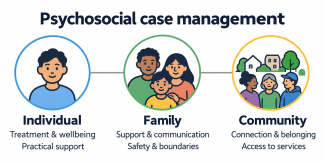
Psychosocial case management: connecting treatment, relationships and community recovery
Psychosocial case management connects evidence-based treatment with the practical and relational support needed for sustained recovery.
Its clearest benefits are helping people access services and remain engaged in care.
Individual care should consider housing, mental health, meaningful activity and continuity of support after discharge.
Families and affected communities also need support, with involvement guided by consent, safety and individual circumstances.
For treatment and prevention, interventions should address identified needs, draw on relevant evidence and be reviewed as circumstances change.
Advancing the science of evaluating Collegiate Recovery Program processes and outcomes: A recovery capital perspective
Collegiate recovery programs (CRPs) offer resources and programming for postsecondary students in addiction recovery to ensure they can initiate or maintain their recovery and complete college. To achieve these goals, CRPs offer a variety...
Collegiate Recovery Communities Programs: What do we know and what do we need to know?
As the broad construct of recovery increasingly guides addiction services and policy, federal agencies have called for the expansion of peer-driven recovery support services. The high prevalence of substance use and abuse in colleges and...
Are Collegiate Recovery Programs worth the investment?
The first collegiate recovery program was founded at Brown University in 1977. Since then, these programs have seen explosive growth, with 136 currently in operation. Universities are often tasked with determining whether programs are worth...
Recovery High Schools: A Descriptive Study of School Programs and Students
High schools specifically designed for students recovering from a substance use disorder (substance abuse or dependence) have been emerging as a continuing care resource since 1987. This study of 17 schools provides the first systematic...
A systematic review of recovery high schools and collegiate recovery programs for building recovery capital among adolescents and emerging adults
Introduction:
Educational settings represent a prime opportunity for reaching adolescents and young adults (ages 12–27) experiencing substance use disorders (SUD). Recovery high schools (RHSs) were established to help adolescents in...
What is a Recovery High School?
This resource from the The Association of Recovery Schools explains the role of recovery high schools, which are secondary schools designed specifically to support students recovering from substance use disorders and co-occurring mental...
Recovery schools for improving behavioral and academic outcomes among students in recovery from substance use disorders: a systematic review
This Campbell systematic review examines the effects of recovery schools on student behavioral and academic outcomes, compared to the effects of non-recovery schools. The review summarizes evidence from one quasi-experimental study (with a...
A qualitative examination of social identity and stigma among adolescents recovering from alcohol or drug use
Introduction
Alcohol and other drug (AOD) use disorders are stigmatized conditions, but little is known about youth’s experience of this stigma, which may threaten their developing social identity and recovery process. This study...
Understanding recovery capital for addiction recovery in adolescence and young adulthood
In 2017, the Recovery Capital for Adolescents Model (RCAM) was proposed to highlight needs of adolescents in recovery (1), building on the seminal work of William Cloud and Robert Granfield (2). Research since the RCAM was proposed has...
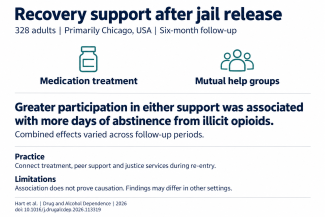
Adults with Problematic Opioid Use Released from Jail: Mutual Help Groups and Medication Support Contribute to a Greater Likelihood of Opioid Abstinence
A recent study found that medication treatment and mutual help group participation were each associated with more days of abstinence from illicit opioids after jail release. Their combined benefits were less clear and varied across follow-up periods. For ISSUP practitioners, the findings highlight the value of connecting treatment, recovery support and justice services during re-entry. The study does not establish causation, and findings from this US sample may not apply equally in other settings.
Connecting Evidence, Prevention, Law Enforcement and Community Action: Key Insights from ISSUP 2026
How do we go about translating evidence into effective action, strengthen prevention, address drug-related crime, improve access to treatment and recovery support, and build safer, healthier communities?
This age-old question was explored...

Addressing Youth Substance Use and Crime: Risk Factors and Strategies
Protecting young people from substance use and crime: building safer communities and pathways to support
Young people's involvement in substance use and crime cannot be understood without considering the environments in which they grow up...